

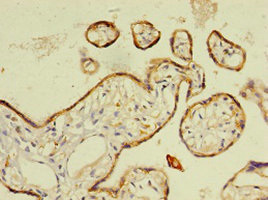
Immunohistochemistry of paraffin-embedded human placenta tissue using CSB-PA10759A0Rb at dilution of 1:100
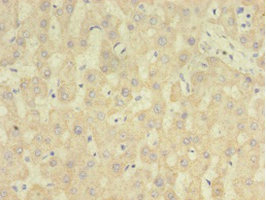
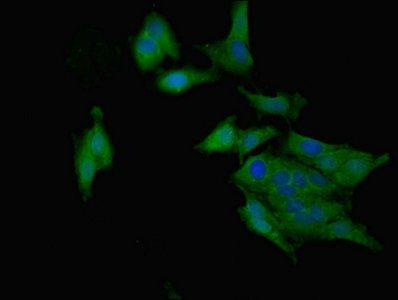
Immunohistochemistry of paraffin-embedded human placenta tissue using CSB-PA10759A0Rb at dilution of 1:100
RARRES2 Antibody
CSB-PA10759A0RB

ApplicationsImmunoFluorescence, ELISA, ImmunoHistoChemistry
Product group Antibodies
ReactivityHuman
TargetRARRES2
Overview
- SupplierCusabio
- Product NameRARRES2 Antibody
- Delivery Days Customer20
- ApplicationsImmunoFluorescence, ELISA, ImmunoHistoChemistry
- CertificationResearch Use Only
- ClonalityPolyclonal
- ConjugateUnconjugated
- Gene ID5919
- Target nameRARRES2
- Target descriptionretinoic acid receptor responder 2
- Target synonymsHP10433, TIG2, retinoic acid receptor responder protein 2, RAR-responsive protein TIG2, chemerin, retinoic acid receptor responder (tazarotene induced) 2, tazarotene-induced gene 2 protein
- HostRabbit
- IsotypeIgG
- Protein IDQ99969
- Protein NameRetinoic acid receptor responder protein 2
- Scientific DescriptionAdipocyte-secreted protein (adipokine) that regulates adipogenesis, metabolism and inflammation through activation of the chemokine-like receptor 1 (CMKLR1). Its other ligands include G protein-coupled receptor 1 (GPR1) and chemokine receptor-like 2 (CCRL2). Positively regulates adipocyte differentiation, modulates the expression of adipocyte genes involved in lipid and glucose metabolism and might play a role in angiogenesis, a process essential for the expansion of white adipose tissue. Also acts as a proinflammatory adipokine, causing an increase in secretion of proinflammatory and prodiabetic adipokines, which further impair adipose tissue metabolic function and have negative systemic effects including impaired insulin sensitivity, altered glucose and lipid metabolism, and a decrease in vascular function in other tissues. Can have both pro- and anti-inflammatory properties depending on the modality of enzymatic cleavage by different classes of proteases. Acts as a chemotactic factor for leukocyte populations expressing CMKLR1, particularly immature plasmacytoid dendritic cells, but also immature myeloid DCs, macrophages and natural killer cells. Exerts an anti-inflammatory role by preventing TNF/TNFA-induced VCAM1 expression and monocytes adhesion in vascular endothelial cells. The effect is mediated via inhibiting activation of NF-kappa-B and CRK/p38 through stimulation of AKT1/NOS3 signaling and nitric oxide production. Its dual role in inflammation and metabolism might provide a link between chronic inflammation and obesity, as well as obesity-related disorders such as type 2 diabetes and cardiovascular disease. Exhibits an antimicrobial function in the skin.
- ReactivityHuman
- Storage Instruction-20°C or -80°C
- UNSPSC41116161
Related products

Product group Antibodies

ApplicationsImmunoPrecipitation, Western Blot, ImmunoCytoChemistry, ImmunoHistoChemistry
TargetRARRES2
- SizePrice
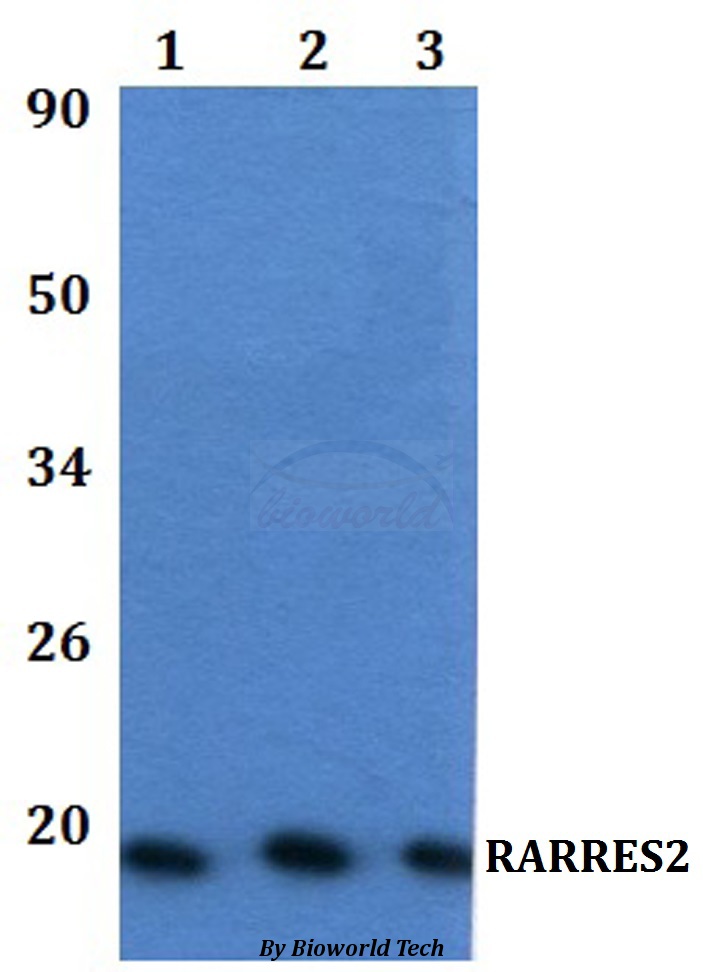
Product group Antibodies

Anti-RARRES2 AntibodyA29259
ApplicationsWestern Blot
ReactivityHuman, Mouse, Rat
- SizePrice
Product group Antibodies

Anti-RARRES2 Antibody144-06963
ApplicationsImmunoFluorescence, Western Blot, ImmunoHistoChemistry
ReactivityHuman, Mouse, Rat
TargetRARRES2
- SizePrice
Product group Antibodies

Chemerin antibodyGTX32518
ApplicationsImmunoFluorescence, Western Blot, ImmunoCytoChemistry
ReactivityHuman, Mouse
TargetRARRES2
- SizePrice
Product group Antibodies

RARRES2 / Chemerin Antibody (aa33-158)LS-C293292
ApplicationsWestern Blot
ReactivityMouse
TargetRARRES2
- SizePrice