Recombinant Human FGF4
ORB1921836

Protein IDP08620
Product group Proteins / Signaling Molecules
Overview
- SupplierBiorbyt
- Product NameRecombinant Human FGF4
- Delivery Days Customer10
- Application Supplier NoteApplication Notes: For research use only. Minimum Sample Size: 50microg/vial
- CertificationResearch Use Only
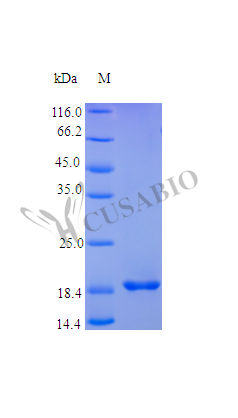
- Estimated Purity≥95%
- Protein IDP08620
- Protein NameFibroblast growth factor 4
- Scientific DescriptionFibroblast Growth Factor 4 (FGF4) is one of a family of 18 secreted canonical FGF proteins that interact with 4 signaling tyrosine kinase FGF receptors. FGF4 is most highly expressed in the embryonic ectoderm, axial, paraxial, and lateral plate mesoderm, and tailbud. The FGF4 subfamily (FGF4, 5, 6) bind to receptors expressed predominantly in mesenchymal tissues (FGFR1c, 2c, 3c, 4), and play important roles in the early stages of embryonic development and organogenesis. FGF signaling is required for proper embryonic axial growth and segmentation. In a mouse model, creation of a gain of function FGF4 copy to replace an inactive FGF 8 gene was able to rescue limb development; however, it also caused abnormal tissue deposition and postaxial polydactyly, highlighting that levels of FGF proteins throughout embryonic development must be properly controlled for normal limb formation. The signal transduction mediated by the FGF/FGFR4 axis is extremely complex, which includes PKC, ERK1/2, AKT, Src, and GSK3beta signaling cascades. The homodimer of FGFR4 forms when binding to either canonical FGF subfamily members or FGF19 subfamily members. Heparin or heparin sulfate is required for the binding of canonical FGF subfamily members to FGFR4, whereas KLB acts as a co-receptor of FGFR4 to facilitate FGFR4 interacting with FGF19 subfamily members. When FGFR4 forms protein complexes with FGFs, it can be phosphorylated on three main tyrosine residues: Y642, Y643, and Y764.
- SourceCHO Cell - Human
- Storage Instruction-20°C or -80°C,2°C to 8°C
- UNSPSC12352202
Related products


Product group Proteins / Signaling Molecules

Protein IDP08620
- SizePrice
Product group Proteins / Signaling Molecules

Protein IDP08620
- SizePrice

Product group Proteins / Signaling Molecules

ApplicationsOther Application
Protein IDP08620
- SizePrice
Product group Proteins / Signaling Molecules

FGF4 PeptideGTX85040-PEP
ApplicationsNeutralisation/Blocking
- SizePrice
Product group Proteins / Signaling Molecules

ApplicationsOther Application
- SizePrice
Product group Proteins / Signaling Molecules

Recombinant Human FGF4RPF11203
ApplicationsWestern Blot, ELISA
Protein IDP08620
- SizePrice