

SMAD4 antibody
GTX112980

ApplicationsImmunoFluorescence, Western Blot, ImmunoCytoChemistry, ImmunoHistoChemistry, ImmunoHistoChemistry Paraffin
Product group Antibodies
ReactivityHuman, Mouse, Rat
TargetSMAD4
Overview
- SupplierGeneTex
- Product NameSMAD4 antibody
- Delivery Days Customer9
- Application Supplier NoteWB: 1:500-1:3000. ICC/IF: 1:100-1:1000. IHC-P: 1:100-1:1000. *Optimal dilutions/concentrations should be determined by the researcher.Not tested in other applications.
- ApplicationsImmunoFluorescence, Western Blot, ImmunoCytoChemistry, ImmunoHistoChemistry, ImmunoHistoChemistry Paraffin
- CertificationResearch Use Only
- ClonalityPolyclonal
- Concentration0.58 mg/ml
- ConjugateUnconjugated
- Gene ID4089
- Target nameSMAD4
- Target descriptionSMAD family member 4
- Target synonymsDPC4, JIP, MADH4, MYHRS, mothers against decapentaplegic homolog 4, MAD homolog 4, SMAD, mothers against DPP homolog 4, deleted in pancreatic carcinoma locus 4, deletion target in pancreatic carcinoma 4, mothers against decapentaplegic, Drosophila, homolog of, 4
- HostRabbit
- IsotypeIgG
- Protein IDQ13485
- Protein NameMothers against decapentaplegic homolog 4
- Scientific DescriptionThis gene encodes a member of the Smad family of signal transduction proteins. Smad proteins are phosphorylated and activated by transmembrane serine-threonine receptor kinases in response to TGF-beta signaling. The product of this gene forms homomeric complexes and heteromeric complexes with other activated Smad proteins, which then accumulate in the nucleus and regulate the transcription of target genes. This protein binds to DNA and recognizes an 8-bp palindromic sequence (GTCTAGAC) called the Smad-binding element (SBE). The Smad proteins are subject to complex regulation by post-translational modifications. Mutations or deletions in this gene have been shown to result in pancreatic cancer, juvenile polyposis syndrome, and hereditary hemorrhagic telangiectasia syndrome. [provided by RefSeq]
- ReactivityHuman, Mouse, Rat
- Storage Instruction-20°C or -80°C,2°C to 8°C
- UNSPSC41116161
Datasheet
Related products
Product group Antibodies

Anti-SMAD4 Antibody144-05657
ApplicationsImmunoFluorescence, Western Blot
ReactivityHuman, Mouse
TargetSMAD4
- SizePrice
Product group Antibodies

Anti-Smad4 AntibodyA83781
ApplicationsImmunoPrecipitation, ELISA
ReactivityHuman
- SizePrice

Product group Antibodies

Anti-SMAD4 AntibodyAMAB91594
ApplicationsWestern Blot, ImmunoHistoChemistry
ReactivityHuman
TargetSMAD4
- SizePrice
Product group Antibodies

SMAD4 AntibodyLS-C770710
ApplicationsWestern Blot, ELISA, ImmunoHistoChemistry
ReactivityHuman, Mouse, Rat
TargetSMAD4
- SizePrice

Product group Antibodies

Goat anti-SMAD4 / MADH4EB05149
ApplicationsImmunoPrecipitation, ELISA
ReactivityBovine, Canine, Human, Mouse, Porcine, Rat
TargetSMAD4
- SizePrice
Product group Antibodies

SMAD4 AntibodyCSB-PA009961
ApplicationsImmunoFluorescence, Western Blot, ELISA, ImmunoHistoChemistry
ReactivityHuman, Monkey, Mouse, Rat
TargetSMAD4
- SizePrice

Product group Antibodies

Anti-Smad4 Antibody Picoband(r)PB9397-CARRIER-FREE
ApplicationsWestern Blot
ReactivityHamster, Human, Mouse, Rat
TargetSMAD4
- SizePrice
![FACS analysis of K562 cells using GTX82787 SMAD4 antibody [4G1C6]. Green : SMAD4 Purple : negative control](https://www.genetex.com/upload/website/prouct_img/normal/GTX82787/GTX82787_20170912_FACS_w_23061322_714.webp)
Product group Antibodies
SMAD4 antibody [4G1C6]GTX82787
ApplicationsFlow Cytometry, ImmunoFluorescence, Western Blot, ELISA, ImmunoCytoChemistry, ImmunoHistoChemistry, ImmunoHistoChemistry Paraffin
ReactivityHuman, Mouse
TargetSMAD4
- SizePrice
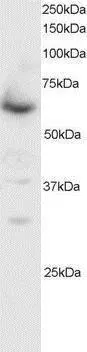
Product group Antibodies
SMAD4 antibody, C-termGTX89968
ApplicationsImmunoPrecipitation, Western Blot
ReactivityHuman, Mouse
TargetSMAD4
- SizePrice