

TDP2 / EAPII (TDP2/1258), Biotin conjugate, 0.1mg/mL [26628-22-8]
BNCB1258

ApplicationsImmunoHistoChemistry, ImmunoHistoChemistry Paraffin
Product group Antibodies
ReactivityBovine, Human, Mouse
TargetTDP2
Overview
- SupplierBiotium
- Product NameTDP2 / EAPII (TDP2/1258), Biotin conjugate, 0.1mg/mL [26628-22-8]
- Delivery Days Customer9
- ApplicationsImmunoHistoChemistry, ImmunoHistoChemistry Paraffin
- CAS Number26628-22-8
- CertificationResearch Use Only
- ClonalityMonoclonal
- Clone IDTDP2/1258
- Concentration0.1 mg/ml
- ConjugateBiotin
- Gene ID51567
- Target nameTDP2
- Target descriptiontyrosyl-DNA phosphodiesterase 2
- Target synonymsAD022, EAP2, EAPII, TTRAP, dJ30M3.3, hTDP2, tyrosyl-DNA phosphodiesterase 2, 5'-Tyr-DNA phosphodiesterase, 5'-tyrosyl-DNA phosphodiesterase, ETS1-associated protein 2, ETS1-associated protein II, TRAF and TNF receptor-associated protein, VPg unlinkase, epididymis secretory sperm binding protein, tyr-DNA phosphodiesterase 2, tyrosyl-RNA phosphodiesterase
- HostMouse
- IsotypeIgG2b
- Protein IDO95551
- Protein NameTyrosyl-DNA phosphodiesterase 2
- Scientific DescriptionThis MAb recognizes a protein of 41 kDa, which is identified as TDP2. It is a member of a superfamily of divalent cation-dependent phosphodiesterases. The encoded protein associates with CD40, tumor necrosis factor (TNF) receptor-75 and TNF receptor associated factors (TRAFs), and inhibits nuclear factor-kappa-B activation. This protein has sequence and structural similarities with APE1 endonuclease, which is involved in both DNA repair and the activation of transcription factors. DNA repair enzyme that can remove a variety of covalent adducts from DNA through hydrolysis of a 5-phosphodiester bond, giving rise to DNA with a free 5 phosphate. Catalyzes the hydrolysis of dead-end complexes between DNA and the topoisomerase 2 (TOP2) active site tyrosine residue. Hydrolyzes 5-phosphoglycolates on protruding 5 ends on DNA double-strand breaks (DSBs) due to DNA damage by radiation and free radicals. The 5-tyrosyl DNA phosphodiesterase activity can enable the repair of TOP2-induced DSBs without the need for nuclease activity, creating a clean DSB with 5-phosphate termini that are ready for ligation. Has also 3-tyrosyl DNA phosphodiesterase activity, but less efficiently and much slower than TDP1. May also act as a negative regulator of ETS1 and may inhibit nuclear factor-kappa-B activation.Primary antibodies are available purified, or with a selection of fluorescent CF® Dyes and other labels. CF® Dyes offer exceptional brightness and photostability. Note: Conjugates of blue fluorescent dyes like CF®405S and CF®405M are not recommended for detecting low abundance targets, because blue dyes have lower fluorescence and can give higher non-specific background than other dye colors.
- SourceAnimal
- ReactivityBovine, Human, Mouse
- Storage Instruction2°C to 8°C,RT
- UNSPSC41116161
MSDS
Related products
Product group Antibodies

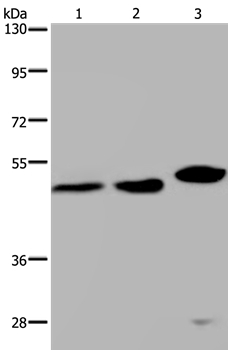
Anti-TDP2 AntibodyA38826
ApplicationsWestern Blot, ImmunoHistoChemistry
ReactivityHuman, Mouse
- SizePrice
Product group Antibodies

TDP2 / TTRAP AntibodyLS-C831067
ApplicationsWestern Blot, ELISA, ImmunoHistoChemistry
ReactivityHuman, Mouse
TargetTDP2
- SizePrice

Product group Antibodies

Anti-TDP2 Antibody Picoband(r)A01804-1-CARRIER-FREE
ApplicationsImmunoFluorescence, Western Blot, ELISA, ImmunoCytoChemistry
ReactivityHuman, Mouse, Rat
TargetTDP2
- SizePrice
Product group Antibodies

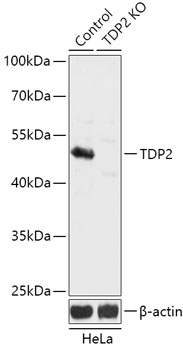
TDP2 Polyclonal AntibodyBS-55213R
ApplicationsWestern Blot
ReactivityHuman, Mouse
TargetTDP2
- SizePrice
Product group Antibodies

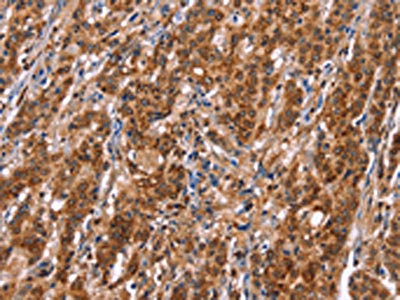
TDP2 AntibodyCSB-PA295592
ApplicationsELISA, ImmunoHistoChemistry
ReactivityHuman
TargetTDP2
- SizePrice

Product group Antibodies

Anti-TDP2 AntibodyHPA074011
ApplicationsImmunoCytoChemistry
ReactivityHuman
TargetTDP2
- SizePrice
Product group Antibodies

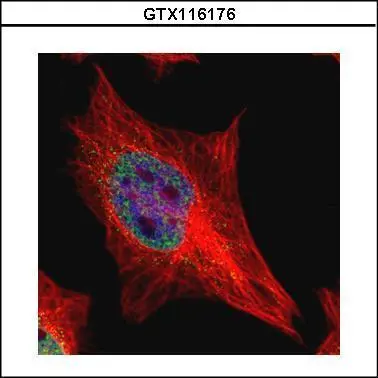
EAPII antibodyGTX116176
ApplicationsImmunoFluorescence, Western Blot, ImmunoCytoChemistry
ReactivityHuman
TargetTDP2
- SizePrice