

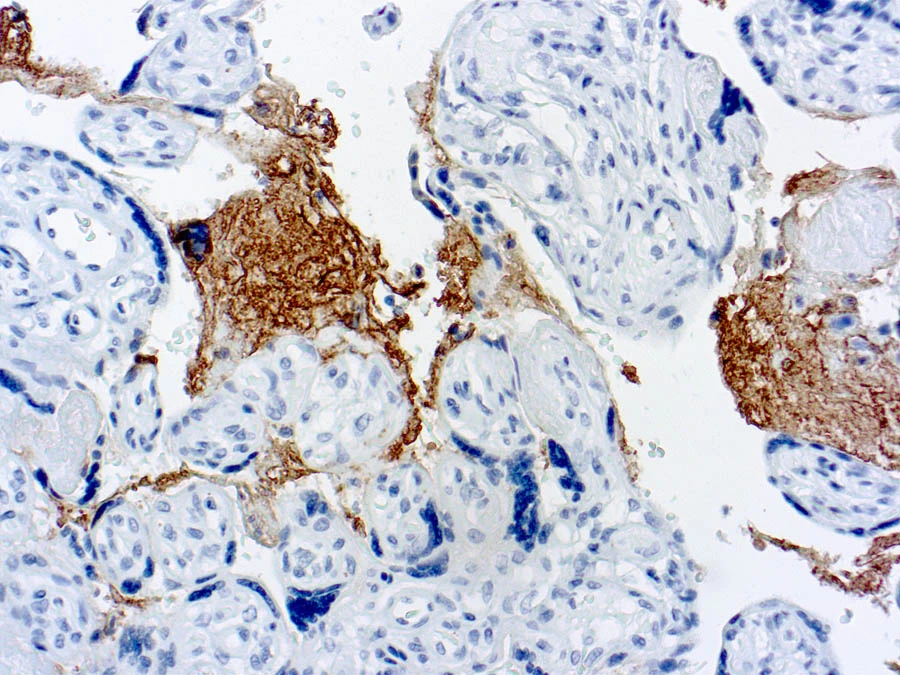
IHC-P analysis of human tonsil tissue using GTX21823 Thrombospondin antibody [A6.1].
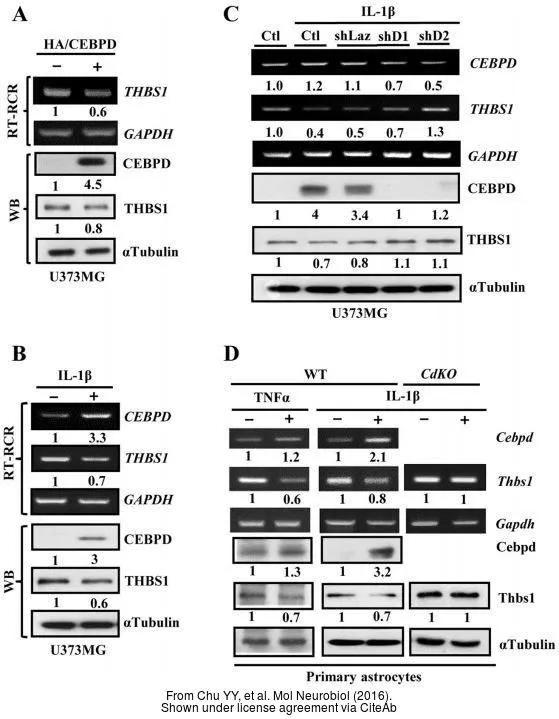
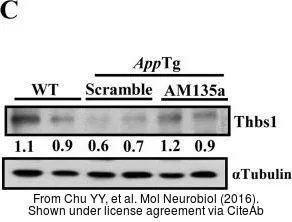
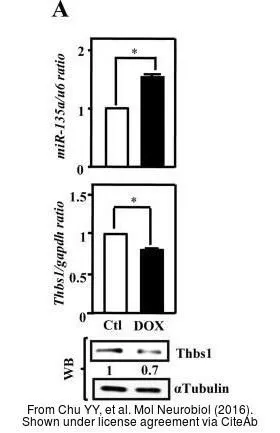
IHC-P analysis of human tonsil tissue using GTX21823 Thrombospondin antibody [A6.1].
Thrombospondin antibody [A6-1]
GTX21823

ApplicationsWestern Blot, ImmunoHistoChemistry, ImmunoHistoChemistry Paraffin, Neutralisation/Blocking
Product group Antibodies
ReactivityHuman, Mouse
TargetTHBS1
Overview
- SupplierGeneTex
- Product NameThrombospondin antibody [A6-1]
- Delivery Days Customer9
- Application Supplier NoteIHC-P: 1:25-1:50. *Optimal dilutions/concentrations should be determined by the researcher.Not tested in other applications.
- ApplicationsWestern Blot, ImmunoHistoChemistry, ImmunoHistoChemistry Paraffin, Neutralisation/Blocking
- CertificationResearch Use Only
- ClonalityMonoclonal
- Clone IDA6-1
- ConjugateUnconjugated
- Gene ID7057
- Target nameTHBS1
- Target descriptionthrombospondin 1
- Target synonymsTHBS, THBS-1, TSP, TSP-1, TSP1, thrombospondin-1, glycoprotein G, thrombospondin-1p180, thrombospondin-p50
- HostMouse
- IsotypeIgG1
- Protein IDP07996
- Protein NameThrombospondin-1
- Scientific DescriptionThe protein encoded by this gene is a subunit of a disulfide-linked homotrimeric protein. This protein is an adhesive glycoprotein that mediates cell-to-cell and cell-to-matrix interactions. This protein can bind to fibrinogen, fibronectin, laminin, type V collagen and integrins alpha-V/beta-1. This protein has been shown to play roles in platelet aggregation, angiogenesis, and tumorigenesis. [provided by RefSeq, Jul 2008]
- ReactivityHuman, Mouse
- Storage Instruction2°C to 8°C
- UNSPSC41116161
References
- Single-Cell RNA Sequencing and Spatial Transcriptomics Reveal Pathogenesis of Meningeal Lymphatic Dysfunction after Experimental Subarachnoid Hemorrhage.Read this paper
- Astrocytic CCAAT/Enhancer Binding Protein delta Regulates Neuronal Viability and Spatial Learning Ability via miR-135a. Chu YY et al., 2016 Aug, Mol NeurobiolRead this paper
Datasheet
Related products
Product group Antibodies

ApplicationsWestern Blot, ImmunoHistoChemistry
ReactivityHuman, Mouse, Rat
- SizePrice

Product group Antibodies

Anti-Thrombospondin/THBS1 Antibody Picoband(r)A00667-1-CARRIER-FREE
ApplicationsWestern Blot, ELISA
ReactivityHuman, Mouse, Rat
TargetTHBS1
- SizePrice
Product group Antibodies

ApplicationsELISA
TargetTHBS1
- SizePrice
Product group Antibodies

ApplicationsWestern Blot, ELISA
ReactivityHuman, Mouse, Rat
TargetTHBS1
- SizePrice
Product group Antibodies

ApplicationsImmunoPrecipitation, Western Blot, ImmunoCytoChemistry, ImmunoHistoChemistry
ReactivityMouse, Rat
TargetTHBS1
- SizePrice
Product group Antibodies

THBS1 AntibodyCSB-PA07349A0RB
ApplicationsELISA
ReactivityHuman
TargetTHBS1
- SizePrice
Product group Antibodies

ApplicationsELISA
ReactivityHuman, Mouse, Rat
TargetTHBS1
- SizePrice
![Whole cell extract (30 μg) was separated by 5% SDS-PAGE, and the membrane was blotted with Thrombospondin 1 antibody [C1C3] (GTX100746) diluted at 1:500.](https://www.genetex.com/upload/website/prouct_img/normal/GTX100746/GTX100746_39995_20160317_WB_w_23060100_172.webp)
Product group Antibodies
Thrombospondin 1 antibody [C1C3]GTX100746
ApplicationsWestern Blot
ReactivityHuman
TargetTHBS1
- SizePrice
Product group Antibodies
TSP antibody [A4.1]GTX72221
ApplicationsImmunoFluorescence, Western Blot, ImmunoCytoChemistry
ReactivityHuman
TargetTHBS1
- SizePrice

Product group Antibodies

Anti-THBS1 AntibodyHPA059756
ApplicationsImmunoCytoChemistry
ReactivityHuman
TargetTHBS1
- SizePrice