

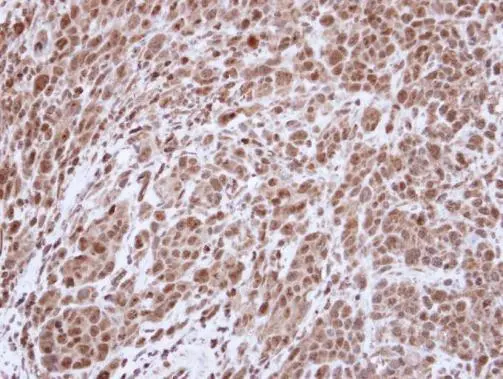
Immunohistochemical analysis of paraffin-embedded SAS Xenograft , using Topoisomerase II alpha (GTX100689) antibody at 1:500 dilution.
Antigen Retrieval: Trilogy? (EDTA based, pH 8.0) buffer, 15min
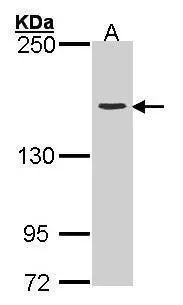
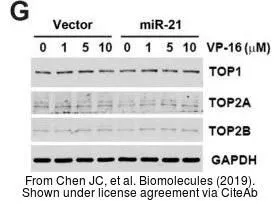
Immunohistochemical analysis of paraffin-embedded SAS Xenograft , using Topoisomerase II alpha (GTX100689) antibody at 1:500 dilution.
Antigen Retrieval: Trilogy? (EDTA based, pH 8.0) buffer, 15min
Topoisomerase II alpha antibody [C3], C-term
GTX100689

ApplicationsWestern Blot, ImmunoHistoChemistry, ImmunoHistoChemistry Paraffin
Product group Antibodies
ReactivityHuman
TargetTOP2A
Overview
- SupplierGeneTex
- Product NameTopoisomerase II alpha antibody [C3], C-term
- Delivery Days Customer9
- Application Supplier NoteWB: 1:500-1:3000. IHC-P: 1:100-1:1000. *Optimal dilutions/concentrations should be determined by the researcher.Not tested in other applications.
- ApplicationsWestern Blot, ImmunoHistoChemistry, ImmunoHistoChemistry Paraffin
- CertificationResearch Use Only
- ClonalityPolyclonal
- Concentration1 mg/ml
- ConjugateUnconjugated
- Gene ID7153
- Target nameTOP2A
- Target descriptionDNA topoisomerase II alpha
- Target synonymsTOP2, TOP2alpha, TOPIIA, TP2A, DNA topoisomerase 2-alpha, DNA gyrase, DNA topoisomerase (ATP-hydrolyzing), DNA topoisomerase II, 170 kD, DNA topoisomerase II, alpha isozyme, topoisomerase (DNA) II alpha 170kDa
- HostRabbit
- IsotypeIgG
- Protein IDP11388
- Protein NameDNA topoisomerase 2-alpha
- Scientific DescriptionThis gene encodes a DNA topoisomerase, an enzyme that controls and alters the topologic states of DNA during transcription. This nuclear enzyme is involved in processes such as chromosome condensation, chromatid separation, and the relief of torsional stress that occurs during DNA transcription and replication. It catalyzes the transient breaking and rejoining of two strands of duplex DNA which allows the strands to pass through one another, thus altering the topology of DNA. Two forms of this enzyme exist as likely products of a gene duplication event. The gene encoding this form, alpha, is localized to chromsome 17 and the beta gene is localized to chromosome 3. The gene encoding this enzyme functions as the target for several anticancer agents and a variety of mutations in this gene have been associated with the development of drug resistance. Reduced activity of this enzyme may also play a role in ataxia-telangiectasia. [provided by RefSeq]
- ReactivityHuman
- Storage Instruction-20°C or -80°C,2°C to 8°C
- UNSPSC41116161
Datasheet
Related products
Product group Antibodies

TOP2A (Phospho-Thr1343) AntibodyABX012641
ApplicationsWestern Blot, ELISA
- SizePrice
Product group Antibodies

Anti-TOP2A AntibodyA100734
ApplicationsWestern Blot, ELISA
ReactivityHuman
- SizePrice

Product group Antibodies

Anti-Topoisomerase II alpha/TOP2A Antibody Picoband(r)A00953-CARRIER-FREE
ApplicationsFlow Cytometry, ImmunoFluorescence, Western Blot, ImmunoCytoChemistry, ImmunoHistoChemistry
ReactivityHuman
TargetTOP2A
- SizePrice
Product group Antibodies

Anti-TOP2A Antibody144-64384
ApplicationsWestern Blot
ReactivityHuman
TargetTOP2A
- SizePrice
Product group Antibodies

TOP2A Recombinant AntibodyBSM-61077R
ApplicationsImmunoFluorescence, Western Blot, ImmunoHistoChemistry, ImmunoHistoChemistry Frozen, ImmunoHistoChemistry Paraffin
ReactivityHuman, Mouse, Rat
TargetTOP2A
- SizePrice
Product group Antibodies

TOP2A AntibodyCSB-PA004317
ApplicationsImmunoFluorescence, Western Blot, ELISA, ImmunoHistoChemistry
ReactivityHuman, Monkey
TargetTOP2A
- SizePrice
Product group Antibodies

ApplicationsImmunoPrecipitation, Western Blot, ImmunoCytoChemistry, ImmunoHistoChemistry
ReactivityMouse
TargetTOP2A
- SizePrice
Product group Antibodies
Topoisomerase II alpha antibodyGTX22987
ApplicationsImmunoFluorescence, ImmunoPrecipitation, Western Blot, ImmunoCytoChemistry, ImmunoHistoChemistry
ReactivityHuman
TargetTOP2A
- SizePrice
![IHC-P analysis of human bladder tumor using GTX23111 Topoisomerase II alpha antibody [3F6]. Note intense nuclear staining of malignant cells and occasional mitotic figures.](https://www.genetex.com/upload/website/prouct_img/normal/GTX23111/GTX23111_20200811_IHC-P_111_w_23060620_252.webp)
Product group Antibodies
References
ApplicationsImmunoHistoChemistry, ImmunoHistoChemistry Paraffin
ReactivityHuman
TargetTOP2A
- SizePrice
![IHC-P analysis of human tonsil tissue section using GTX02727 Topoisomerase II alpha antibody [TOP2A/4397R].](https://www.genetex.com/upload/website/prouct_img/normal/GTX02727/GTX02727_20210319_IHC-P_1_w_23053122_815.webp)
Product group Antibodies
ApplicationsImmunoHistoChemistry, ImmunoHistoChemistry Paraffin
ReactivityHuman
TargetTOP2A
- SizePrice