

TRAIL peptide
GTX27867

ApplicationsNeutralisation/Blocking
Product group Proteins / Signaling Molecules
Overview
- SupplierGeneTex
- Product NameTRAIL peptide
- Delivery Days Customer9
- Application Supplier NoteThe peptide is used for blocking the activity of anti-TRAIL. Incubatingthe peptide with equal volume of antibody for 30 min at 37C usually completely blocks theactivity of anti-TRAIL (GTX22056) in Western blotting.
- ApplicationsNeutralisation/Blocking
- CertificationResearch Use Only
- Concentration0.20 mg/ml
- ConjugateUnconjugated
- Gene ID8743
- Target nameTNFSF10
- Target descriptionTNF superfamily member 10
- Target synonymsAPO2L, Apo-2L, CD253, TANCR, TL2, TNLG6A, TRAIL, tumor necrosis factor ligand superfamily member 10, Apo-2 ligand, TNF-related apoptosis inducing ligand TRAIL, chemokine tumor necrosis factor ligand superfamily member 10, tumor necrosis factor (ligand) family, member 10, tumor necrosis factor (ligand) superfamily, member 10, tumor necrosis factor ligand 6A, tumor necrosis factor superfamily member 10
- Scientific DescriptionApoptosis or programmed cell death is induced in cells by a group of death domain containing receptors. Binding of ligand to these receptors sends signals that activate members of the caspase family of proteases. The signals ultimately cause degradation of chromosomal DNA by activating DNase. TRAIL (TNF related apoptosis induced ligand) or Apo 2L initiates apoptosis of tumor cells by binding to either of its receptors, DR4 or DR5. These receptors consist of an extracellular TRAIL binding domain and a cytoplasmic death domain. In addition, two decoy receptors for TRAIL have also been identified. These receptors, designated DcR1 and DcR2, lack the death domain. Binding of TRAIL to either of these receptors, therefore, does not transmit the death signal. Thus, these receptors represent a novel way of regulating cell sensitivity to a pro-apoptotic cytokine at the cell surface. TRAIL is expressed predominantly in spleen, lung, and prostate but also in many other tissues.
- Storage Instruction-20°C
- UNSPSC41116100
- SpeciesHuman
Datasheet
Related products
Product group Proteins / Signaling Molecules

Protein IDP50591
- SizePrice
Product group Proteins / Signaling Molecules

TRAIL, Soluble (human) (rec.)AG-40B-0003
Protein IDP50591
- SizePrice
Product group Proteins / Signaling Molecules

PrEST Antigen TNFSF10APREST87699
Protein IDP50591
- SizePrice
Product group Proteins / Signaling Molecules

ApplicationsOther Application
- SizePrice
Product group Proteins / Signaling Molecules

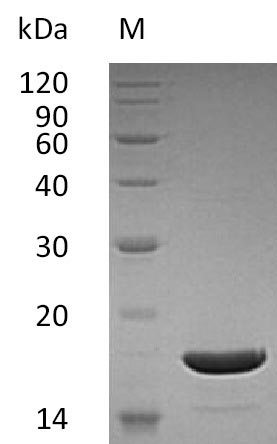
Recombinant Human Tumor necrosis factor ligand superfamily member 10 (TNFSF10), partial (Active)CSB-AP004901HU
Protein IDP50591
- SizePrice

Product group Proteins / Signaling Molecules

ApplicationsOther Application
Protein IDP50591
- SizePrice
Product group Proteins / Signaling Molecules
TRAIL peptideGTX22436
ApplicationsImmunoPrecipitation
Protein IDP50591
- SizePrice
Product group Proteins / Signaling Molecules
Human TRAIL protein (active)GTX29960-PRO
ApplicationsFunctional Assay
- SizePrice
Product group Proteins / Signaling Molecules
Human TRAIL protein, His tag (active)GTX65667-PRO
ApplicationsFunctional Assay
- SizePrice
Product group Proteins / Signaling Molecules
Human TRAIL protein, His tag (active)GTX65668-PRO
ApplicationsFunctional Assay
- SizePrice