

TRAPPC9 antibody
GTX48542

ApplicationsImmunoFluorescence, ImmunoPrecipitation, Western Blot, ImmunoCytoChemistry
Product group Antibodies
ReactivityBovine, Canine, Chicken, Human, Mouse, Primate, Xenopus
TargetTRAPPC9
Overview
- SupplierGeneTex
- Product NameTRAPPC9 antibody
- Delivery Days Customer9
- Application Supplier NoteWB: 1:100 - 1:2000. ICC/IF: 1:10 - 1:2000. IP: 1:10 - 1:500. *Optimal dilutions/concentrations should be determined by the researcher.Not tested in other applications.
- ApplicationsImmunoFluorescence, ImmunoPrecipitation, Western Blot, ImmunoCytoChemistry
- CertificationResearch Use Only
- ClonalityPolyclonal
- ConjugateUnconjugated
- Gene ID83696
- Target nameTRAPPC9
- Target descriptiontrafficking protein particle complex subunit 9
- Target synonymsIBP, IKBKBBP, MRT13, NIBP, T1, TRS120, trafficking protein particle complex subunit 9, IKK2 binding protein, NIK and IKK-beta binding protein, NIK- and IKBKB-binding protein, TRAPP 120 kDa subunit, trafficking protein particle complex 9, tularik gene 1 protein
- HostRabbit
- IsotypeIgG
- Protein IDQ96Q05
- Protein NameTrafficking protein particle complex subunit 9
- Scientific DescriptionThis gene encodes a protein that likely plays a role in NF-kappa-B signaling. Mutations in this gene have been associated with autosomal-recessive mental retardation. Alternatively spliced transcript variants have been described.
- ReactivityBovine, Canine, Chicken, Human, Mouse, Primate, Xenopus
- Storage Instruction-20°C or -80°C,2°C to 8°C
- UNSPSC41116161
References
- The Roles of HK2 on Tumorigenesis of Cervical Cancer. Liu C et al., 2019 Jan 1, Technol Cancer Res TreatRead this paper
- AmotL2 disrupts apical-basal cell polarity and promotes tumour invasion. Mojallal M et al., 2014 Aug 1, Nat CommunRead this paper
Datasheet
Related products
Product group Antibodies

TRAPPC9 AntibodyLS-C750497
ApplicationsWestern Blot
ReactivityHuman, Mouse
TargetTRAPPC9
- SizePrice
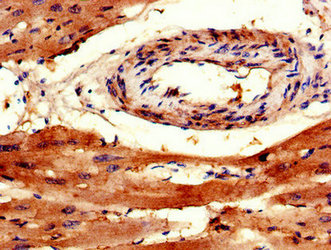
Product group Antibodies

TRAPPC9 AntibodyCSB-PA842741LA01HU
ApplicationsImmunoFluorescence, ELISA, ImmunoHistoChemistry
ReactivityHuman
TargetTRAPPC9
- SizePrice