

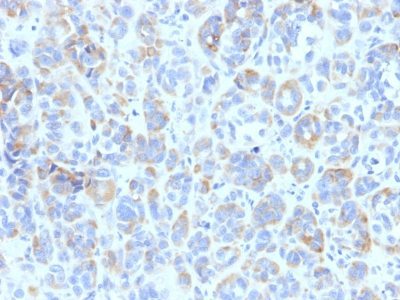
TYRP1 (Tyrosinase Related Protein 1)(TA99), 1mg/mL [26628-22-8]
BNUM0806

ApplicationsFlow Cytometry, ImmunoFluorescence, ImmunoPrecipitation, ImmunoHistoChemistry, ImmunoHistoChemistry Frozen, ImmunoHistoChemistry Paraffin
Product group Antibodies
ReactivityHuman, Mouse
TargetTYRP1
Overview
- SupplierBiotium
- Product NameTYRP1 (Tyrosinase Related Protein 1)(TA99), 1mg/mL [26628-22-8]
- Delivery Days Customer9
- ApplicationsFlow Cytometry, ImmunoFluorescence, ImmunoPrecipitation, ImmunoHistoChemistry, ImmunoHistoChemistry Frozen, ImmunoHistoChemistry Paraffin
- CAS Number26628-22-8
- CertificationResearch Use Only
- ClonalityMonoclonal
- Clone IDTA99
- Concentration1 mg/ml
- Gene ID7306
- Target nameTYRP1
- Target descriptiontyrosinase related protein 1
- Target synonymsCAS2, CATB, GP75, OCA3, TRP, TRP1, TYRP, b-PROTEIN, 5,6-dihydroxyindole-2-carboxylic acid oxidase, DHICA oxidase, catalase B, glycoprotein 75, melanoma antigen gp75
- HostMouse
- IsotypeIgG2a
- Protein IDP17643
- Protein Name5,6-dihydroxyindole-2-carboxylic acid oxidase
- Scientific DescriptionThis antibody reacts with a 75 kDa melanocyte-specific gene product, identified as Tyrosinase-related protein-1 (TRP-1). It is involved in melanin synthesis. TRP1 is present on the melanosomal membranes of melanoma, normal melanocytes and nevi.Recent evidence suggests that TRP-1 is involved in maintaining stability of tyrosinase protein and modulating its catalytic activity. TRP-1 is also involved in maintenance of melanosome ultrastructure and affects melanocyte proliferation and cell death. Primary antibodies are available purified, or with a selection of fluorescent CF® Dyes and other labels. CF® Dyes offer exceptional brightness and photostability. Note: Conjugates of blue fluorescent dyes like CF®405S and CF®405M are not recommended for detecting low abundance targets, because blue dyes have lower fluorescence and can give higher non-specific background than other dye colors.
- SourceAnimal
- ReactivityHuman, Mouse
- Storage Instruction-20°C
- UNSPSC41116161
MSDS
Related products
Product group Antibodies

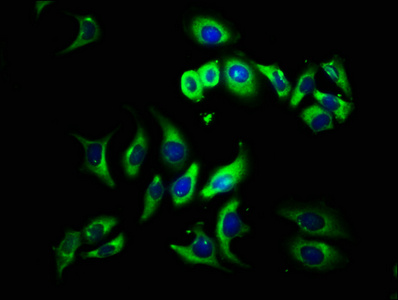
TYRP1 AntibodyCSB-PA025399LA01HU
ApplicationsImmunoFluorescence, ELISA
ReactivityHuman
TargetTYRP1
- SizePrice

Product group Antibodies

Anti-TYRP1 AntibodyAMAB91326
ApplicationsWestern Blot, ImmunoCytoChemistry, ImmunoHistoChemistry
ReactivityHuman
TargetTYRP1
- SizePrice
Product group Antibodies

Anti-TRP-1, gp75 [TA99]Ab00180-10.0
ApplicationsFlow Cytometry, ImmunoFluorescence, ImmunoPrecipitation, Western Blot, ELISA, ImmunoHistoChemistry, ImmunoHistoChemistry Frozen
ReactivityHuman
TargetTYRP1
- SizePrice
Product group Antibodies

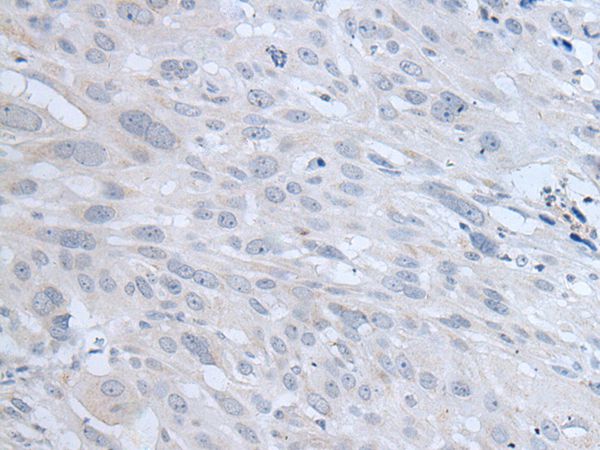
Anti-TYRP1 AntibodyA46626
ApplicationsImmunoHistoChemistry
ReactivityHuman
- SizePrice
Product group Antibodies

ApplicationsELISA, ImmunoHistoChemistry, ImmunoHistoChemistry Paraffin
ReactivityHuman
TargetTYRP1
- SizePrice

Product group Antibodies

Anti-TRP1 Monoclonal AntibodyM01959-1
ApplicationsImmunoPrecipitation, Western Blot, ImmunoHistoChemistry
ReactivityHuman
TargetTYRP1
- SizePrice
Product group Antibodies

TYRP1 AntibodyPACO62395
ApplicationsImmunoFluorescence, ELISA
ReactivityHuman
TargetTYRP1
- SizePrice
Product group Antibodies
References

TYRP1 Polyclonal AntibodyBS-15510R
ApplicationsImmunoFluorescence, Western Blot, ELISA, ImmunoCytoChemistry, ImmunoHistoChemistry, ImmunoHistoChemistry Frozen, ImmunoHistoChemistry Paraffin
ReactivityBovine, Equine, Human, Mouse, Rat
TargetTYRP1
- SizePrice
Product group Antibodies

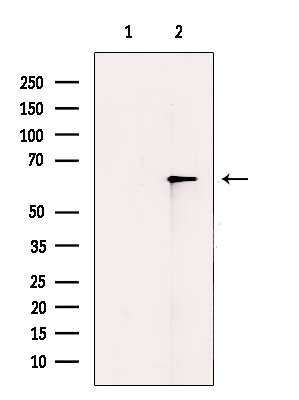
TRP1 antibodyGTX04910
ApplicationsWestern Blot, ImmunoHistoChemistry, ImmunoHistoChemistry Paraffin
ReactivityHuman, Mouse
TargetTYRP1
- SizePrice
Product group Antibodies

Anti-TYRP1 Antibody (TRP)188-10733
ReactivityHuman, Mouse
TargetTYRP1
- SizePrice