

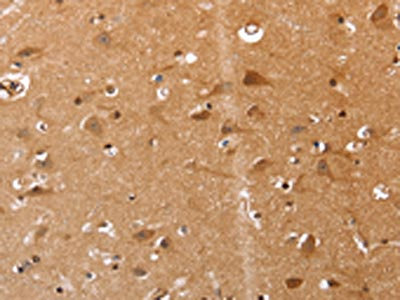
The image on the left is immunohistochemistry of paraffin-embedded Human brain tissue using CSB-PA196434(VIMP Antibody) at dilution 1/20, on the right is treated with synthetic peptide. (Original magnification: x200)
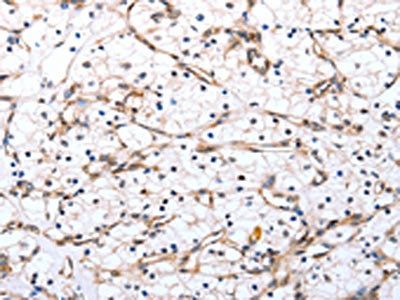
The image on the left is immunohistochemistry of paraffin-embedded Human brain tissue using CSB-PA196434(VIMP Antibody) at dilution 1/20, on the right is treated with synthetic peptide. (Original magnification: x200)
VIMP Antibody
CSB-PA196434

ApplicationsELISA, ImmunoHistoChemistry
Product group Antibodies
ReactivityHuman, Mouse, Rat
TargetSELENOS
Overview
- SupplierCusabio
- Product NameVIMP Antibody
- Delivery Days Customer20
- ApplicationsELISA, ImmunoHistoChemistry
- CertificationResearch Use Only
- ClonalityPolyclonal
- ConjugateUnconjugated
- Gene ID55829
- Target nameSELENOS
- Target descriptionselenoprotein S
- Target synonymsAD-015, ADO15, SBBI8, SELS, SEPS1, VIMP, selenoprotein S, VCP interacting membrane selenoprotein, VCP-interacting membrane protein, tanis, valosin-containing protein-interacting membrane protein
- HostRabbit
- IsotypeIgG
- Protein IDQ9BQE4
- Protein NameSelenoprotein S
- Scientific DescriptionThis gene encodes a selenoprotein, which contains a selenocysteine (Sec) residue at its active site. The selenocysteine is encoded by the UGA codon that normally signals translation termination. The 3 UTR of selenoprotein genes have a common stem-loop structure, the sec insertion sequence (SECIS), that is necessary for the recognition of UGA as a Sec codon rather than as a stop signal. Studies suggest that this protein may regulate cytokine production, and thus play a key role in the control of the inflammatory response. Two alternatively spliced transcript variants encoding the same protein have been found for this gene.
- ReactivityHuman, Mouse, Rat
- Storage Instruction-20°C or -80°C
- UNSPSC41116161
Related products
Product group Antibodies

SELS AntibodyLS-C405817
ApplicationsELISA, ImmunoHistoChemistry
ReactivityHuman, Mouse, Rat
TargetSELENOS
- SizePrice

Product group Antibodies

Anti-SELENOS AntibodyHPA010025
ApplicationsWestern Blot, ImmunoCytoChemistry, ImmunoHistoChemistry
ReactivityHuman
TargetSELENOS
- SizePrice

Product group Antibodies

Anti-VIMP AntibodyCAB15013
ApplicationsWestern Blot, ELISA
ReactivityHuman
TargetSELENOS
- SizePrice