Lane 1: Mouse Placenta lysates;Lane 2: Mouse Lung lysates probed with AKT1/2/3 Polyclonal Antibody, unconjugated (bs-0115R) at 1:300 overnight at 4°C followed by a conjugated secondary antibody at 1:10000 for 60 minutes at 37°C.
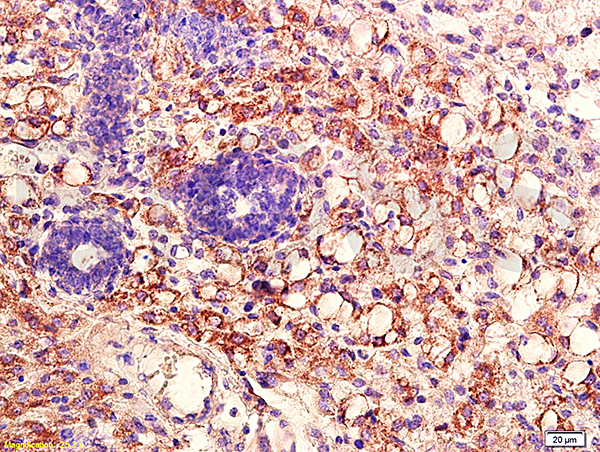
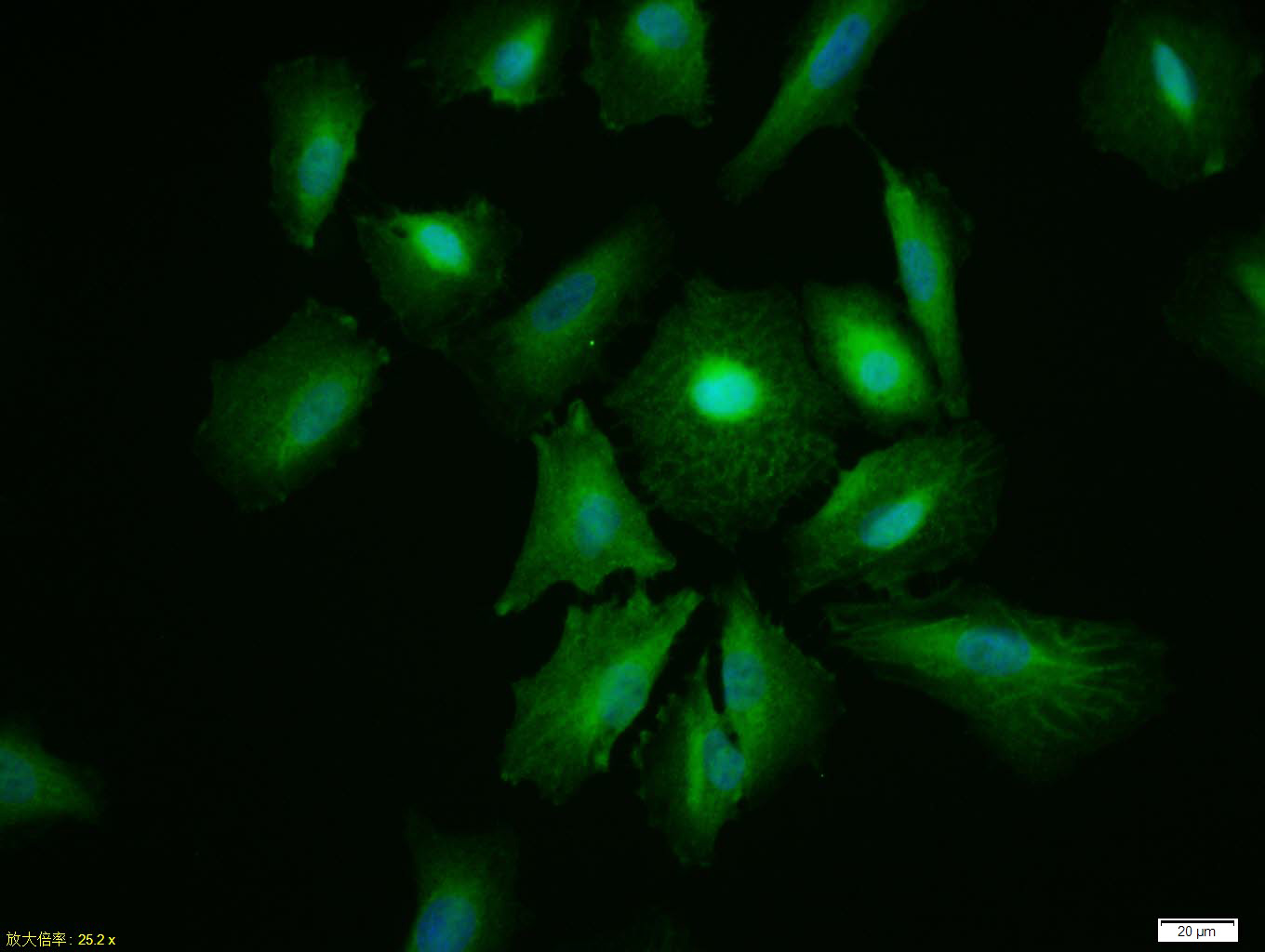
Lane 1: Mouse Placenta lysates;Lane 2: Mouse Lung lysates probed with AKT1/2/3 Polyclonal Antibody, unconjugated (bs-0115R) at 1:300 overnight at 4°C followed by a conjugated secondary antibody at 1:10000 for 60 minutes at 37°C.
AKT1 Polyclonal Antibody
BS-0115R

ApplicationsFlow Cytometry, ImmunoFluorescence, Western Blot, ELISA, ImmunoCytoChemistry, ImmunoHistoChemistry, ImmunoHistoChemistry Frozen, ImmunoHistoChemistry Paraffin
Product group Antibodies
ReactivityBovine, Canine, Chicken, Human, Mouse, Porcine, Rabbit, Rat, Sheep
TargetAKT1
Overview
- SupplierBioss
- Product NameAKT1 Polyclonal Antibody
- Delivery Days Customer16
- ApplicationsFlow Cytometry, ImmunoFluorescence, Western Blot, ELISA, ImmunoCytoChemistry, ImmunoHistoChemistry, ImmunoHistoChemistry Frozen, ImmunoHistoChemistry Paraffin
- Applications SupplierWB(1:300-5000), ELISA(1:500-1000), FCM(1:20-100), IHC-P(1:200-400), IHC-F(1:100-500), IF(IHC-P)(1:50-200), IF(IHC-F)(1:50-200), IF(ICC)(1:50-200)
- CertificationResearch Use Only
- ClonalityPolyclonal
- Concentration1 ug/ul
- ConjugateUnconjugated
- Gene ID207
- Target nameAKT1
- Target descriptionAKT serine/threonine kinase 1
- Target synonymsAKT, PKB, PKB-ALPHA, PRKBA, RAC, RAC-ALPHA, RAC-alpha serine/threonine-protein kinase, AKT1m, PKB alpha, RAC-PK-alpha, protein kinase B alpha, proto-oncogene c-Akt, rac protein kinase alpha, serine-threonine protein kinase, v-akt murine thymoma viral oncogene homolog 1, v-akt murine thymoma viral oncogene-like protein 1
- HostRabbit
- IsotypeIgG
- Protein IDP31749
- Protein NameRAC-alpha serine/threonine-protein kinase
- ReactivityBovine, Canine, Chicken, Human, Mouse, Porcine, Rabbit, Rat, Sheep
- Storage Instruction-20°C
- UNSPSC12352203
References
- Liu B, Zhang J, Hu S, et al. MicroRNA-379 mediates pigmentation, migration and proliferation of melanocytes by targeting the insulin-like growth factor 1 receptor. Exp Dermatol. 2020,29(5):467-476. doi: 10.1111/exd.14095Read this paper
- Kim K, Park S, Kim H, et al. Enterococcus faecium L-15 Extract Enhances the Self-Renewal and Proliferation of Mouse Skin-Derived Precursor Cells. Probiotics Antimicrob Proteins. 2020,12(4):1492-1501. doi: 10.1007/s12602-020-09635-wRead this paper
- Zhang Y, Sun L, Sun Y, et al. Overexpressed CES2 has prognostic value in CRC and knockdown CES2 reverses L-OHP-resistance in CRC cells by inhibition of the PI3K signaling pathway. Exp Cell Res. 2020,389(1):111856. doi: 10.1016/j.yexcr.2020.111856Read this paper
- Wang J , Xu H , Cheng X , et al. Calcium relieves fluoride-induced bone damage through the PI3K/AKT pathway. Food Funct. 2020,11(1):1155-1164. doi: 10.1039/c9fo02491cRead this paper
- Wang Y, Zhang C, Xu C, et al. H(2)S mediates apoptosis in response to inflammation through PI3K/Akt/NFκB signaling pathway. Biotechnol Lett. 2020,42(3):375-387. doi: 10.1007/s10529-019-02782-3Read this paper
- Kamohara A, Hirata H, Xu X, et al. IgG immune complexes with Staphylococcus aureus protein A enhance osteoclast differentiation and bone resorption by stimulating Fc receptors and TLR2. Int Immunol. 2020,32(2):89-104. doi: 10.1093/intimm/dxz063Read this paper
- Liu F, Wang L, Yi S, et al. Clinical and biological significances of heat shock protein 90 (Hsp90) in human nasopharyngeal carcinoma cells and anti-cancer effects of Hsp90 inhibitor. Biomed Pharmacother. 2019,120:109533. doi: 10.1016/j.biopha.2019.109533Read this paper
- Wang Z, Kuang G, Yu Z, et al. Light-activatable dual prodrug polymer nanoparticle for precise synergistic chemotherapy guided by drug-mediated computed tomography imaging. Acta Biomater. 2019,94:459-468. doi: 10.1016/j.actbio.2019.05.047Read this paper
- Zhang H, Su Y, Wang J, et al. Ginsenoside Rb1 promotes the growth of mink hair follicle via PI3K/AKT/GSK-3β signaling pathway. Life Sci. 2019,229:210-218. doi: 10.1016/j.lfs.2019.05.033Read this paper
- Tang Q, Ke H, Wu C, et al. Aqueous extract from You-Gui-Yin ameliorates cognitive impairment of chronic renal failure mice through targeting hippocampal CaMKIIα/CREB/BDNF and EPO/EPOR pathways. J Ethnopharmacol. 2019,239:111925. doi: 10.1016/j.jep.2019.111925Read this paper
Datasheet
Related products

Product group Antibodies

Anti-pAKT [AbAb-pAKT]AB04102-10.0
ApplicationsImmunoPrecipitation, Western Blot, ELISA
ReactivityHuman, Mouse
TargetAKT1
- SizePrice

Product group Antibodies

Anti-AKT1,2,3 Antibody Picoband(r)A00024-2-CARRIER-FREE
ApplicationsFlow Cytometry, ImmunoFluorescence, Western Blot, ELISA, ImmunoCytoChemistry
ReactivityHuman, Mouse, Rat
TargetAKT1
- SizePrice
Product group Antibodies

Anti-AKT1 Antibody144-11016
ApplicationsImmunoFluorescence, Western Blot, ImmunoHistoChemistry
ReactivityHuman, Mouse, Rat
TargetAKT1
- SizePrice

Product group Antibodies

Anti-AKT1 AntibodyAMAB90834
ApplicationsWestern Blot, ImmunoCytoChemistry
ReactivityHuman
TargetAKT1
- SizePrice
Product group Antibodies

ReactivityHuman
TargetAKT1
- SizePrice
Product group Antibodies

Akt1 Polyclonal AntibodyCAC07008
ApplicationsImmunoFluorescence, ImmunoPrecipitation, Western Blot, ELISA, ImmunoHistoChemistry
TargetAKT1
- SizePrice
Product group Antibodies
AKT1 Polyclonal AntibodyBS-0115M
ApplicationsImmunoFluorescence, Western Blot, ELISA, ImmunoCytoChemistry, ImmunoHistoChemistry, ImmunoHistoChemistry Frozen, ImmunoHistoChemistry Paraffin
ReactivityBovine, Canine, Chicken, Human, Mouse, Porcine, Rabbit, Rat, Sheep
TargetAKT1
- SizePrice
Product group Antibodies

AKT1/AKT2/AKT3 AntibodyCSB-PA000848
ApplicationsWestern Blot, ELISA, ImmunoHistoChemistry
ReactivityHuman, Mouse, Rat
TargetAKT1
- SizePrice