

AMPK alpha 1 (phospho Thr183) + AMPK alpha 2 (phospho Thr172) antibody
GTX130429

ApplicationsWestern Blot
Product group Antibodies
ReactivityHuman, Mouse
TargetPRKAA1
Overview
- SupplierGeneTex
- Product NameAMPK alpha 1 (phospho Thr183) + AMPK alpha 2 (phospho Thr172) antibody
- Delivery Days Customer9
- Application Supplier NoteWB: 1:500-1:3000. *Optimal dilutions/concentrations should be determined by the researcher.Not tested in other applications.
- ApplicationsWestern Blot
- CertificationResearch Use Only
- ClonalityPolyclonal
- Concentration1.5 mg/ml
- ConjugateUnconjugated
- Gene ID5562
- Target namePRKAA1
- Target descriptionprotein kinase AMP-activated catalytic subunit alpha 1
- Target synonymsAMPK, AMPK alpha 1, AMPKa1, 5'-AMP-activated protein kinase catalytic subunit alpha-1, 5'-AMP-activated protein kinase, catalytic alpha-1 chain, ACACA kinase, AMP -activate kinase alpha 1 subunit, AMP-activated protein kinase, catalytic, alpha-1, AMPK subunit alpha-1, AMPK, alpha, 1, HMGCR kinase, acetyl-CoA carboxylase kinase, hydroxymethylglutaryl-CoA reductase kinase, protein kinase, AMP-activated, alpha 1 catalytic subunit, tau-protein kinase PRKAA1
- HostRabbit
- IsotypeIgG
- Protein IDQ13131
- Protein Name5'-AMP-activated protein kinase catalytic subunit alpha-1
- Scientific DescriptionThe protein encoded by this gene belongs to the ser/thr protein kinase family. It is the catalytic subunit of the 5-prime-AMP-activated protein kinase (AMPK). AMPK is a cellular energy sensor conserved in all eukaryotic cells. The kinase activity of AMPK is activated by the stimuli that increase the cellular AMP/ATP ratio. AMPK regulates the activities of a number of key metabolic enzymes through phosphorylation. It protects cells from stresses that cause ATP depletion by switching off ATP-consuming biosynthetic pathways. Alternatively spliced transcript variants encoding distinct isoforms have been observed. [provided by RefSeq]
- ReactivityHuman, Mouse
- Storage Instruction-20°C or -80°C,2°C to 8°C
- UNSPSC12352203
References
- Suzuki K, Kubota Y, Kaneko K, et al. CLPX regulates mitochondrial fatty acid β-oxidation in liver cells. J Biol Chem. 2023,299(10):105210. doi: 10.1016/j.jbc.2023.105210Read this paper
- Su WP, Li CJ, Lin LT, et al. Boosting mitochondrial function and metabolism in aging female germ cells with dual ROCK/ROS inhibition. Biomed Pharmacother. 2023,163:114888. doi: 10.1016/j.biopha.2023.114888Read this paper
- Lee S, Jo M, Lee HE, et al. HEXA-018, a Novel Inducer of Autophagy, Rescues TDP-43 Toxicity in Neuronal Cells. Front Pharmacol. 2021,12:747975. doi: 10.3389/fphar.2021.747975Read this paper
- Jiang WP, Deng JS, Huang SS, et al. Sanghuangporus sanghuang Mycelium Prevents Paracetamol-Induced Hepatotoxicity through Regulating the MAPK/NF-κB, Keap1/Nrf2/HO-1, TLR4/PI3K/Akt, and CaMKKβ/LKB1/AMPK Pathways and Suppressing Oxidative Stress and Inflammation. Antioxidants (Basel). 2021,10(6). doi: 10.3390/antiox10060897Read this paper
- Houshmand F, Barati M, Golab F, et al. Metformin-induced AMPK activation stimulates remyelination through induction of neurotrophic factors, downregulation of NogoA and recruitment of Olig2+ precursor cells in the cuprizone murine model of multiple sclerosis. Daru. 2019,27(2):583-592. doi: 10.1007/s40199-019-00286-zRead this paper
- Irungbam K, Churin Y, Matono T, et al. Cannabinoid receptor 1 knockout alleviates hepatic steatosis by downregulating perilipin 2. Lab Invest. 2020,100(3):454-465. doi: 10.1038/s41374-019-0327-5Read this paper
- Lin YN, Chang HY, Wang CCN, et al. Oleanolic Acid Inhibits Liver X Receptor Alpha and Pregnane X Receptor to Attenuate Ligand-Induced Lipogenesis. J Agric Food Chem. 2018,66(42):10964-10976. doi: 10.1021/acs.jafc.8b03372Read this paper
Datasheet
Related products

Product group Antibodies

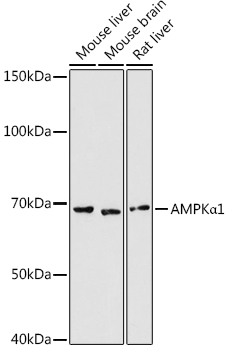
PRKAA1 Polyclonal AntibodyCAC14615
ApplicationsImmunoFluorescence, Western Blot, ELISA, ImmunoHistoChemistry
ReactivityMouse
TargetPRKAA1
- SizePrice
Product group Antibodies

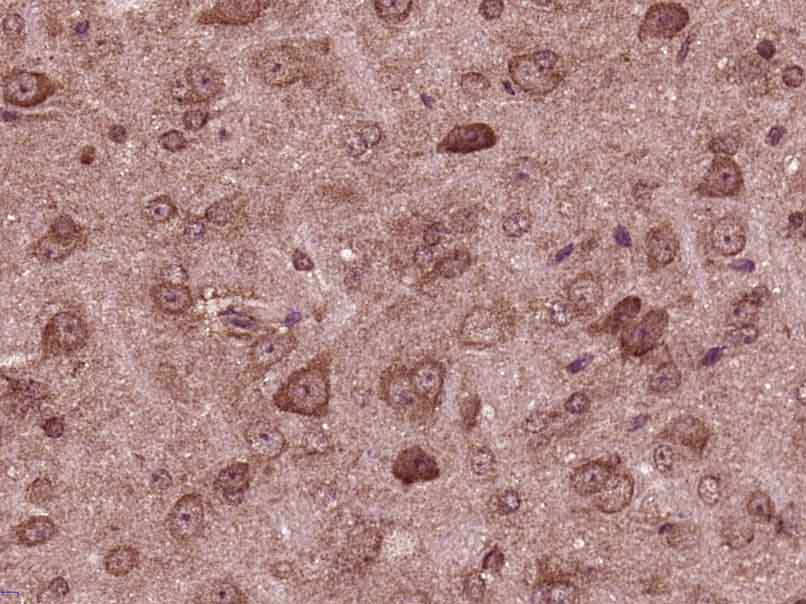
ApplicationsImmunoFluorescence, Western Blot, ImmunoCytoChemistry
ReactivityHuman, Mouse, Rat
- SizePrice

Product group Antibodies
References

AMPK alpha-1 Polyclonal AntibodyBS-10344R
ApplicationsFlow Cytometry, Western Blot, ELISA, ImmunoHistoChemistry, ImmunoHistoChemistry Paraffin
ReactivityBovine, Human, Mouse, Rabbit, Rat, Sheep
TargetPRKAA1
- SizePrice

Product group Antibodies
ApplicationsWestern Blot, ImmunoHistoChemistry, ImmunoHistoChemistry Paraffin
ReactivityHuman
TargetPRKAA1
- SizePrice
Product group Antibodies
ApplicationsImmunoHistoChemistry, ImmunoHistoChemistry Paraffin
ReactivityHuman
TargetPRKAA1
- SizePrice
Product group Antibodies
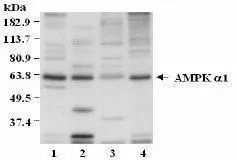
AMPK alpha 1 antibodyGTX23759
ApplicationsImmunoPrecipitation, Western Blot, ImmunoHistoChemistry
ReactivityBovine, Human, Mouse, Rat
TargetPRKAA1
- SizePrice
Product group Antibodies
AMPK alpha 1 antibodyGTX112999
ApplicationsWestern Blot
ReactivityHuman, Mouse
TargetPRKAA1
- SizePrice