

Anti-B3GAT1 Antibody
ER1901-83

ApplicationsImmunoFluorescence, Western Blot, ImmunoHistoChemistry, ImmunoHistoChemistry Paraffin
Product group Antibodies
ReactivityHuman, Mouse, Rat
TargetB3GAT1
Overview
- SupplierHUABIO
- Product NameAnti-B3GAT1 Antibody
- Delivery Days Customer7
- ApplicationsImmunoFluorescence, Western Blot, ImmunoHistoChemistry, ImmunoHistoChemistry Paraffin
- Applications SupplierWB,IHC-P,IF-Cell
- CertificationResearch Use Only
- ClonalityPolyclonal
- Concentration1 mg/ml
- ConjugateUnconjugated
- Gene ID27087
- Target nameB3GAT1
- Target descriptionbeta-1,3-glucuronyltransferase 1
- Target synonymsCD57, GLCATP, GLCUATP, HNK1, LEU7, NK-1, NK1, galactosylgalactosylxylosylprotein 3-beta-glucuronosyltransferase 1, LEU7 antigen, UDP-GlcUA:glycoprotein beta-1,3-glucuronyltransferase, glucuronosyltransferase P
- HostRabbit
- IsotypeIgG
- Protein IDO35789
- Protein NameGalactosylgalactosylxylosylprotein 3-beta-glucuronosyltransferase 1
- Scientific DescriptionGalactosylgalactosylxylosylprotein 3-beta-glucuronosyltransferase 1 (B3GAT1) is an enzyme that in humans is encoded by the B3GAT1 gene, whose enzymatic activity creates the CD57 epitope on other cell surface proteins. In immunology, the CD57 antigen (CD stands for cluster of differentiation) is also known as HNK1 (human natural killer-1) or LEU7. It is expressed as a carbohydrate epitope that contains a sulfoglucuronyl residue in several adhesion molecules of the nervous system. The protein encoded by this gene is a member of the glucuronyltransferase gene family. These enzymes exhibit strict acceptor specificity, recognizing nonreducing terminal sugars and their anomeric linkages. This gene product functions as the key enzyme in a glucuronyl transfer reaction during the biosynthesis of the carbohydrate epitope HNK-1 (human natural killer-1, also known as CD57 and LEU7). Alternate transcriptional splice variants have been characterized. In anatomical pathology, CD57 (immunostaining) is similar to CD56 for use in differentiating neuroendocrine tumors from others. There is an increase in the number of circulating CD57 positive cells in the blood of patients who have recently undergone organ or tissue transplants, especially of the bone marrow, and in patients with HIV.
- ReactivityHuman, Mouse, Rat
- Reactivity SupplierHuman,Mouse,Rat
- Storage Instruction-20°C,2°C to 8°C
- UNSPSC41116161
Datasheet
Related products
Product group Antibodies

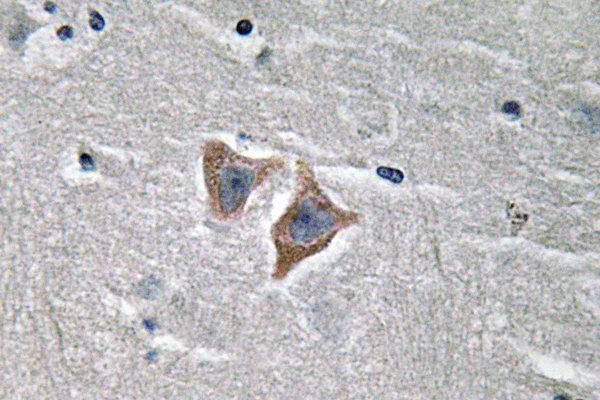
B3GAT1 AntibodyCSB-PA008860
ApplicationsELISA, ImmunoHistoChemistry
ReactivityHuman, Mouse, Rat
TargetB3GAT1
- SizePrice
Product group Antibodies

Anti-CD57 AntibodyA97790
ApplicationsELISA, ImmunoHistoChemistry
ReactivityHuman, Mouse, Rat
- SizePrice
Product group Antibodies

ApplicationsFlow Cytometry, Western Blot, ImmunoHistoChemistry
ReactivityHuman
TargetB3GAT1
- SizePrice

Product group Antibodies

Anti-B3GAT1 AntibodyAMAB91575
ApplicationsWestern Blot, ImmunoCytoChemistry
ReactivityHuman
TargetB3GAT1
- SizePrice

Product group Antibodies

ApplicationsFlow Cytometry, Western Blot, ImmunoCytoChemistry, ImmunoHistoChemistry, ImmunoHistoChemistry Frozen, ImmunoHistoChemistry Paraffin
ReactivityHuman
TargetB3GAT1
- SizePrice
Product group Antibodies

B3GAT1 AntibodyLS-C831714
ApplicationsWestern Blot, ELISA
ReactivityHuman, Mouse, Rat
TargetB3GAT1
- SizePrice

Product group Antibodies

ApplicationsFlow Cytometry
TargetB3GAT1
- SizePrice
Product group Antibodies

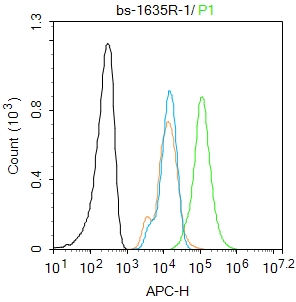
B3GAT1 Polyclonal AntibodyBS-1635R
ApplicationsFlow Cytometry, ImmunoFluorescence, Western Blot, ELISA, ImmunoCytoChemistry, ImmunoHistoChemistry, ImmunoHistoChemistry Frozen, ImmunoHistoChemistry Paraffin
ReactivityChicken, Human, Mouse, Rat
TargetB3GAT1
- SizePrice
![IHC-P analysis of human adrenal gland tissue using GTX00463 CD57 antibody [TB01]. Diultion : 10μg/ml](https://www.genetex.com/upload/website/prouct_img/normal/GTX00463/GTX00463_20191025_AP_003_3_w_23053121_907.webp)
Product group Antibodies

CD57 antibody [TB01]GTX00463
ApplicationsFlow Cytometry, ImmunoFluorescence, Western Blot, ImmunoCytoChemistry, ImmunoHistoChemistry, ImmunoHistoChemistry Frozen, ImmunoHistoChemistry Paraffin
ReactivityHuman
TargetB3GAT1
- SizePrice