

Anti-SNAIL Antibody
ER1706-22

ApplicationsImmunoFluorescence, Western Blot
Product group Antibodies
ReactivityHuman, Mouse
TargetSNAI1
Overview
- SupplierHUABIO
- Product NameAnti-SNAIL Antibody
- Delivery Days Customer7
- ApplicationsImmunoFluorescence, Western Blot
- Applications SupplierWB,IF-Cell,IHC-P
- CertificationResearch Use Only
- ClonalityPolyclonal
- Concentration2 mg/ml
- ConjugateUnconjugated
- Gene ID6615
- Target nameSNAI1
- Target descriptionsnail family transcriptional repressor 1
- Target synonymsSLUGH2, SNA, SNAH, SNAIL, SNAIL1, dJ710H13.1, zinc finger protein SNAI1, protein sna, protein snail homolog 1, snail 1 homolog, snail 1 zinc finger protein, snail family zinc finger 1, snail homolog 1
- HostRabbit
- IsotypeIgG
- Protein IDO95863
- Protein NameZinc finger protein SNAI1
- Scientific DescriptionThe Snail family of developmental regulatory proteins is a group of widely conserved zinc-finger proteins that regulate transcription and include the mammalian proteins SLUG, SNAI 1, the human homolog of Drosophila SNAIL, and Smuc. SNAI 1 and SLUG are expressed in placenta and adult heart, liver, and skeletal muscle. SNAI 1, and the corresponding mouse homolog Sna, each contain three classic zinc fingers and one atypical zinc finger, while SLUG contains five zinc finger regions and a transcriptional repression domain at the amino terminus, which enables SLUG to act as a negative regulator of gene expression. SLUG is implicated in the generation and migration of neural crest cells in human embryos and also contributes to limb bud development. In addition, SLUG also constitutes a cellular anti-apoptotic transcription factor that effectively prevents apoptosis in murine pro-B cells deprived of IL-3. The Snail-related gene from murine skeletal muscle cells, Smuc, is highly expressed in skeletal muscle and thymus and can, likewise, repress gene transcription. Smuc preferentially associates with CAGGTG and CACCTG E-box motifs (CANNTG) on DNA and involves the five putative DNA-binding zinc finger domains at the C-terminal region of Smuc.
- ReactivityHuman, Mouse
- Reactivity SupplierHuman,Mouse
- Storage Instruction-20°C,2°C to 8°C
- UNSPSC41116161
Datasheet
Related products

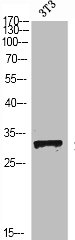
Product group Antibodies

SNAI1 AntibodyCSB-PA004123
ApplicationsImmunoFluorescence, Western Blot, ELISA, ImmunoHistoChemistry
ReactivityHuman, Monkey, Mouse
TargetSNAI1
- SizePrice

Product group Antibodies

Anti-SNAIL/SNAI1 Antibody Picoband(r)A00716-2-CARRIER-FREE
ApplicationsFlow Cytometry, Western Blot, ELISA
ReactivityHuman, Mouse, Rat
TargetSNAI1
- SizePrice
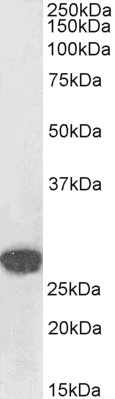
Product group Antibodies

ApplicationsWestern Blot, ELISA
ReactivityHuman, Mouse
- SizePrice
Product group Antibodies

SNAI1 (Phospho-Ser246) AntibodyABX012522
ApplicationsImmunoFluorescence, Western Blot, ELISA, ImmunoCytoChemistry
- SizePrice

Product group Antibodies

Anti-SNAI1 AntibodyAMAB91215
ApplicationsImmunoCytoChemistry, ImmunoHistoChemistry
ReactivityHuman
TargetSNAI1
- SizePrice
Product group Antibodies

ApplicationsWestern Blot, ELISA, ImmunoHistoChemistry
ReactivityHuman, Mouse, Rat
TargetSNAI1
- SizePrice
Product group Antibodies

SNAI1 / SNAIL-1 AntibodyLS-C404293
ApplicationsWestern Blot, ELISA, ImmunoHistoChemistry
ReactivityHuman, Mouse
TargetSNAI1
- SizePrice
Product group Antibodies

ApplicationsImmunoPrecipitation, Western Blot, ImmunoCytoChemistry, ImmunoHistoChemistry
TargetSNAI1
- SizePrice
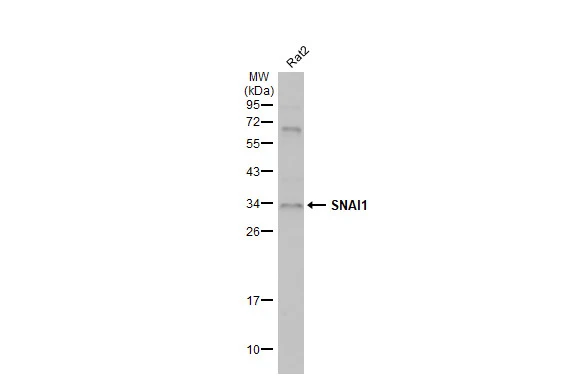
Product group Antibodies

SNAI1 antibodyGTX100754
ApplicationsImmunoFluorescence, Western Blot, ImmunoCytoChemistry, ImmunoHistoChemistry, ImmunoHistoChemistry Paraffin
ReactivityHuman, Mouse, Rat
TargetSNAI1
- SizePrice