


Figure 1. Western blot analysis of Survivin/BIRC5 using anti-Survivin/BIRC5 antibody (RP1026). Electrophoresis was performed on a 5-20% SDS-PAGE gel at 70V (Stacking gel) / 90V (Resolving gel) for 2-3 hours. The sample well of each lane was loaded with 30 ug of sample under reducing conditions. Lane 1: human Hela whole cell lysates, Lane 2: human Jurkat whole cell lysates, Lane 3: human 293T whole cell lysates. After electrophoresis, proteins were transferred to a nitrocellulose membrane at 150 mA for 50-90 minutes. Blocked the membrane with 5% non-fat milk/TBS for 1.5 hour at RT. The membrane was incubated with rabbit anti-Survivin/BIRC5 antigen affinity purified polyclonal antibody (Catalog # RP1026) at 0.5 microg/mL overnight at 4°C, then washed with TBS-0.1%Tween 3 times with 5 minutes each and probed with a goat anti-rabbit IgG-HRP secondary antibody at a dilution of 1:5000 for 1.5 hour at RT. The signal is developed using an Enhanced Chemiluminescent detection (ECL) kit (Catalog # EK1002) with Tanon 5200 system. A specific band was detected for Survivin/BIRC5 at approximately 16 kDa. The expected band size for Survivin/BIRC5 is at 16 kDa.

Figure 1. Western blot analysis of Survivin/BIRC5 using anti-Survivin/BIRC5 antibody (RP1026). Electrophoresis was performed on a 5-20% SDS-PAGE gel at 70V (Stacking gel) / 90V (Resolving gel) for 2-3 hours. The sample well of each lane was loaded with 30 ug of sample under reducing conditions. Lane 1: human Hela whole cell lysates, Lane 2: human Jurkat whole cell lysates, Lane 3: human 293T whole cell lysates. After electrophoresis, proteins were transferred to a nitrocellulose membrane at 150 mA for 50-90 minutes. Blocked the membrane with 5% non-fat milk/TBS for 1.5 hour at RT. The membrane was incubated with rabbit anti-Survivin/BIRC5 antigen affinity purified polyclonal antibody (Catalog # RP1026) at 0.5 microg/mL overnight at 4°C, then washed with TBS-0.1%Tween 3 times with 5 minutes each and probed with a goat anti-rabbit IgG-HRP secondary antibody at a dilution of 1:5000 for 1.5 hour at RT. The signal is developed using an Enhanced Chemiluminescent detection (ECL) kit (Catalog # EK1002) with Tanon 5200 system. A specific band was detected for Survivin/BIRC5 at approximately 16 kDa. The expected band size for Survivin/BIRC5 is at 16 kDa.
Anti-survivin/BIRC5 Antibody Picoband(r)
RP1026

ApplicationsWestern Blot, ELISA, ImmunoHistoChemistry
Product group Antibodies
ReactivityHuman
TargetBIRC5
Overview
- SupplierBoster Bio
- Product NameAnti-survivin/BIRC5 Antibody Picoband(r)
- Delivery Days Customer9
- Application Supplier NoteWB: The detection limit for BIRC5 is approximately 0.5ng/lane under reducing conditions. By Heat: Boiling the paraffin sections in 10mM citrate buffer, pH6.0, for 20mins is required for the staining of formalin/paraffin sections. Other applications have not been tested. Optimal dilutions should be determined by end users.
- ApplicationsWestern Blot, ELISA, ImmunoHistoChemistry
- Applications SupplierELI, IHP, WB, IHC
- CertificationResearch Use Only
- ClonalityPolyclonal
- Concentration500 ug/ml
- Gene ID332
- Target nameBIRC5
- Target descriptionbaculoviral IAP repeat containing 5
- Target synonymsAPI4, EPR-1, baculoviral IAP repeat-containing protein 5, apoptosis inhibitor 4, apoptosis inhibitor survivin
- HostRabbit
- IsotypeIgG
- Protein IDO15392
- Protein NameBaculoviral IAP repeat-containing protein 5
- Scientific DescriptionBoster Bio Anti-survivin/BIRC5 Antibody catalog # RP1026. Tested in ELISA, IHC, WB applications. This antibody reacts with Human. The brand Picoband indicates this is a premium antibody that guarantees superior quality, high affinity, and strong signals with minimal background in Western blot applications. Only our best-performing antibodies are designated as Picoband, ensuring unmatched performance.
- ReactivityHuman
- Reactivity SupplierHuman
- Storage Instruction-20°C,2°C to 8°C
- UNSPSC12352203
References
- Lotti R, Palazzo E, Quadri M, et al. Isolation of an "Early" Transit Amplifying Keratinocyte Population in Human Epidermis: A Role for the Low Affinity Neurotrophin Receptor CD271. Stem Cells. 2022,40(12):1149-1161. doi: 10.1093/stmcls/sxac060Read this paper
- Yin G, Li X, Wang X, et al. Effect of 5-aminolevulinic acid photodynamic therapy on the expression of apoptosis inhibitors Bcl-2 and Survivin in keratinocytes of condyloma acuminatum. Photodiagnosis Photodyn Ther. 2019,28:53-57. doi: 10.1016/j.pdpdt.2019.07.018Read this paper
- Huang KF, Huang XP, Xiao GQ, et al. Kallistatin, a novel anti-angiogenesis agent, inhibits angiogenesis via inhibition of the NF-κB signaling pathway. Biomed Pharmacother. 2014,68(4):455-61. doi: 10.1016/j.biopha.2014.03.005Read this paper
- Li G, Zhang S, Fang H, et al. Aspirin overcomes Navitoclax-resistance in hepatocellular carcinoma cells through suppression of Mcl-1. Biochem Biophys Res Commun. 2013,434(4):809-14. doi: 10.1016/j.bbrc.2013.04.018Read this paper
- Rasul A, Bao R, Malhi M, et al. Induction of apoptosis by costunolide in bladder cancer cells is mediated through ROS generation and mitochondrial dysfunction. Molecules. 2013,18(2):1418-33. doi: 10.3390/molecules18021418Read this paper
- Tang C, Lu YH, Xie JH, et al. Downregulation of survivin and activation of caspase-3 through the PI3K/Akt pathway in ursolic acid-induced HepG2 cell apoptosis. Anticancer Drugs. 2009,20(4):249-58. doi: 10.1097/CAD.0b013e328327d476Read this paper
- Fang W, Li X, Jiang Q, et al. Transcriptional patterns, biomarkers and pathways characterizing nasopharyngeal carcinoma of Southern China. J Transl Med. 2008,6:32. doi: 10.1186/1479-5876-6-32Read this paper
Datasheet
MSDS
Related products

Product group Antibodies
Anti-Survivin/BIRC5 Antibody Picoband(r)A00379-CARRIER-FREE
ApplicationsWestern Blot, ELISA, ImmunoHistoChemistry
ReactivityHuman, Mouse, Rat
TargetBIRC5
- SizePrice
Product group Antibodies

Anti-Survivin Antibody130-10048
ApplicationsELISA
ReactivityHuman
TargetBIRC5
- SizePrice
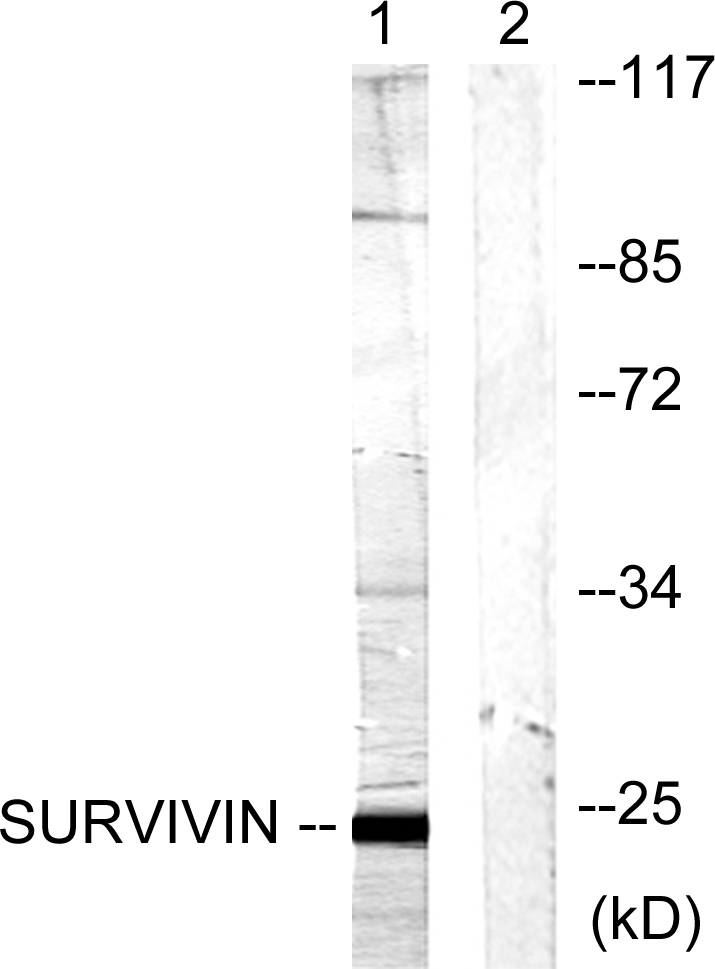
Product group Antibodies

Anti-Survivin AntibodyA94872
ApplicationsImmunoFluorescence, Western Blot, ELISA, ImmunoHistoChemistry
ReactivityHuman, Mouse, Rat
- SizePrice

Product group Antibodies

Anti-BIRC5 AntibodyAMAB91761
ApplicationsWestern Blot
ReactivityHuman
TargetBIRC5
- SizePrice
Product group Antibodies

ApplicationsELISA
ReactivityHuman
TargetBIRC5
- SizePrice

Product group Antibodies

Goat anti-Survivin / BIRC5EB06448
ApplicationsWestern Blot, ELISA
ReactivityBovine, Canine, Feline, Human, Porcine
TargetBIRC5
- SizePrice
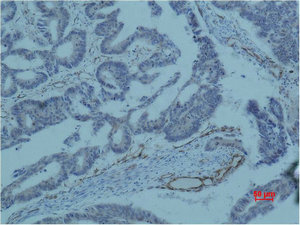
Product group Antibodies

BIRC5 Monoclonal AntibodyCSB-MA080214
ApplicationsWestern Blot, ELISA, ImmunoHistoChemistry
ReactivityHuman, Rat
TargetBIRC5
- SizePrice
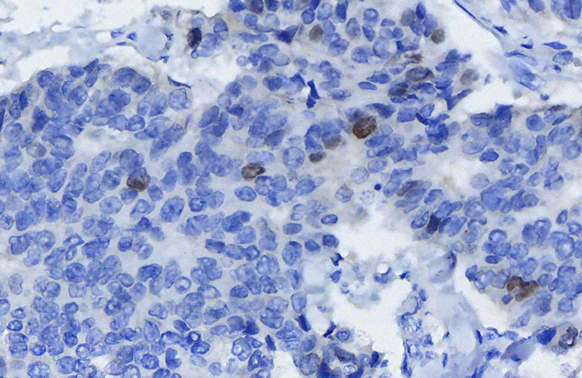
Product group Antibodies

Survivin antibodyGTX100052
ApplicationsImmunoFluorescence, ImmunoPrecipitation, Western Blot, ImmunoCytoChemistry, ImmunoHistoChemistry, ImmunoHistoChemistry Paraffin
ReactivityHuman, Mouse
TargetBIRC5
- SizePrice
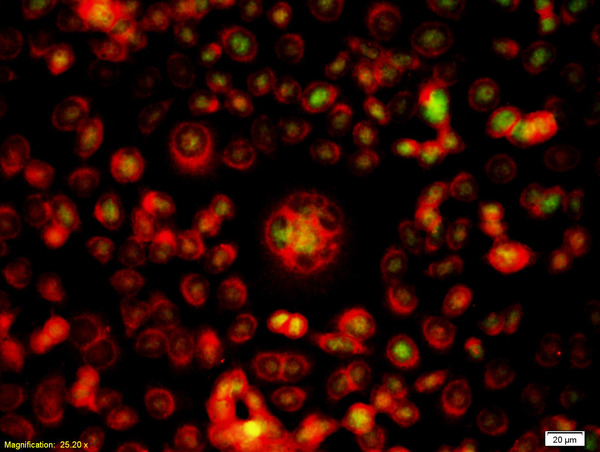
Product group Antibodies
References

Survivin Polyclonal AntibodyBS-0615R
ApplicationsFlow Cytometry, ImmunoFluorescence, Western Blot, ELISA, ImmunoCytoChemistry, ImmunoHistoChemistry, ImmunoHistoChemistry Frozen, ImmunoHistoChemistry Paraffin
ReactivityBovine, Canine, Equine, Guinea Pig, Human, Mouse, Porcine, Rat
TargetBIRC5
- SizePrice