

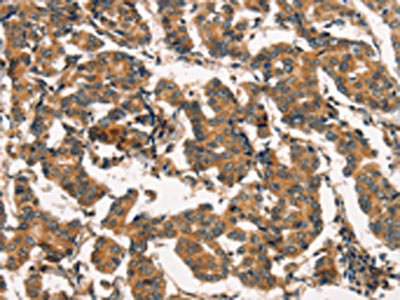
The image on the left is immunohistochemistry of paraffin-embedded Human breast cancer tissue using CSB-PA157358(ARL6IP1 Antibody) at dilution 1/20, on the right is treated with fusion protein. (Original magnification: x200)
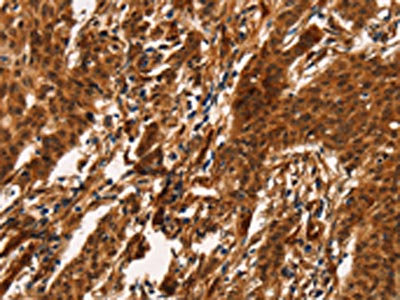
The image on the left is immunohistochemistry of paraffin-embedded Human breast cancer tissue using CSB-PA157358(ARL6IP1 Antibody) at dilution 1/20, on the right is treated with fusion protein. (Original magnification: x200)
ARL6IP1 Antibody
CSB-PA157358

ApplicationsELISA, ImmunoHistoChemistry
Product group Antibodies
ReactivityHuman, Mouse
TargetARL6IP1
Overview
- SupplierCusabio
- Product NameARL6IP1 Antibody
- Delivery Days Customer20
- ApplicationsELISA, ImmunoHistoChemistry
- CertificationResearch Use Only
- ClonalityPolyclonal
- ConjugateUnconjugated
- Gene ID23204
- Target nameARL6IP1
- Target descriptionARL6 interacting reticulophagy regulator 1
- Target synonymsAIP1, ARL6IP, ARMER, SPG61, ADP-ribosylation factor-like protein 6-interacting protein 1, ADP ribosylation factor like GTPase 6 interacting protein 1, ADP-ribosylation factor GTPase 6 interacting protein 1, ADP-ribosylation factor-like 6 interacting protein 1, ARF like GTPase 6 interacting protein 1, ARL-6-interacting protein 1, aip-1, apoptotic regulator in the membrane of the endoplasmic reticulum
- HostRabbit
- IsotypeIgG
- Protein IDQ15041
- Protein NameADP-ribosylation factor-like protein 6-interacting protein 1
- Scientific DescriptionARMER (apoptotic regulator in the membrane of the endoplasmic reticulum), also known as ADP-ribosylation-like factor 6-interacting protein 1 (ARL6IP1 or AIP1), is a multi-pass membrane protein that belongs to the Ras superfamily. It is expressed in brain, thymus, lung, bone marrow and, to a lesser extent, in spleen, kidney and liver. ARMER is not found in the heart and is found predominantly in early myeloid progenitor cells localizing to the intracytoplasmic membranes. It interacts with ARL6, inhibits caspase-9 activity by inhibiting proteolysis of downstream substrates (including LEHD-AFC, vimentin and caspase-3) and is down-regulated during myeloid differentiation. ARMER may play a role in membrane trafficking, protein transport or cell signaling during hematopoietic maturation.
- ReactivityHuman, Mouse
- Storage Instruction-20°C or -80°C
- UNSPSC41116161
Related products
Product group Antibodies

Anti-ARL6IP1 AntibodyA91662
ApplicationsImmunoFluorescence, Western Blot, ImmunoCytoChemistry, ImmunoHistoChemistry
ReactivityHuman, Mouse, Rat
- SizePrice

Product group Antibodies

ApplicationsImmunoFluorescence, Western Blot, ELISA, ImmunoHistoChemistry, ImmunoHistoChemistry Paraffin
ReactivityHuman, Mouse
TargetARL6IP1
- SizePrice
Product group Antibodies

Anti-ARL6IP1 Antibody144-64800
ApplicationsImmunoFluorescence, Western Blot, ImmunoHistoChemistry
ReactivityHuman, Mouse, Rat
TargetARL6IP1
- SizePrice
Product group Antibodies
References

ARMER antibodyGTX85516
ApplicationsWestern Blot, ELISA, ImmunoHistoChemistry, ImmunoHistoChemistry Frozen, ImmunoHistoChemistry Paraffin
ReactivityHuman, Mouse, Rat
TargetARL6IP1
- SizePrice

Product group Antibodies

Anti-ARL6IP1 AntibodyHPA045307
ApplicationsImmunoHistoChemistry
ReactivityHuman
TargetARL6IP1
- SizePrice
Product group Antibodies

ARL6IP1 / ARMER Antibody (FITC)LS-C395542
ApplicationsELISA
ReactivityHuman
TargetARL6IP1
- SizePrice