

Immunohistochemistry of paraffin-embedded Human liver cancer tissue using BRCA1 Polyclonal Antibody at dilution 1:35
Immunohistochemistry of paraffin-embedded Human liver cancer tissue using BRCA1 Polyclonal Antibody at dilution 1:35
BRCA1 Polyclonal Antibody
E-AB-10188

ApplicationsImmunoHistoChemistry
Product group Antibodies
TargetBRCA1
Overview
- SupplierElabscience
- Product NameBRCA1 Polyclonal Antibody
- Delivery Days Customer12
- ApplicationsImmunoHistoChemistry
- Applications SupplierELISA IHC
- CertificationResearch Use Only
- ClonalityPolyclonal
- Concentration0.3 mg/ml
- ConjugateUnconjugated
- Gene ID672
- Target nameBRCA1
- Target descriptionBRCA1 DNA repair associated
- Target synonymsBRCAI, BRCC1, BROVCA1, FANCS, IRIS, PNCA4, PPP1R53, PSCP, RNF53, breast cancer type 1 susceptibility protein, BRCA1/BRCA2-containing complex, subunit 1, Fanconi anemia, complementation group S, RING finger protein 53, breast and ovarian cancer susceptibility protein 1, breast cancer 1, early onset, early onset breast cancer 1, protein phosphatase 1, regulatory subunit 53
- HostRabbit
- IsotypeIgG
- Protein IDP38398
- Protein NameBreast cancer type 1 susceptibility protein
- Scientific DescriptionThis gene encodes a nuclear phosphoprotein that plays a role in maintaining genomic stability, and it also acts as a tumor suppressor. The encoded protein combines with other tumor suppressors, DNA damage sensors, and signal transducers to form a large multi-subunit protein complex known as the BRCA1-associated genome surveillance complex (BASC). This gene product associates with RNA polymerase II, and through the C-terminal domain, also interacts with histone deacetylase complexes. This protein thus plays a role in transcription, DNA repair of double-stranded breaks, and recombination. Mutations in this gene are responsible for approximately 40% of inherited breast cancers and more than 80% of inherited breast and ovarian cancers. Alternative splicing plays a role in modulating the subcellular localization and physiological function of this gene.
- Storage Instruction-20°C
- UNSPSC41116161
MSDS
Related products
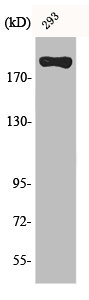
Product group Antibodies

BRCA1 AntibodyCSB-PA001041
ApplicationsWestern Blot, ELISA, ImmunoHistoChemistry
ReactivityHuman
TargetBRCA1
- SizePrice


Product group Antibodies

Anti-BRCA1 Antibody Picoband(r)A00005-2-CARRIER-FREE
ApplicationsFlow Cytometry, Western Blot, ELISA
ReactivityHuman
TargetBRCA1
- SizePrice
Product group Antibodies

Anti-BRCA1 AntibodyA100691
ApplicationsELISA, ImmunoHistoChemistry
ReactivityHuman
- SizePrice
Product group Antibodies

BRCA1 AntibodyLS-C763506
ApplicationsImmunoHistoChemistry
ReactivityHuman
TargetBRCA1
- SizePrice

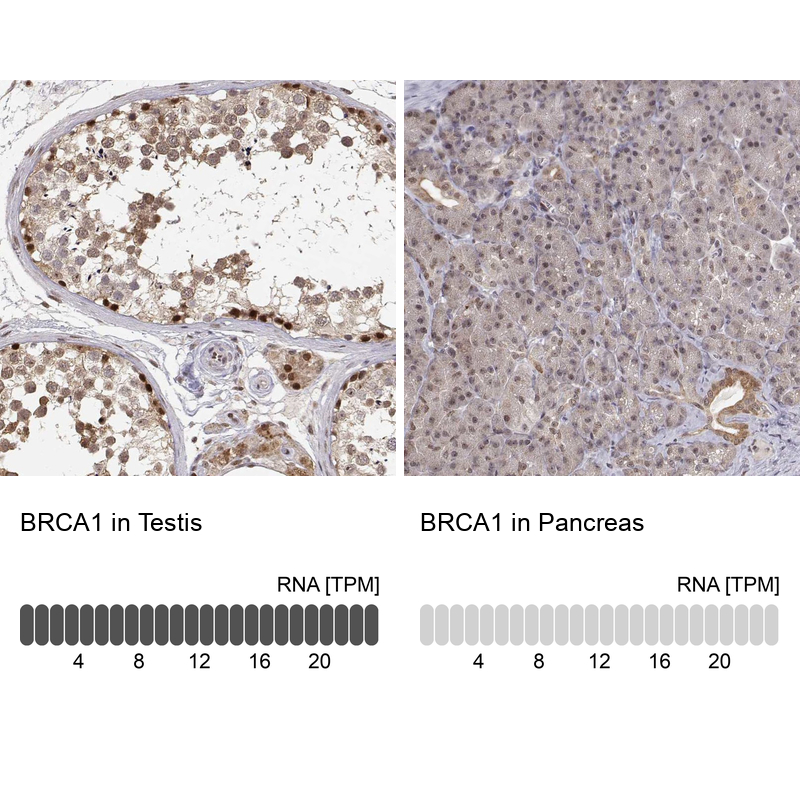
Product group Antibodies

Anti-BRCA1 AntibodyHPA057371
ApplicationsImmunoHistoChemistry
ReactivityHuman
TargetBRCA1
- SizePrice
Product group Antibodies

ApplicationsImmunoPrecipitation, Western Blot, ImmunoCytoChemistry, ImmunoHistoChemistry
ReactivityMouse, Rat
TargetBRCA1
- SizePrice
![A549 whole cell and nuclear extracts (30 μg) were separated by 5% SDS-PAGE, and the membrane was blotted with BRCA1 antibody [C3], C-term (GTX100720) diluted at 1:500. The HRP-conjugated anti-rabbit IgG antibody (GTX213110-01) was used to detect the primary antibody.](https://www.genetex.com/upload/website/prouct_img/normal/GTX100720/GTX100720_39988_20180504_WB_Fraction_w_23060100_697.webp)
Product group Antibodies

BRCA1 antibody [C3], C-termGTX100720
ApplicationsImmunoFluorescence, Western Blot, ImmunoCytoChemistry
ReactivityHuman
TargetBRCA1
- SizePrice
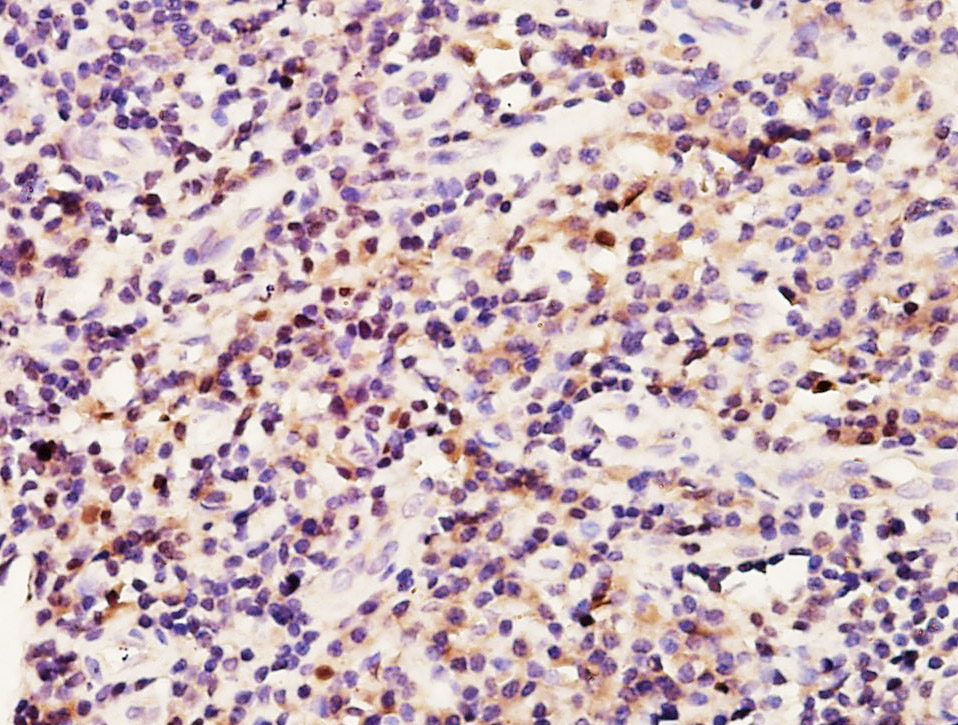
Product group Antibodies

BRCA1 Polyclonal AntibodyBS-0802R
ApplicationsImmunoFluorescence, Western Blot, ELISA, ImmunoCytoChemistry, ImmunoHistoChemistry, ImmunoHistoChemistry Frozen, ImmunoHistoChemistry Paraffin
ReactivityHuman
TargetBRCA1
- SizePrice