

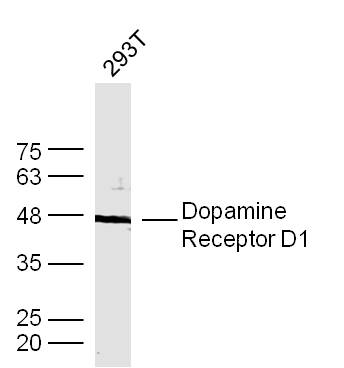
Human 293T cells probed with DRD1 Polyclonal Antibody, unconjugated (bs-1007R) at 1:300 overnight at 4°C followed by a conjugated secondary antibody at 1:10000 for 90 minutes at 37°C.
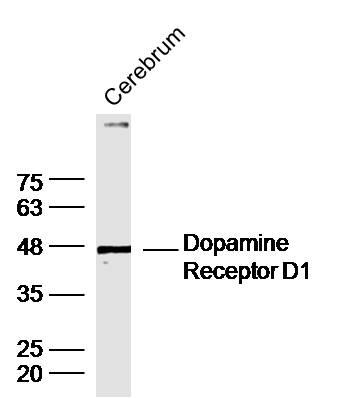
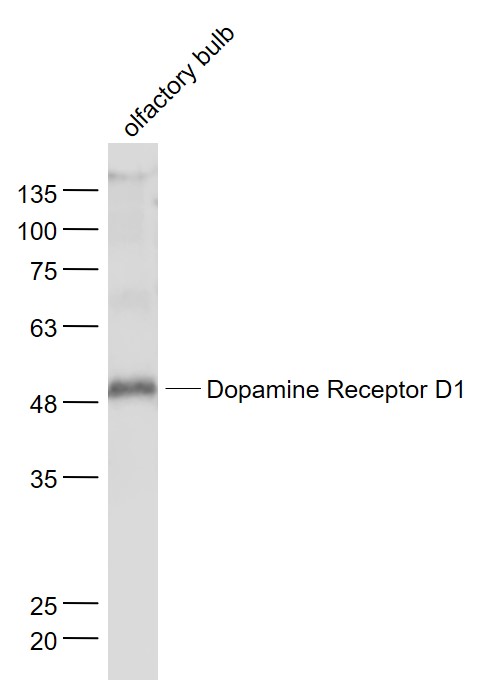
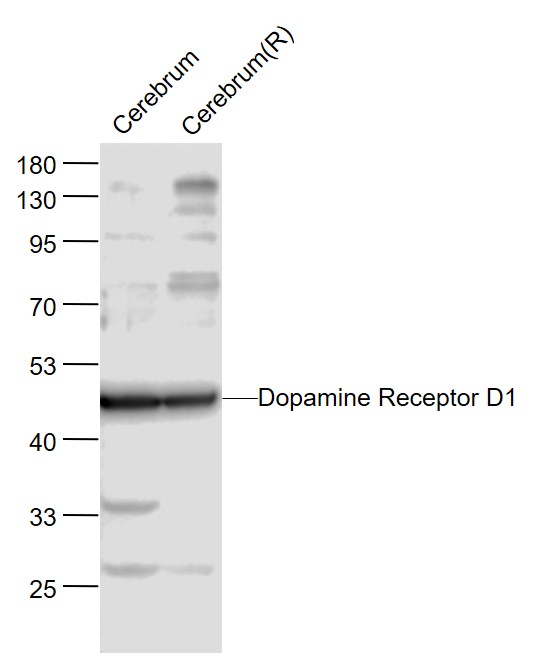
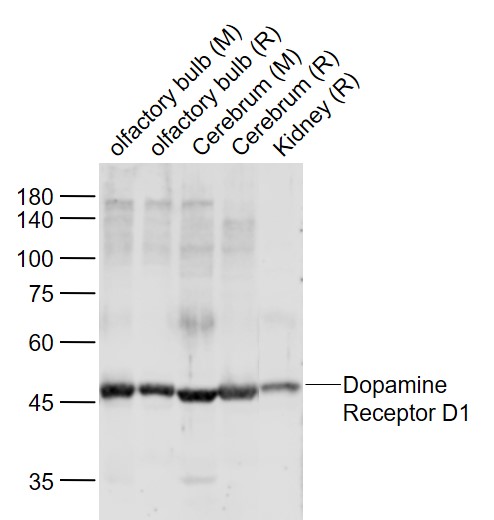

Human 293T cells probed with DRD1 Polyclonal Antibody, unconjugated (bs-1007R) at 1:300 overnight at 4°C followed by a conjugated secondary antibody at 1:10000 for 90 minutes at 37°C.
DRD1 Polyclonal Antibody
BS-1007R

ApplicationsFlow Cytometry, ImmunoFluorescence, ImmunoHistoChemistry, ImmunoHistoChemistry Frozen, ImmunoHistoChemistry Paraffin
Product group Antibodies
ReactivityHuman, Mouse, Rat
TargetDRD1
Overview
- SupplierBioss
- Product NameDRD1 Polyclonal Antibody
- Delivery Days Customer16
- ApplicationsFlow Cytometry, ImmunoFluorescence, ImmunoHistoChemistry, ImmunoHistoChemistry Frozen, ImmunoHistoChemistry Paraffin
- Applications SupplierIHC-P(IHC-P=1:100-500), IHC-F(IHC-F=1:100-500), IF(IF=1:100-500), FCM(FCM=1μg/Test)
- CertificationResearch Use Only
- ClonalityPolyclonal
- Concentration1 ug/ul
- ConjugateUnconjugated
- Gene ID1812
- Target nameDRD1
- Target descriptiondopamine receptor D1
- Target synonymsD1R, DADR, DRD1A, D(1A) dopamine receptor, dopamine D1 receptor
- HostRabbit
- IsotypeIgG
- Protein IDP21728
- Protein NameD(1A) dopamine receptor
- ReactivityHuman, Mouse, Rat
- Storage Instruction-20°C
- UNSPSC41116161
References
- Synaptic dopamine release is positively regulated by SNAP-25 that involves in benzo[a]pyrene-induced neurotoxicity. Yang K et al., 2019 Jul 15, ChemosphereRead this paper
- m6A Demethylase FTO Regulates Dopaminergic Neurotransmission Deficits Caused by Arsenite. Bai L et al., 2018 Oct 1, Toxicol SciRead this paper
Datasheet
Related products
Product group Antibodies

Anti-DRD1 AntibodyA96213
ApplicationsImmunoFluorescence, ELISA, ImmunoHistoChemistry
ReactivityHuman, Mouse, Rat
- SizePrice
Product group Antibodies

Anti-DRD1 Antibody144-02893
ApplicationsWestern Blot
ReactivityHuman, Mouse, Rat
TargetDRD1
- SizePrice

Product group Antibodies

DRD1 AntibodyCSB-PA007178LA01HU
ApplicationsImmunoFluorescence, Western Blot, ELISA, ImmunoHistoChemistry
ReactivityHuman
TargetDRD1
- SizePrice
Product group Antibodies

DRD1 Polyclonal AntibodyCAC14639
ApplicationsImmunoFluorescence, Western Blot, ELISA, ImmunoHistoChemistry
TargetDRD1
- SizePrice

Product group Antibodies

ApplicationsWestern Blot
ReactivityHuman, Mouse, Rat
TargetDRD1
- SizePrice
Product group Antibodies

DRD1 / Dopamine Receptor D1 AntibodyLS-C402231
ApplicationsWestern Blot, ELISA, ImmunoHistoChemistry
ReactivityHuman
TargetDRD1
- SizePrice
![Dopamine Receptor D1 antibody [C2C3], C-term detects Dopamine Receptor D1 protein by immunohistochemical analysis. Sample: Frozen-sectioned mouse cerebral cortex. Green: Dopamine Receptor D1 stained by Dopamine Receptor D1 antibody [C2C3], C-term (GTX100354) diluted at 1:250. Blue: Fluoroshield with DAPI (GTX30920).](https://www.genetex.com/upload/website/prouct_img/normal/GTX100354/GTX100354_39609_20190509_IHC-Fr_M_w_23060100_757.webp)
Product group Antibodies

ApplicationsImmunoFluorescence, Western Blot, ImmunoCytoChemistry, ImmunoHistoChemistry, ImmunoHistoChemistry Frozen, ImmunoHistoChemistry Paraffin
ReactivityHuman, Mouse, Rat
TargetDRD1
- SizePrice


Product group Antibodies

Anti-DRD1 AntibodyHPA017304
ApplicationsWestern Blot, ImmunoCytoChemistry
ReactivityHuman
TargetDRD1
- SizePrice