

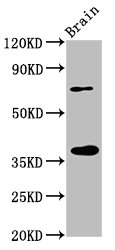
Western Blot Positive WB detected in: Rat brain tissue All lanes: EIF3I antibody at 3.2microg/ml Secondary Goat polyclonal to rabbit IgG at 1/50000 dilution Predicted band size: 37 kDa Observed band size: 37 kDa
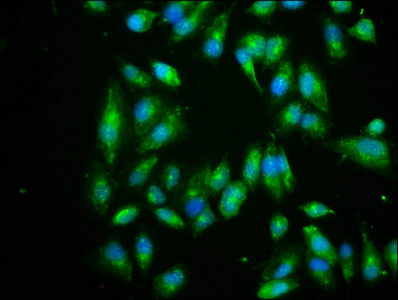
Western Blot Positive WB detected in: Rat brain tissue All lanes: EIF3I antibody at 3.2microg/ml Secondary Goat polyclonal to rabbit IgG at 1/50000 dilution Predicted band size: 37 kDa Observed band size: 37 kDa
EIF3I Antibody
CSB-PA03105A0RB

ApplicationsImmunoFluorescence, Western Blot, ELISA
Product group Antibodies
ReactivityHuman, Rat
TargetEIF3I
Overview
- SupplierCusabio
- Product NameEIF3I Antibody
- Delivery Days Customer20
- ApplicationsImmunoFluorescence, Western Blot, ELISA
- CertificationResearch Use Only
- ClonalityPolyclonal
- ConjugateUnconjugated
- Gene ID8668
- Target nameEIF3I
- Target descriptioneukaryotic translation initiation factor 3 subunit I
- Target synonymsEIF3S2, PRO2242, TRIP-1, TRIP1, eIF3-beta, eIF3-p36, eukaryotic translation initiation factor 3 subunit I, TGF-beta receptor-interacting protein 1, TGFbeta receptor-interacting protein 1, eukaryotic translation initiation factor 3 subunit 2, eukaryotic translation initiation factor 3, subunit 2 (beta, 36kD), eukaryotic translation initiation factor 3, subunit 2 beta, 36kDa, predicted protein of HQ2242
- HostRabbit
- IsotypeIgG
- Protein IDQ13347
- Protein NameEukaryotic translation initiation factor 3 subunit I
- Scientific DescriptionComponent of the eukaryotic translation initiation factor 3 (eIF-3) complex, which is required for several steps in the initiation of protein synthesis (PubMed:17581632, PubMed:25849773, PubMed:27462815). The eIF-3 complex associates with the 40S ribosome and facilitates the recruitment of eIF-1, eIF-1A, eIF-2:GTP:methionyl-tRNAi and eIF-5 to form the 43S pre-initiation complex (43S PIC). The eIF-3 complex stimulates mRNA recruitment to the 43S PIC and scanning of the mRNA for AUG recognition. The eIF-3 complex is also required for disassembly and recycling of post-termination ribosomal complexes and subsequently prevents premature joining of the 40S and 60S ribosomal subunits prior to initiation (PubMed:17581632). The eIF-3 complex specifically targets and initiates translation of a subset of mRNAs involved in cell proliferation, including cell cycling, differentiation and apoptosis, and uses different modes of RNA stem-loop binding to exert either translational activation or repression (PubMed:25849773).
- ReactivityHuman, Rat
- Storage Instruction-20°C or -80°C
- UNSPSC41116161
Related products
Product group Antibodies

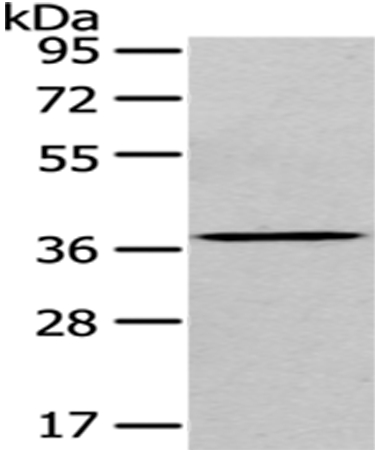
Anti-EIF3I AntibodyA38267
ApplicationsWestern Blot, ImmunoHistoChemistry
ReactivityHuman
- SizePrice
Product group Antibodies

Eif3I Polyclonal AntibodyCAC09020
ApplicationsImmunoFluorescence, Western Blot, ELISA
ReactivityRat
TargetEIF3I
- SizePrice
Product group Antibodies

EIF3I / EIF3S2 AntibodyLS-C408992
ApplicationsWestern Blot
ReactivityHuman
TargetEIF3I
- SizePrice
Product group Antibodies

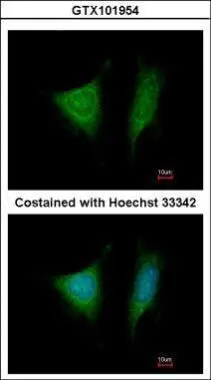
EIF3 beta antibody [N2C3]GTX101954
ApplicationsImmunoFluorescence, Western Blot, ImmunoCytoChemistry
ReactivityHuman
TargetEIF3I
- SizePrice

Product group Antibodies

Anti-EIF3I AntibodyHPA029939
ApplicationsWestern Blot, ImmunoHistoChemistry
ReactivityHuman, Mouse, Rat
TargetEIF3I
- SizePrice