

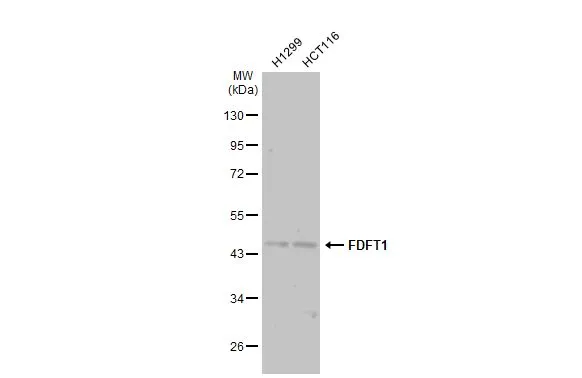
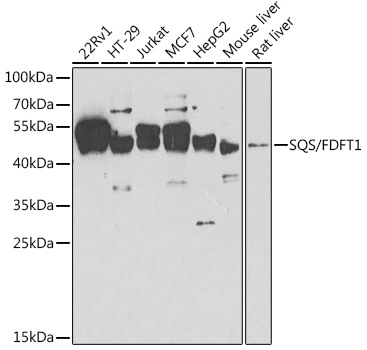
Various whole cell extracts (30 μg) were separated by 10% SDS-PAGE, and the membrane was blotted with FDFT1 antibody [N1C3] (GTX108885) diluted at 1:1000. The HRP-conjugated anti-rabbit IgG antibody (GTX213110-01) was used to detect the primary antibody.
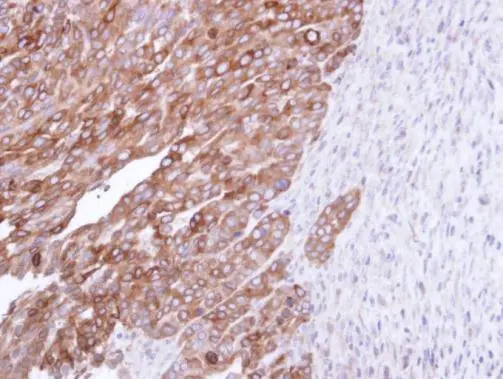
![Whole cell extract (30 μg) was separated by 12% SDS-PAGE, and the membrane was blotted with FDFT1 antibody [N1C3] (GTX108885) diluted at 1:1000. The HRP-conjugated anti-rabbit IgG antibody (GTX213110-01) was used to detect the primary antibody.](https://www.genetex.com/upload/website/prouct_img/normal/GTX108885/GTX108885_40016_20210806_WB_w_23060120_646.webp "Whole cell extract (30 μg) was separated by 12% SDS-PAGE, and the membrane was blotted with FDFT1 antibody [N1C3] (GTX108885) diluted at 1:1000. The HRP-conjugated anti-rabbit IgG antibody (GTX213110-01) was used to detect the primary antibody.")
Various whole cell extracts (30 μg) were separated by 10% SDS-PAGE, and the membrane was blotted with FDFT1 antibody [N1C3] (GTX108885) diluted at 1:1000. The HRP-conjugated anti-rabbit IgG antibody (GTX213110-01) was used to detect the primary antibody.
FDFT1 antibody [N1C3]
GTX108885

ApplicationsWestern Blot, ImmunoHistoChemistry, ImmunoHistoChemistry Paraffin
Product group Antibodies
ReactivityHuman
TargetFDFT1
Overview
- SupplierGeneTex
- Product NameFDFT1 antibody [N1C3]
- Delivery Days Customer9
- Application Supplier NoteWB: 1:500-1:3000. IHC-P: 1:100-1:1000. *Optimal dilutions/concentrations should be determined by the researcher.Not tested in other applications.
- ApplicationsWestern Blot, ImmunoHistoChemistry, ImmunoHistoChemistry Paraffin
- CertificationResearch Use Only
- ClonalityPolyclonal
- Concentration0.97 mg/ml
- ConjugateUnconjugated
- Gene ID2222
- Target nameFDFT1
- Target descriptionfarnesyl-diphosphate farnesyltransferase 1
- Target synonymsDGPT, ERG9, SQS, SQSD, SS, squalene synthase, FPP:FPP farnesyltransferase, presqualene-di-diphosphate synthase, squalene synthetase
- HostRabbit
- IsotypeIgG
- Protein IDP37268
- Protein NameSqualene synthase
- Scientific DescriptionThis gene encodes a membrane-associated enzyme located at a branch point in the mevalonate pathway. The encoded protein is the first specific enzyme in cholesterol biosynthesis, catalyzing the dimerization of two molecules of farnesyl diphosphate in a two-step reaction to form squalene. [provided by RefSeq]
- ReactivityHuman
- Storage Instruction-20°C or -80°C,2°C to 8°C
- UNSPSC41116161
Datasheet
Related products

Product group Antibodies

FDFT1 AntibodyCSB-PA008562ESR1HU
ApplicationsImmunoFluorescence, Western Blot, ELISA, ImmunoHistoChemistry
ReactivityHuman, Mouse
TargetFDFT1
- SizePrice
Product group Antibodies

Anti-FDFT1 AntibodyA31163
ApplicationsImmunoFluorescence, Western Blot, ImmunoHistoChemistry
ReactivityHuman, Mouse, Rat
- SizePrice

Product group Antibodies

ApplicationsImmunoFluorescence, ImmunoPrecipitation, Western Blot, ImmunoCytoChemistry, ImmunoHistoChemistry
ReactivityHuman, Mouse, Rat
TargetFDFT1
- SizePrice
Product group Antibodies

FDFT1 / Squalene Synthase AntibodyLS-C830782
ApplicationsWestern Blot, ELISA
ReactivityHuman, Mouse, Rat
TargetFDFT1
- SizePrice

Product group Antibodies

Anti-FDFT1 AntibodyHPA008874
ApplicationsWestern Blot, ImmunoCytoChemistry, ImmunoHistoChemistry
ReactivityHuman
TargetFDFT1
- SizePrice
Product group Antibodies

FDFT1 Recombinant Antibody, AbBy Fluor-488 ConjugatedBSM-61816R-BF488
ApplicationsImmunoFluorescence, Western Blot
ReactivityHuman, Mouse, Rat
TargetFDFT1
- SizePrice
Product group Antibodies

Fdft1 Polyclonal AntibodyCAC08433
ApplicationsImmunoFluorescence, Western Blot, ELISA, ImmunoHistoChemistry
TargetFDFT1
- SizePrice
![Whole cell extract (30 μg) was separated by 12% SDS-PAGE, and the membrane was blotted with FDFT1 antibody [N2C3] (GTX104091) diluted at 1:1500. The HRP-conjugated anti-rabbit IgG antibody (GTX213110-01) was used to detect the primary antibody.](https://www.genetex.com/upload/website/prouct_img/normal/GTX104091/GTX104091_39771_20210806_WB_w_23060120_716.webp)
Product group Antibodies
FDFT1 antibody [N2C3]GTX104091
ApplicationsWestern Blot, ImmunoHistoChemistry, ImmunoHistoChemistry Paraffin
ReactivityHuman
TargetFDFT1
- SizePrice
Product group Antibodies
FDFT1 antibodyGTX53976
ApplicationsImmunoFluorescence, Western Blot, ImmunoCytoChemistry, ImmunoHistoChemistry, ImmunoHistoChemistry Paraffin
ReactivityHuman, Mouse, Rat
TargetFDFT1
- SizePrice