

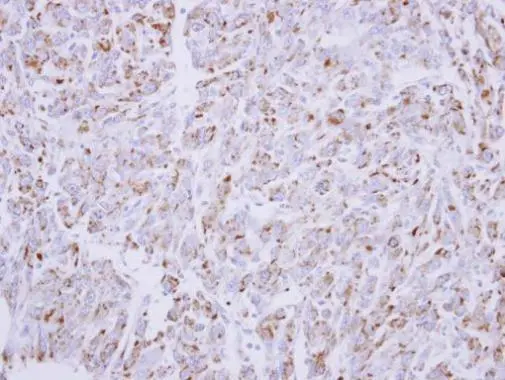
Immunohistochemical analysis of paraffin-embedded U87 xenograft, using G6PD(GTX101218) antibody at 1:300 dilution.
Antigen Retrieval: Trilogy? (EDTA based, pH 8.0) buffer, 15min
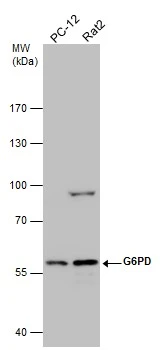

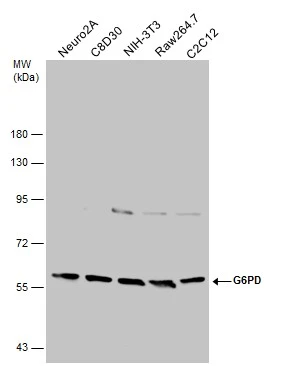
Immunohistochemical analysis of paraffin-embedded U87 xenograft, using G6PD(GTX101218) antibody at 1:300 dilution.
Antigen Retrieval: Trilogy? (EDTA based, pH 8.0) buffer, 15min
G6PD antibody [N3C3]
GTX101218

ApplicationsWestern Blot, ImmunoHistoChemistry, ImmunoHistoChemistry Frozen, ImmunoHistoChemistry Paraffin
Product group Antibodies
ReactivityHuman, Mouse, Rat
TargetG6PD
Overview
- SupplierGeneTex
- Product NameG6PD antibody [N3C3]
- Delivery Days Customer9
- Application Supplier NoteWB: 1:500-1:3000. IHC-P: 1:100-1:1000. *Optimal dilutions/concentrations should be determined by the researcher.Not tested in other applications.
- ApplicationsWestern Blot, ImmunoHistoChemistry, ImmunoHistoChemistry Frozen, ImmunoHistoChemistry Paraffin
- CertificationResearch Use Only
- ClonalityPolyclonal
- Concentration0.81 mg/ml
- ConjugateUnconjugated
- Gene ID2539
- Target nameG6PD
- Target descriptionglucose-6-phosphate dehydrogenase
- Target synonymsCNSHA1, G6PD1, glucose-6-phosphate 1-dehydrogenase, epididymis secretory sperm binding protein
- HostRabbit
- IsotypeIgG
- Protein IDP11413
- Protein NameGlucose-6-phosphate 1-dehydrogenase
- Scientific DescriptionThis gene encodes glucose-6-phosphate dehydrogenase. This protein is a cytosolic enzyme encoded by a housekeeping X-linked gene whose main function is to produce NADPH, a key electron donor in the defense against oxidizing agents and in reductive biosynthetic reactions. G6PD is remarkable for its genetic diversity. Many variants of G6PD, mostly produced from missense mutations, have been described with wide ranging levels of enzyme activity and associated clinical symptoms. G6PD deficiency may cause neonatal jaundice, acute hemolysis, or severe chronic non-spherocytic hemolytic anemia. Two transcript variants encoding different isoforms have been found for this gene. [provided by RefSeq]
- ReactivityHuman, Mouse, Rat
- Storage Instruction-20°C or -80°C,2°C to 8°C
- UNSPSC41116161
Datasheet
Related products
Product group Antibodies

Anti-G6PD AntibodyA29866
ApplicationsWestern Blot, ImmunoHistoChemistry
ReactivityHuman, Mouse, Rat
- SizePrice

Product group Antibodies

Anti-G6PD Antibody144-01537
ApplicationsWestern Blot
ReactivityHuman, Mouse
TargetG6PD
- SizePrice
Product group Antibodies

G6PD AntibodyLS-C748997
ApplicationsImmunoFluorescence, Western Blot
ReactivityHuman, Mouse
TargetG6PD
- SizePrice
Product group Antibodies

ApplicationsImmunoFluorescence, Western Blot
ReactivityHuman
TargetG6PD
- SizePrice
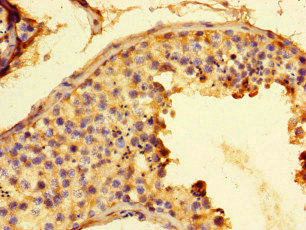
Product group Antibodies

G6PD AntibodyCSB-PA009121LA01HU
ApplicationsImmunoFluorescence, ELISA, ImmunoHistoChemistry
ReactivityHuman
TargetG6PD
- SizePrice
Product group Antibodies

ApplicationsWestern Blot, ELISA
ReactivityCanine, Human, Mouse, Rat
TargetG6PD
- SizePrice
Product group Antibodies

ApplicationsWestern Blot, ImmunoHistoChemistry
TargetG6PD
- SizePrice
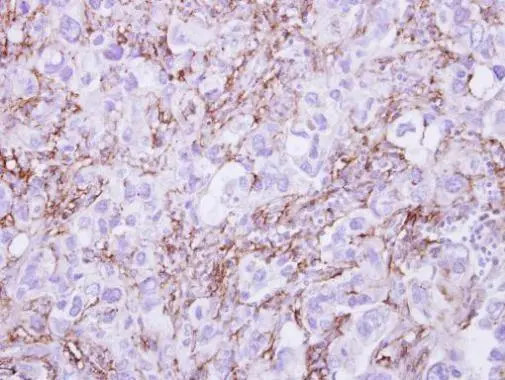
Product group Antibodies
G6PD antibodyGTX101212
ApplicationsWestern Blot, ImmunoHistoChemistry, ImmunoHistoChemistry Paraffin
ReactivityHuman
TargetG6PD
- SizePrice
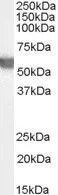
Product group Antibodies
ApplicationsWestern Blot, ELISA, ImmunoHistoChemistry, ImmunoHistoChemistry Paraffin
ReactivityHuman
TargetG6PD
- SizePrice