

Galectin-1 / Human Placental Lactogen (hPL) (GAL1/1831), CF405S conjugate, 0.1mg/mL [26628-22-8]
BNC041831

ApplicationsImmunoFluorescence, Western Blot, ImmunoHistoChemistry, ImmunoHistoChemistry Paraffin
Product group Antibodies
ReactivityBovine, Human, Mouse
TargetLGALS1
Overview
- SupplierBiotium
- Product NameGalectin-1 / Human Placental Lactogen (hPL) (GAL1/1831), CF405S conjugate, 0.1mg/mL [26628-22-8]
- Delivery Days Customer9
- ApplicationsImmunoFluorescence, Western Blot, ImmunoHistoChemistry, ImmunoHistoChemistry Paraffin
- CAS Number26628-22-8
- CertificationResearch Use Only
- ClonalityMonoclonal
- Clone IDGAL1/1831
- Concentration0.1 mg/ml
- ConjugateOther Conjugate
- Gene ID3956
- Target nameLGALS1
- Target descriptiongalectin 1
- Target synonymsGAL1, GBP, galectin-1, 14 kDa laminin-binding protein, 14 kDa lectin, HBL, HLBP14, HPL, S-Lac lectin 1, beta-galactoside-binding lectin L-14-I, beta-galactoside-binding protein 14kDa, epididymis secretory sperm binding protein, gal-1, galaptin, lactose-binding lectin 1, lectin, galactoside-binding, soluble, 1, putative MAPK-activating protein PM12
- HostMouse
- IsotypeIgG1
- Protein IDP09382
- Protein NameGalectin-1
- Scientific DescriptionGalectin-1 is a member of the beta-galactoside-binding family and is a dimeric protein of 14 kD participating in a variety of normal and pathological processes, including cancer progression. Galectin-1 can affect the proliferation of normal and malignant cells. Inhibition of cell growth is observed in a lactose-dependent manner as lower concentrations of the lectin stimulate cell proliferation. Galectin-1 may also be implicated in the induction of apoptosis of activated T cells through the binding of exogenous galectin-1 to CD45 molecules present on the surface of lymphocytes. Galectin-1, reported to be present either at the surface of cancer cells or accumulated around these cells could act as an immunological shield to protect against a T cell immune response and provide an advantage for survival.Primary antibodies are available purified, or with a selection of fluorescent CF® Dyes and other labels. CF® Dyes offer exceptional brightness and photostability. Note: Conjugates of blue fluorescent dyes like CF®405S and CF®405M are not recommended for detecting low abundance targets, because blue dyes have lower fluorescence and can give higher non-specific background than other dye colors.
- SourceAnimal
- ReactivityBovine, Human, Mouse
- Storage Instruction2°C to 8°C,RT
- UNSPSC41116161
MSDS
Related products
Product group Antibodies

Anti-LGALS1 Antibody144-01580
ApplicationsWestern Blot
ReactivityHuman, Mouse, Rat
TargetLGALS1
- SizePrice

Product group Antibodies

Anti-LGALS1 [SAIC-25B-112]Ab00317-1.1
ApplicationsMass Spectrometry
ReactivityHuman
TargetLGALS1
- SizePrice
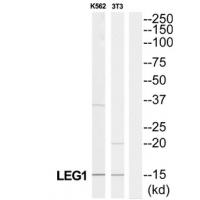
Product group Antibodies

Anti-LGALS1 AntibodyA42202
ApplicationsWestern Blot
ReactivityHuman, Mouse, Rat
- SizePrice

Product group Antibodies

Goat anti-galectin-1 (mouse)EB10777
ApplicationsWestern Blot, ELISA
ReactivityBovine, Human, Mouse, Porcine, Rat
TargetLGALS1
- SizePrice

Product group Antibodies

Anti-LGALS1 AntibodyHPA000646
ApplicationsWestern Blot, ImmunoHistoChemistry
ReactivityHuman, Mouse, Rat
TargetLGALS1
- SizePrice
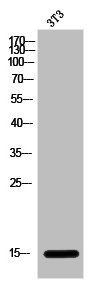
Product group Antibodies

LGALS1 AntibodyCSB-PA009814
ApplicationsWestern Blot, ELISA
ReactivityHuman, Rat
TargetLGALS1
- SizePrice
Product group Antibodies

LGALS1 / Galectin 1 AntibodyLS-C400758
ApplicationsWestern Blot, ELISA, ImmunoHistoChemistry
ReactivityHuman, Mouse, Rat
TargetLGALS1
- SizePrice

Product group Antibodies

Anti-Galectin 1/LGALS1 Antibody Picoband(r)PB9240-1-CARRIER-FREE
ApplicationsFlow Cytometry, ImmunoFluorescence, Western Blot, ELISA, ImmunoCytoChemistry, ImmunoHistoChemistry
ReactivityHuman, Mouse, Rat
TargetLGALS1
- SizePrice