

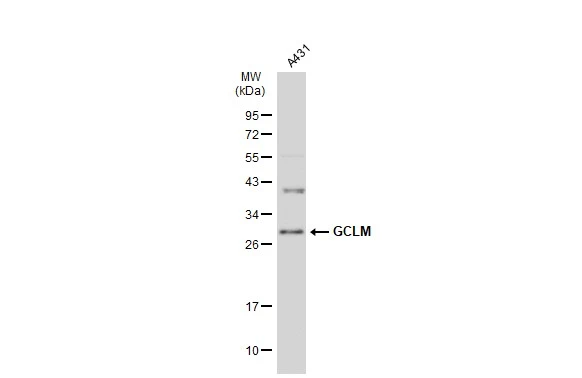
Whole cell extract (30 μg) was separated by 12% SDS-PAGE, and the membrane was blotted with GCLM antibody (GTX114075) diluted at 1:1000. The HRP-conjugated anti-rabbit IgG antibody (GTX213110-01) was used to detect the primary antibody.
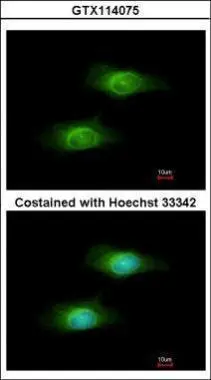
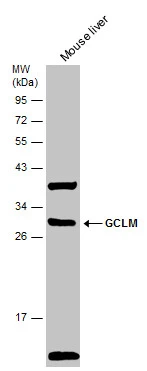
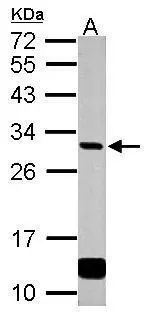
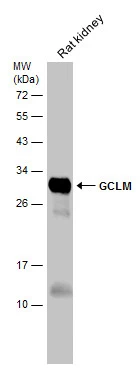
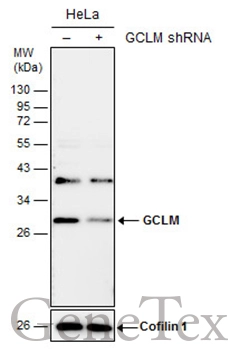
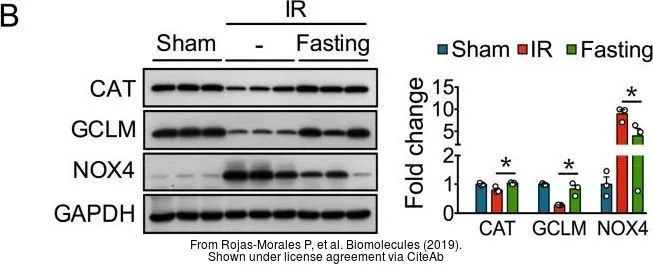
Whole cell extract (30 μg) was separated by 12% SDS-PAGE, and the membrane was blotted with GCLM antibody (GTX114075) diluted at 1:1000. The HRP-conjugated anti-rabbit IgG antibody (GTX213110-01) was used to detect the primary antibody.
GCLM antibody
GTX114075

ApplicationsImmunoFluorescence, Western Blot, ImmunoCytoChemistry
Product group Antibodies
ReactivityHuman, Mouse, Rat
TargetGCLM
Overview
- SupplierGeneTex
- Product NameGCLM antibody
- Delivery Days Customer9
- Application Supplier NoteWB: 1:500-1:10000. ICC/IF: 1:100-1:1000. *Optimal dilutions/concentrations should be determined by the researcher.Not tested in other applications.
- ApplicationsImmunoFluorescence, Western Blot, ImmunoCytoChemistry
- CertificationResearch Use Only
- ClonalityPolyclonal
- Concentration1.21 mg/ml
- ConjugateUnconjugated
- Gene ID2730
- Target nameGCLM
- Target descriptionglutamate-cysteine ligase modifier subunit
- Target synonymsGLCLR, glutamate--cysteine ligase regulatory subunit, GCS light chain, GSC light chain, gamma-ECS regulatory subunit, gamma-glutamylcysteine synthetase regulatory subunit, glutamate-cysteine ligase (gamma-glutamylcysteine synthetase), regulatory (30.8kD), glutamate-cysteine ligase modifier subunit delta2 alternative splicing, glutamate-cysteine ligase regulatory protein
- HostRabbit
- IsotypeIgG
- Protein IDP48507
- Protein NameGlutamate--cysteine ligase regulatory subunit
- Scientific DescriptionGlutamate-cysteine ligase, also known as gamma-glutamylcysteine synthetase, is the first rate limiting enzyme of glutathione synthesis. The enzyme consists of two subunits, a heavy catalytic subunit and a light regulatory subunit. Gamma glutamylcysteine synthetase deficiency has been implicated in some forms of hemolytic anemia. [provided by RefSeq]
- ReactivityHuman, Mouse, Rat
- Storage Instruction-20°C or -80°C,2°C to 8°C
- UNSPSC41116161
Datasheet
Related products

Product group Antibodies

Anti-GCLM Antibody Picoband(r)A02948-2-CARRIER-FREE
ApplicationsWestern Blot, ELISA
ReactivityHuman, Mouse, Rat
TargetGCLM
- SizePrice
Product group Antibodies

Anti-GCLM Antibody144-05314
ApplicationsImmunoFluorescence, Western Blot
ReactivityHuman, Mouse
TargetGCLM
- SizePrice
Product group Antibodies

Anti-GCLM AntibodyA14661
ApplicationsImmunoFluorescence, Western Blot, ImmunoCytoChemistry
ReactivityHuman, Mouse, Rat
- SizePrice
Product group Antibodies

GCLM AntibodyLS-C749003
ApplicationsWestern Blot, ImmunoHistoChemistry
ReactivityHuman, Mouse
TargetGCLM
- SizePrice
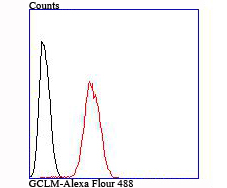
Product group Antibodies

GCLM Recombinant AntibodyBSM-54141R
ApplicationsFlow Cytometry, ImmunoFluorescence, Western Blot, ImmunoCytoChemistry, ImmunoHistoChemistry, ImmunoHistoChemistry Frozen, ImmunoHistoChemistry Paraffin
ReactivityHuman, Mouse, Rat
TargetGCLM
- SizePrice
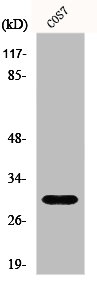
Product group Antibodies

GCLM AntibodyCSB-PA002667
ApplicationsWestern Blot, ELISA, ImmunoHistoChemistry
ReactivityHuman, Monkey, Mouse, Rat
TargetGCLM
- SizePrice
Product group Antibodies

GCLM Polyclonal AntibodyCAC13041
ApplicationsImmunoFluorescence, Western Blot, ELISA, ImmunoHistoChemistry
ReactivityRat
TargetGCLM
- SizePrice

Product group Antibodies

Anti-GCLM AntibodyHPA023696
ApplicationsWestern Blot, ImmunoCytoChemistry, ImmunoHistoChemistry
ReactivityHuman
TargetGCLM
- SizePrice
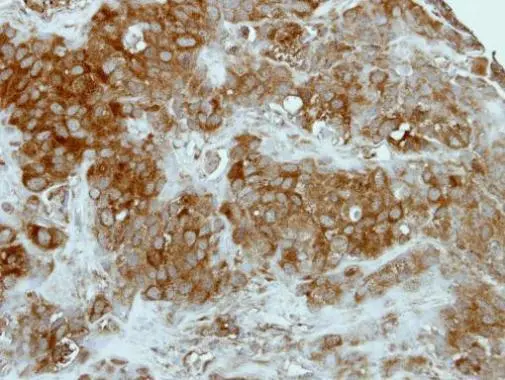
Product group Antibodies
GCLM antibody [N1N3]GTX111858
ApplicationsImmunoFluorescence, Western Blot, ImmunoCytoChemistry, ImmunoHistoChemistry, ImmunoHistoChemistry Paraffin
ReactivityHuman
TargetGCLM
- SizePrice
![Various whole cell extracts (30 μg) were separated by 12% SDS-PAGE, and the membrane was blotted with GCLM antibody [HL3517] (GTX641414) diluted at 1:1000. The HRP-conjugated anti-rabbit IgG antibody (GTX213110-01) was used to detect the primary antibody.](https://www.genetex.com/upload/website/prouct_img/normal/GTX641414/GTX641414_T-45614_20241206_WB_24121100_276.webp)
Product group Antibodies
GCLM antibody [HL3517]GTX641414
ApplicationsWestern Blot
ReactivityHuman
TargetGCLM
- SizePrice