

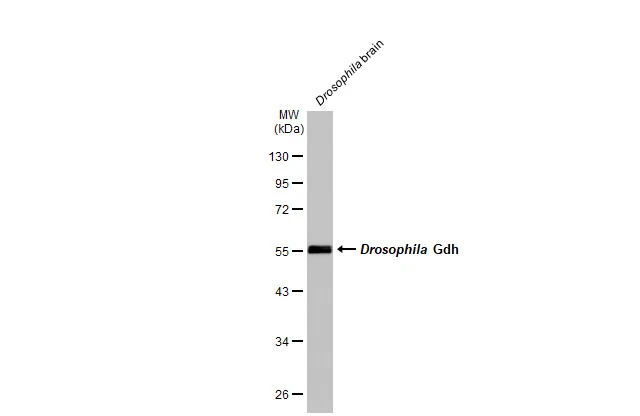
Drosophila tissue extract (50 μg) was separated by 10% SDS-PAGE, and the membrane was blotted with GLUD1 + GLUD2 antibody (GTX105765) diluted at 1:1000. The HRP-conjugated anti-rabbit IgG antibody (GTX213110-01) was used to detect the primary antibody.
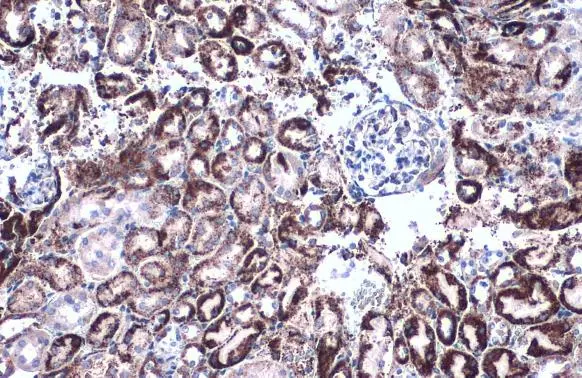
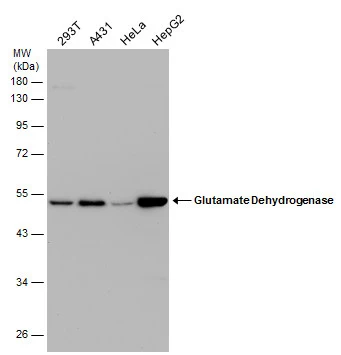
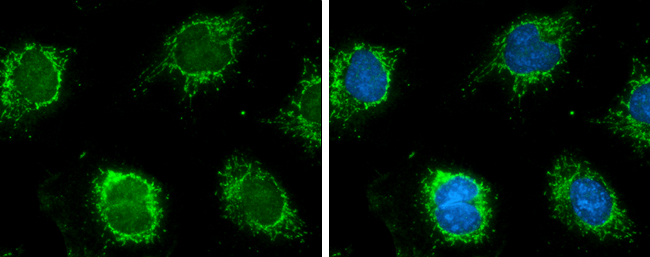
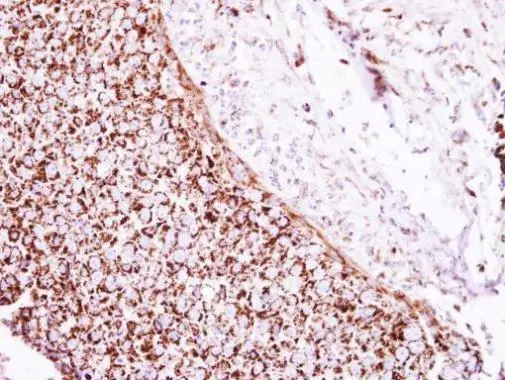
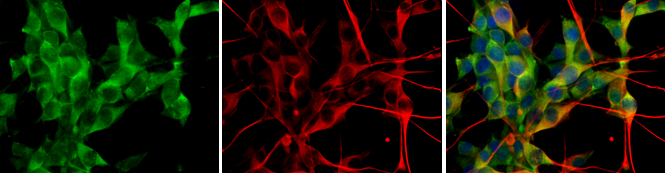
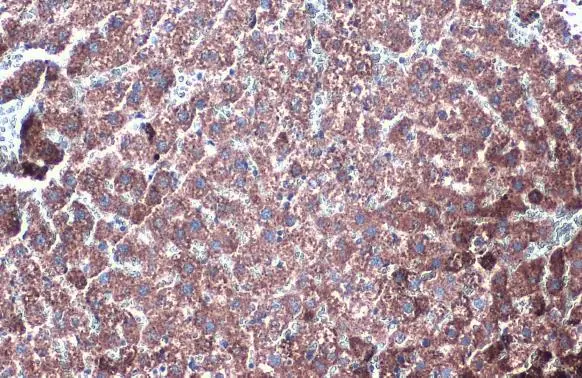
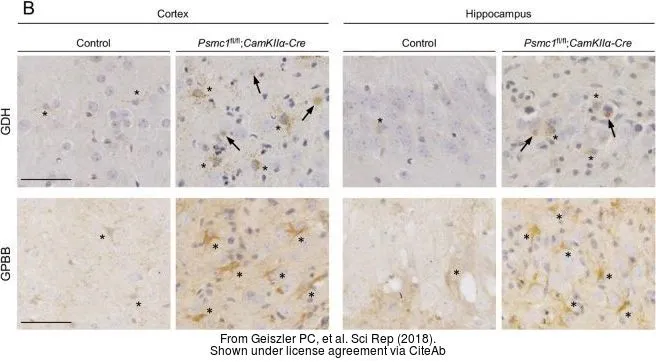
Drosophila tissue extract (50 μg) was separated by 10% SDS-PAGE, and the membrane was blotted with GLUD1 + GLUD2 antibody (GTX105765) diluted at 1:1000. The HRP-conjugated anti-rabbit IgG antibody (GTX213110-01) was used to detect the primary antibody.
GLUD1 + GLUD2 antibody
GTX105765

ApplicationsImmunoFluorescence, Western Blot, ELISA, ImmunoCytoChemistry, ImmunoHistoChemistry, ImmunoHistoChemistry Paraffin
Product group Antibodies
ReactivityDrosophila, Human, Mouse, Rat
TargetGLUD1
Overview
- SupplierGeneTex
- Product NameGLUD1 + GLUD2 antibody
- Delivery Days Customer9
- Application Supplier NoteWB: 1:500-1:3000. ICC/IF: 1:100-1:1000. IHC-P: 1:100-1:1000. *Optimal dilutions/concentrations should be determined by the researcher.Not tested in other applications.
- ApplicationsImmunoFluorescence, Western Blot, ELISA, ImmunoCytoChemistry, ImmunoHistoChemistry, ImmunoHistoChemistry Paraffin
- CertificationResearch Use Only
- ClonalityPolyclonal
- Concentration0.07 mg/ml
- ConjugateUnconjugated
- Gene ID2746
- Target nameGLUD1
- Target descriptionglutamate dehydrogenase 1
- Target synonymsGDH, GDH1, GLUD, hGDH1, glutamate dehydrogenase 1, mitochondrial, epididymis secretory sperm binding protein, epididymis tissue sperm binding protein Li 18mP, glutamate dehydrogenase (NAD(P)+)
- HostRabbit
- IsotypeIgG
- Protein IDP00367
- Protein NameGlutamate dehydrogenase 1, mitochondrial
- Scientific DescriptionL-glutamate dehydrogenase (EC 1.4.1.3) has a central role in nitrogen metabolism in plants and animals. Glutamate dehydrogenase is found in all organisms and catalyzes the oxidative deamination of 1-glutamate to 2-oxoglutarate (Smith et al., 2001 [PubMed 11254391]). Glutamate, the main substrate of GLUD, is present in brain in concentrations higher than in other organs. In nervous tissue, GLUD appears to function in both the synthesis and the catabolism of glutamate and perhaps in ammonia detoxification (Mavrothalassitis et al., 1988 [PubMed 3368458]).[supplied by OMIM]
- ReactivityDrosophila, Human, Mouse, Rat
- Storage Instruction-20°C or -80°C,2°C to 8°C
- UNSPSC41116161
Datasheet
Related products
Product group Antibodies

Anti-GLUD1 AntibodyA116593
ApplicationsDot Blot, ImmunoFluorescence, Western Blot, ELISA
ReactivityBovine
- SizePrice
Product group Antibodies

Anti-GLUD1 Antibody144-07631
ApplicationsWestern Blot, ImmunoHistoChemistry
ReactivityHuman, Mouse, Rat
TargetGLUD1
- SizePrice

Product group Antibodies

Anti-GLUD1/2 Antibody Picoband(r)A01866-2-CARRIER-FREE
ApplicationsFlow Cytometry, ImmunoFluorescence, Western Blot, ELISA, ImmunoCytoChemistry, ImmunoHistoChemistry
ReactivityHuman, Mouse, Rat
TargetGLUD1
- SizePrice
Product group Antibodies

ApplicationsFlow Cytometry, ImmunoFluorescence, Western Blot, ImmunoCytoChemistry, ImmunoHistoChemistry, ImmunoHistoChemistry Frozen, ImmunoHistoChemistry Paraffin
ReactivityHuman, Mouse, Rat
TargetGLUD1
- SizePrice
Product group Antibodies

GLUD1 AntibodyCSB-PA009544GA01HU
ApplicationsWestern Blot, ELISA, ImmunoHistoChemistry
ReactivityHuman, Mouse, Rat
TargetGLUD1
- SizePrice
Product group Antibodies
References

ApplicationsImmunoFluorescence, Western Blot, ELISA, ImmunoHistoChemistry
ReactivityBovine, Canine, Human, Mouse, Rat
TargetGLUD1
- SizePrice
Product group Antibodies

ApplicationsImmunoPrecipitation, Western Blot, ImmunoCytoChemistry, ImmunoHistoChemistry
ReactivityMouse, Rat
TargetGLUD1
- SizePrice
Product group Antibodies

GLUD1/Glutamate Dehydrogenase AntibodyLS-C349320
ApplicationsWestern Blot, ImmunoHistoChemistry
ReactivityHuman, Mouse, Rat
TargetGLUD1
- SizePrice

Product group Antibodies

Anti-GLUD1 AntibodyHPA042492
ApplicationsImmunoHistoChemistry
ReactivityHuman
TargetGLUD1
- SizePrice
![Various tissue extracts (50 μg) were separated by 7.5% SDS-PAGE, and the membrane was blotted with GLUD1+GLUD2 antibody [HL2124] (GTX638096) diluted at 1:10000. The HRP-conjugated anti-rabbit IgG antibody (GTX213110-01) was used to detect the primary antibody.](https://www.genetex.com/upload/website/prouct_img/normal/GTX638096/GTX638096_T-44914_20230203_WB_M_R_23020621_380.webp)
Product group Antibodies
GLUD1+ GLUD2 antibody [HL2124]GTX638096
ApplicationsWestern Blot, ImmunoHistoChemistry, ImmunoHistoChemistry Paraffin
ReactivityHuman, Mouse, Rat
TargetGLUD1
- SizePrice