GnRH-Receptor (LHRH Receptor)(A9E4), 1mg/mL [26628-22-8]
BNUM0309

ApplicationsImmunoFluorescence, ImmunoHistoChemistry, ImmunoHistoChemistry Paraffin
Product group Antibodies
ReactivityHuman, Mouse
TargetGNRHR
Overview
- SupplierBiotium
- Product NameGnRH-Receptor (LHRH Receptor)(A9E4), 1mg/mL [26628-22-8]
- Delivery Days Customer9
- ApplicationsImmunoFluorescence, ImmunoHistoChemistry, ImmunoHistoChemistry Paraffin
- CAS Number26628-22-8
- CertificationResearch Use Only
- ClonalityMonoclonal
- Clone IDA9E4
- Concentration1 mg/ml
- Gene ID2798
- Target nameGNRHR
- Target descriptiongonadotropin releasing hormone receptor
- Target synonymsGNRHR1, GRHR, HH7, LHRHR, LRHR, gonadotropin-releasing hormone receptor, gnRH receptor, gnRH-R, gonadotropin-releasing hormone (type 1) receptor 1, leutinizing hormone releasing horomone receptor, leutinizing-releasing hormone receptor, luliberin receptor, type I GnRH receptor
- HostMouse
- IsotypeIgG1
- Protein IDP22888
- Protein NameLutropin-choriogonadotropic hormone receptor
- Scientific DescriptionRecognizes an epitope on the extracellular domain of gonadotropin releasing hormone (GnRH) receptor or luteinizing hormone receptor (LHCGR). Lutropin (also designated luteinizing hormone) plays a role in spermatogenesis and ovulation by stimulating the testes and ovaries to produce steroids. Gonadotropin (also designated choriogonadotropin) production in the placenta maintains estrogen and progesterone levels during the first trimester of pregnancy. Ovaries and testes abundantly express luteinizing hormone/choriogonadotropin receptor. GnRH receptor contains seven hydrophobic transmembrane domains connected by hydrophilic extracellular and intracellular loops characteristic of G-protein coupled receptors. GnRH stimulates the gonadotrophs of the anterior pituitary to secrete luteinizing hormone (LH) as well as follicle-stimulating hormone (FSH). GnRH influences the protective effect of pregnancy and Gonadotropin against breast cancer. The expression of GnRH on breast carcinoma correlates in part to the degree of tumor differentiation. GnRH-positive breast tumors occur more frequently in tumors with greater cell differentiation in premenopausal women. GnRH is present in luteal and granulosa cells as well as in ovarian cell membrane preparations.Primary antibodies are available purified, or with a selection of fluorescent CF® Dyes and other labels. CF® Dyes offer exceptional brightness and photostability. Note: Conjugates of blue fluorescent dyes like CF®405S and CF®405M are not recommended for detecting low abundance targets, because blue dyes have lower fluorescence and can give higher non-specific background than other dye colors.
- SourceAnimal
- ReactivityHuman, Mouse
- Storage Instruction-20°C
- UNSPSC41116161
MSDS
Related products
Product group Antibodies

GNRHR AntibodyCSB-PA008891
ApplicationsImmunoFluorescence, Western Blot, ELISA
ReactivityHuman, Mouse
TargetGNRHR
- SizePrice

Product group Antibodies

Anti-LHRH [SMI41]Ab00922-1.1
ApplicationsImmunoHistoChemistry, ImmunoHistoChemistry Paraffin, RadioImmunoAssay
ReactivityHuman
TargetGNRHR
- SizePrice
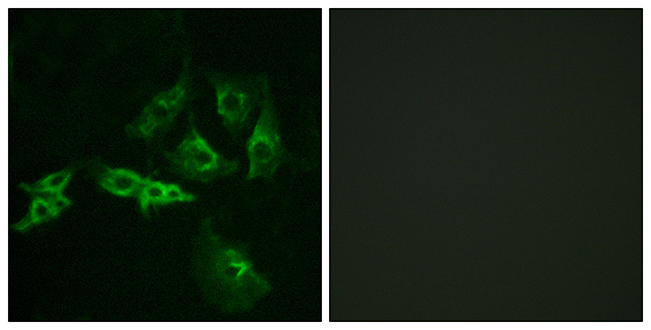
Product group Antibodies

Anti-GNRHR AntibodyA99087
ApplicationsImmunoFluorescence, ELISA
ReactivityHuman, Mouse
- SizePrice
Product group Antibodies

Goat anti-GRHR / LRHREB07546
ApplicationsWestern Blot, ELISA
ReactivityCanine, Human
TargetGNRHR
- SizePrice

Product group Antibodies

Anti-GNRHR AntibodyHPA013424
ApplicationsImmunoHistoChemistry
ReactivityHuman
TargetGNRHR
- SizePrice
Product group Antibodies

GnRH receptor / GNRHR AntibodyLS-C402366
ApplicationsWestern Blot, ELISA
ReactivityHuman, Mouse, Rat
TargetGNRHR
- SizePrice
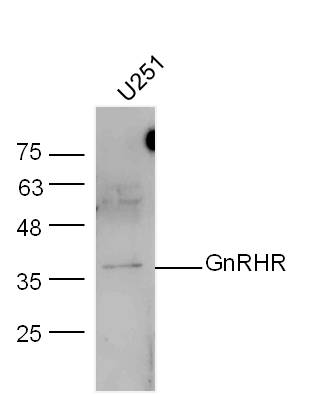
Product group Antibodies
References

GnRHR Polyclonal AntibodyBS-1464R
ApplicationsImmunoFluorescence, Western Blot, ELISA, ImmunoCytoChemistry, ImmunoHistoChemistry, ImmunoHistoChemistry Frozen, ImmunoHistoChemistry Paraffin
ReactivityBovine, Canine, Equine, Human, Mouse, Porcine, Rat
TargetGNRHR
- SizePrice
![Non-transfected (–) and transfected (+) boiled and unboiled 293T whole cell extracts (30 μg) were separated by 10% SDS-PAGE, and the membrane was blotted with GnRHR antibody [HL2638] (GTX639094) diluted at 1:5000. The HRP-conjugated anti-rabbit IgG antibody (GTX213110-01) was used to detect the primary antibody.](https://www.genetex.com/upload/website/prouct_img/normal/GTX639094/GTX639094_T-45187_20231103_WB_B_23110819_886.webp)
Product group Antibodies

GnRHR antibody [HL2638]GTX639094
ApplicationsWestern Blot, ImmunoHistoChemistry, ImmunoHistoChemistry Paraffin
ReactivityHuman, Mouse
TargetGNRHR
- SizePrice