Heavy chain cardiac Myosin antibody [3-48]
GTX20015

ApplicationsImmunoFluorescence, Western Blot, ELISA, ImmunoCytoChemistry, ImmunoHistoChemistry, ImmunoHistoChemistry Frozen
Product group Antibodies
ReactivityBovine, Canine, Human, Mouse, Porcine, Rabbit, Rat
TargetMYH6
Overview
- SupplierGeneTex
- Product NameHeavy chain cardiac Myosin antibody [3-48]
- Delivery Days Customer9
- Application Supplier NoteWB: 1:500. *Optimal dilutions/concentrations should be determined by the researcher.Not tested in other applications.
- ApplicationsImmunoFluorescence, Western Blot, ELISA, ImmunoCytoChemistry, ImmunoHistoChemistry, ImmunoHistoChemistry Frozen
- CertificationResearch Use Only
- ClonalityMonoclonal
- Clone ID3-48
- Concentration1 mg/ml
- ConjugateUnconjugated
- Gene ID4624
- Target nameMYH6
- Target descriptionmyosin heavy chain 6
- Target synonymsASD3, CMD1EE, CMH14, MYHC, MYHCA, SSS3, alpha-MHC, myosin-6, myHC-alpha, myosin, heavy polypeptide 6, cardiac muscle, alpha (cardiomyopathy, hypertrophic 1)
- HostMouse
- IsotypeIgG1
- Scientific Description3-48 antibody cross-reacts with heavy chains of human myosin isolated from: slow skeletal muscle, fast skeletal muscle, eye muscle, and streptococcal M5 peptide. It does not react with human platelet, smooth muscle myosin heavy chains, myosin light chains, myosin fragments circulating in blood of patients with myocardial infarction, nor does it react with any other human tissue antigens or blood cells.
- ReactivityBovine, Canine, Human, Mouse, Porcine, Rabbit, Rat
- Storage Instruction-20°C or -80°C,2°C to 8°C
- UNSPSC41116161
References
- CircCLTH promotes skeletal muscle development and regeneration. Chen M et al., 2022 Dec, EpigeneticsRead this paper
- CircRIMKLB promotes myoblast proliferation and inhibits differentiation by sponging miR-29c to release KCNJ12.Read this paper
- The circular RNA circCPE regulates myoblast development by sponging miR-138. Ru W et al., 2021 Sep 8, J Anim Sci BiotechnolRead this paper
- Beta-agonist drugs modulate the proliferation and differentiation of skeletal muscle cells in vitro. Flavie Ouali BE et al., 2021 Jul, Biochem Biophys RepRead this paper
- CircINSR Regulates Fetal Bovine Muscle and Fat Development. Shen X et al., 2020, Front Cell Dev BiolRead this paper
- Circular RNA circMYL1 Inhibit Proliferation and Promote Differentiation of Myoblasts by Sponging miR-2400. Elnour IE et al., 2021 Jan 16, CellsRead this paper
- Familial Recurrent Myocarditis Triggered by Exercise in Patients With a Truncating Variant of the Desmoplakin Gene. Poller W et al., 2020 May 18, J Am Heart AssocRead this paper
- Bta-miR-885 promotes proliferation and inhibits differentiation of myoblasts by targeting MyoD1. Elsaeid Elnour I et al., 2020 Oct, J Cell PhysiolRead this paper
Datasheet
Related products

Product group Antibodies

Anti-MYH6 Antibody Picoband(r)A02808-2-CARRIER-FREE
ApplicationsFlow Cytometry, Western Blot, ImmunoHistoChemistry
ReactivityHuman, Mouse, Rat
TargetMYH6
- SizePrice
Product group Antibodies

Anti-MYH6 Antibody144-60117
ApplicationsWestern Blot
ReactivityHuman, Mouse, Rat
TargetMYH6
- SizePrice

Product group Antibodies

Anti-MYH6 AntibodyAMAB90947
ApplicationsWestern Blot, ImmunoHistoChemistry
ReactivityHuman
TargetMYH6
- SizePrice
Product group Antibodies

MYHC / MYH6 AntibodyLS-C748030
ApplicationsWestern Blot
ReactivityHuman, Mouse, Rat
TargetMYH6
- SizePrice

Product group Antibodies

MYH6 Recombinant AntibodyBSM-52867R
ApplicationsImmunoFluorescence, Western Blot, ImmunoHistoChemistry, ImmunoHistoChemistry Frozen, ImmunoHistoChemistry Paraffin
ReactivityHuman, Mouse, Rat
TargetMYH6
- SizePrice
Product group Antibodies

ApplicationsImmunoPrecipitation, Western Blot, ImmunoCytoChemistry, ImmunoHistoChemistry
TargetMYH6
- SizePrice
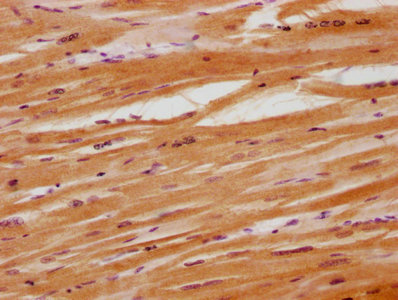
Product group Antibodies

MYH6 AntibodyCSB-PA015299HA01HU
ApplicationsELISA, ImmunoHistoChemistry
ReactivityHuman
TargetMYH6
- SizePrice
![Mouse tissue extract (50 μg) was separated by 5% SDS-PAGE, and the membrane was blotted with MYH6 antibody [GT5612] (GTX632649) diluted at 1:500.](https://www.genetex.com/upload/website/prouct_img/normal/GTX632649/GTX632649_42254_20151210_WB_M_heart_w_23061202_357.webp)
Product group Antibodies
MYH6 antibody [GT5612]GTX632649
ApplicationsWestern Blot, ImmunoHistoChemistry, ImmunoHistoChemistry Paraffin
ReactivityHuman, Mouse
TargetMYH6
- SizePrice
![Mouse tissue extract (50 μg) was separated by 5% SDS-PAGE, and the membrane was blotted with MYH6 antibody [GT565] (GTX632650) diluted at 1:5000.](https://www.genetex.com/upload/website/prouct_img/normal/GTX632650/GTX632650_42254_20151217_WB_M_heart_w_23061202_976.webp)
Product group Antibodies
MYH6 antibody [GT565]GTX632650
ApplicationsWestern Blot
ReactivityHuman, Mouse
TargetMYH6
- SizePrice