

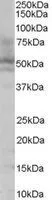
WB analysis of HepG2 lysate using GTX89532 HNF4 alpha antibody, N-term. Dilution : 0.1μg/ml Loading : 35μg protein in RIPA buffer
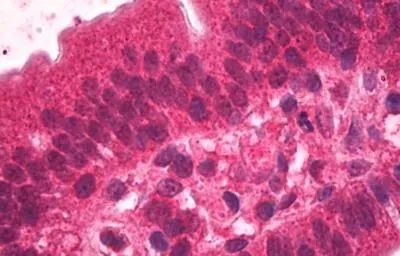
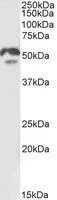
WB analysis of HepG2 lysate using GTX89532 HNF4 alpha antibody, N-term. Dilution : 0.1μg/ml Loading : 35μg protein in RIPA buffer
HNF4 alpha antibody, N-term
GTX89532

ApplicationsWestern Blot, ImmunoHistoChemistry, ImmunoHistoChemistry Paraffin
Product group Antibodies
ReactivityHuman, Mouse
TargetHNF4A
Overview
- SupplierGeneTex
- Product NameHNF4 alpha antibody, N-term
- Delivery Days Customer9
- Application Supplier NoteWB: 0.1-0.5microg/ml. IHC-P: 2microg/ml. *Optimal dilutions/concentrations should be determined by the researcher.Not tested in other applications.
- ApplicationsWestern Blot, ImmunoHistoChemistry, ImmunoHistoChemistry Paraffin
- CertificationResearch Use Only
- ClonalityPolyclonal
- Concentration0.50 mg/ml
- ConjugateUnconjugated
- Gene ID3172
- Target nameHNF4A
- Target descriptionhepatocyte nuclear factor 4 alpha
- Target synonymsFRTS4, HNF4, HNF4a7, HNF4a8, HNF4a9, HNF4alpha, MODY, MODY1, NR2A1, NR2A21, TCF, TCF-14, TCF14, hepatocyte nuclear factor 4-alpha, HNF4A wild type, HNF4alpha10/11/12, hepatic nuclear factor 4 alpha, nuclear receptor subfamily 2 group A member 1, transcription factor 14, transcription factor HNF-4
- HostGoat
- IsotypeIgG
- Protein IDP41235
- Protein NameHepatocyte nuclear factor 4-alpha
- Scientific DescriptionThe protein encoded by this gene is a nuclear transcription factor which binds DNA as a homodimer. The encoded protein controls the expression of several genes, including hepatocyte nuclear factor 1 alpha, a transcription factor which regulates the expression of several hepatic genes. This gene may play a role in development of the liver, kidney, and intestines. Mutations in this gene have been associated with monogenic autosomal dominant non-insulin-dependent diabetes mellitus type I. Alternative splicing of this gene results in multiple transcript variants encoding several different isoforms. [provided by RefSeq, Apr 2012]
- ReactivityHuman, Mouse
- Storage Instruction-20°C or -80°C,2°C to 8°C
- UNSPSC41116161
References
- Identification of CD133(+) intercellsomes in intercellular communication to offset intracellular signal deficit.Read this paper
Datasheet
Related products
Product group Antibodies

Anti-HNF-4-alpha AntibodyA285970
ApplicationsImmunoFluorescence, ELISA
ReactivityHuman, Mouse
- SizePrice
Product group Antibodies

Anti-HNF4A [RAB-S25]Ab01787-1.1
ApplicationsFlow Cytometry, ImmunoFluorescence
ReactivityHuman
TargetHNF4A
- SizePrice
Product group Antibodies

Anti-HNF4A Antibody144-02085
ApplicationsWestern Blot, ImmunoHistoChemistry
ReactivityHuman, Mouse, Rat
TargetHNF4A
- SizePrice

Product group Antibodies

Anti-HNF-4-alpha Antibody Picoband(r) (monoclonal, 6C8E9)M00389-2-CARRIER-FREE
ApplicationsWestern Blot, ImmunoHistoChemistry
ReactivityHuman, Rat
TargetHNF4A
- SizePrice
Product group Antibodies

HNF4A / HNF4 AntibodyLS-C830151
ApplicationsELISA, ImmunoHistoChemistry
ReactivityHuman, Mouse, Rat
TargetHNF4A
- SizePrice
Product group Antibodies
References

HNF4A Polyclonal AntibodyBS-3828R
ApplicationsFlow Cytometry, ImmunoFluorescence, Western Blot, ELISA, ImmunoCytoChemistry, ImmunoHistoChemistry, ImmunoHistoChemistry Frozen, ImmunoHistoChemistry Paraffin
ReactivityHuman, Mouse, Rat
TargetHNF4A
- SizePrice
Product group Antibodies

HNF4A AntibodyCSB-PA002939
ApplicationsWestern Blot, ELISA, ImmunoHistoChemistry
ReactivityHuman, Mouse, Rat
TargetHNF4A
- SizePrice
Product group Antibodies

Goat anti-HNF4AEB06700
ApplicationsWestern Blot, ELISA, ImmunoHistoChemistry
ReactivityCanine, Human, Mouse, Porcine
TargetHNF4A
- SizePrice
Product group Antibodies

HNF4A Polyclonal AntibodyCAC14642
ApplicationsWestern Blot, ELISA
ReactivityMouse
TargetHNF4A
- SizePrice
Product group Antibodies
HNF4 alpha antibody [N1], N-termGTX100311
ApplicationsWestern Blot
ReactivityHuman
TargetHNF4A
- SizePrice