

HSP60 Antibody
ORB2643369

ApplicationsFlow Cytometry, ImmunoFluorescence, Western Blot, ImmunoHistoChemistry, ImmunoHistoChemistry Paraffin
Product group Antibodies
ReactivityHuman
TargetHSPD1
Overview
- SupplierBiorbyt
- Product NameHSP60 Antibody
- Delivery Days Customer10
- Application Supplier NoteOptimal dilution of the antibody should be determined by the researcher.
- ApplicationsFlow Cytometry, ImmunoFluorescence, Western Blot, ImmunoHistoChemistry, ImmunoHistoChemistry Paraffin
- Applications SupplierFlow cytometry: 1-2ug/million cells in 0.1ml,Immunofluorescence: 1-2ug/ml,Western blot: 1-2ug/ml,Immunohistochemistry (FFPE): 1-2ug/ml FACS, IF, IHC-P, WB
- CertificationResearch Use Only
- ClonalityMonoclonal
- Clone IDCPTC-HSPD1-1
- ConjugateUnconjugated
- Gene ID3329
- Target nameHSPD1
- Target descriptionheat shock protein family D (Hsp60) member 1
- Target synonymsCPN60, GROEL, HLD4, HSP-60, HSP60, HSP65, HuCHA60, SPG13, 60 kDa heat shock protein, mitochondrial, 60 kDa chaperonin, P60 lymphocyte protein, chaperonin 60, epididymis secretory sperm binding protein, heat shock 60kDa protein 1 (chaperonin), heat shock protein 65, heat shock protein family D member 1, mitochondrial matrix protein P1, short heat shock protein 60 Hsp60s1
- HostMouse
- IsotypeIgG1
- Protein IDP10809
- Protein Name60 kDa heat shock protein, mitochondrial
- Scientific DescriptionThe heat shock proteins (HSPs) comprise a group of highly conserved, abundantly expressed proteins with diverse functions, including the assembly and sequestering of multiprotein complexes, transportation of nascent polypeptide chains across cellular membranes, and the regulation of protein folding. The mitochondrial and cytosolic localization of HSP60, combined with its binding and catalysis of folding of newly synthesized proteins destined for the mitochondrial matrix, classify this protein as a molecular chaperone. An additional role of HSP 60 is to act as a cell surface marker for T cell recognition, as well as being involved in a danger signal cascade immune response. HSP60 has been shown to influence apoptosis in tumor cells, and changes in its expression level may serve as a biomarker, as down-regulated HSP60 expression indicates a poor prognosis as well as a risk of tumor infiltration development, especially with regard to urothelial carcinomas. In ovarian cancer, decreased expression of HSP60 correlates with aggressive tumor types, while overexpression is correlated with a better patient prognosis.
- ReactivityHuman
- Storage Instruction-20°C,2°C to 8°C
- UNSPSC12352203
Related products
Product group Antibodies

Anti-HSP60 Antibody130-10057
ApplicationsELISA
ReactivityHuman
TargetHSPD1
- SizePrice
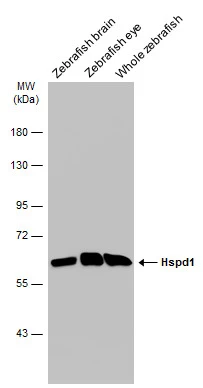
Product group Antibodies
References

HSP60 antibodyGTX110089
ApplicationsImmunoFluorescence, Western Blot, ELISA, ImmunoCytoChemistry, ImmunoHistoChemistry, ImmunoHistoChemistry Paraffin
ReactivityDrosophila, Hamster, Human, Mouse, Rat, Zebra Fish
TargetHSPD1
- SizePrice

Product group Antibodies

ApplicationsFlow Cytometry
TargetHSPD1
- SizePrice
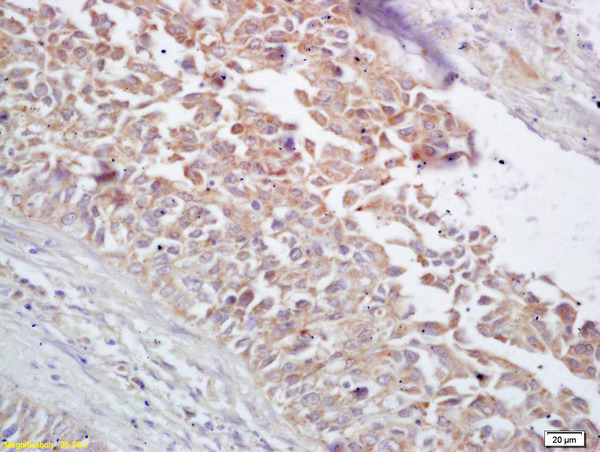
Product group Antibodies
References

HSP60 Polyclonal AntibodyBS-0191R
ApplicationsImmunoFluorescence, Western Blot, ELISA, ImmunoCytoChemistry, ImmunoHistoChemistry, ImmunoHistoChemistry Frozen, ImmunoHistoChemistry Paraffin
ReactivityBovine, Canine, Equine, Human, Mouse, Rabbit, Rat
TargetHSPD1
- SizePrice
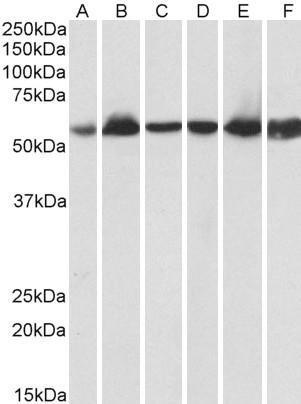
Product group Antibodies

Anti-Hsp60 AntibodyA83554
ApplicationsImmunoFluorescence, Western Blot, ELISA, ImmunoHistoChemistry
ReactivityHuman, Porcine, Rat
- SizePrice
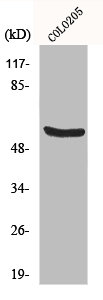
Product group Antibodies

HSPD1 AntibodyCSB-PA002990
ApplicationsImmunoFluorescence, Western Blot, ELISA, ImmunoHistoChemistry
ReactivityHuman, Mouse, Rat
TargetHSPD1
- SizePrice
Product group Antibodies

ApplicationsImmunoFluorescence, Western Blot, ELISA, ImmunoHistoChemistry
ReactivityBovine, Canine, Human, Porcine, Rat
TargetHSPD1
- SizePrice

Product group Antibodies

Anti-Hsp60/HSPD1 Antibody Picoband(r)PB9337-CARRIER-FREE
ApplicationsImmunoFluorescence, Western Blot, ImmunoCytoChemistry, ImmunoHistoChemistry
ReactivityHuman, Mouse, Rat
TargetHSPD1
- SizePrice
Product group Antibodies

ApplicationsELISA
ReactivityHuman
TargetHSPD1
- SizePrice