

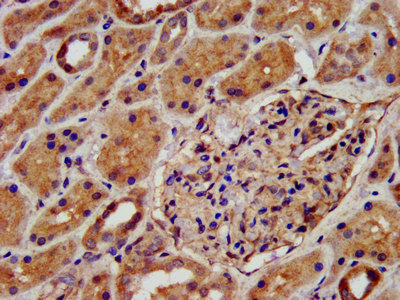
IHC image of CSB-PA613604LA01HU diluted at 1:500 and staining in paraffin-embedded human kidney tissue performed on a Leica BondTM system. After dewaxing and hydration, antigen retrieval was mediated by high pressure in a citrate buffer (pH 6.0). Section was blocked with 10% normal goat serum 30min at RT. Then primary antibody (1% BSA) was incubated at 4°C overnight. The primary is detected by a biotinylated secondary antibody and visualized using an HRP conjugated SP system.
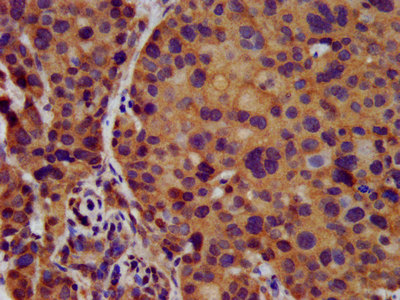
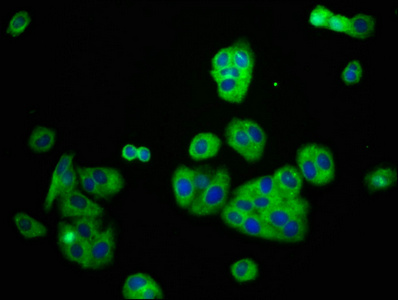
IHC image of CSB-PA613604LA01HU diluted at 1:500 and staining in paraffin-embedded human kidney tissue performed on a Leica BondTM system. After dewaxing and hydration, antigen retrieval was mediated by high pressure in a citrate buffer (pH 6.0). Section was blocked with 10% normal goat serum 30min at RT. Then primary antibody (1% BSA) was incubated at 4°C overnight. The primary is detected by a biotinylated secondary antibody and visualized using an HRP conjugated SP system.
KCNJ8 Antibody
CSB-PA613604LA01HU

ApplicationsImmunoFluorescence, ELISA, ImmunoHistoChemistry
Product group Antibodies
ReactivityHuman
TargetKCNJ8
Overview
- SupplierCusabio
- Product NameKCNJ8 Antibody
- Delivery Days Customer20
- ApplicationsImmunoFluorescence, ELISA, ImmunoHistoChemistry
- CertificationResearch Use Only
- ClonalityPolyclonal
- ConjugateUnconjugated
- Gene ID3764
- Target nameKCNJ8
- Target descriptionpotassium inwardly rectifying channel subfamily J member 8
- Target synonymsKIR6.1, uKATP-1, ATP-sensitive inward rectifier potassium channel 8, inward rectifier K(+) channel Kir6.1, inwardly rectifying potassium channel KIR6.1, potassium channel, inwardly rectifying subfamily J member 8, potassium voltage-gated channel subfamily J member 8
- HostRabbit
- IsotypeIgG
- Protein IDQ15842
- Protein NameATP-sensitive inward rectifier potassium channel 8
- Scientific DescriptionThis potassium channel is controlled by G proteins. Inward rectifier potassium channels are characterized by a greater tendency to allow potassium to flow into the cell rather than out of it. Their voltage dependence is regulated by the concentration of extracellular potassium; as external potassium is raised, the voltage range of the channel opening shifts to more positive voltages. The inward rectification is mainly due to the blockage of outward current by internal magnesium. Can be blocked by external barium (By similarity).
- ReactivityHuman
- Storage Instruction-20°C or -80°C
- UNSPSC41116161
Related products

Product group Antibodies

Anti-Kir6.1/KCNJ8 Antibody Picoband(r)A04950-1-CARRIER-FREE
ApplicationsFlow Cytometry, Western Blot, ELISA, ImmunoHistoChemistry
ReactivityHuman, Mouse, Rat
TargetKCNJ8
- SizePrice

Product group Antibodies

Anti-KCNJ8 AntibodyHPA031066
ApplicationsImmunoHistoChemistry
ReactivityHuman
TargetKCNJ8
- SizePrice
Product group Antibodies

KCNJ8 / Kir6.1 AntibodyLS-C497273
ApplicationsWestern Blot
ReactivityHuman
TargetKCNJ8
- SizePrice
Product group Antibodies

Kir6.1 antibody, InternalGTX47687
ApplicationsWestern Blot
ReactivityHuman
TargetKCNJ8
- SizePrice
Product group Antibodies
References

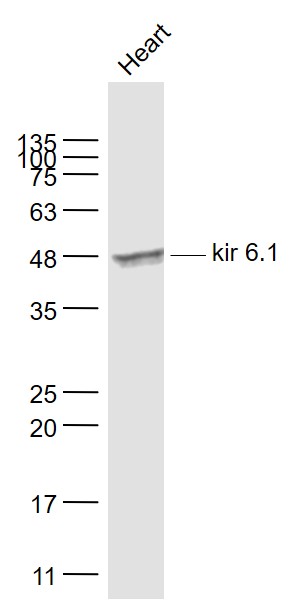
kir 6.1 Polyclonal AntibodyBS-6468R
ApplicationsImmunoFluorescence, Western Blot, ELISA, ImmunoCytoChemistry, ImmunoHistoChemistry, ImmunoHistoChemistry Frozen, ImmunoHistoChemistry Paraffin
ReactivityBovine, Chicken, Human, Mouse, Porcine, Rabbit, Rat
TargetKCNJ8
- SizePrice