

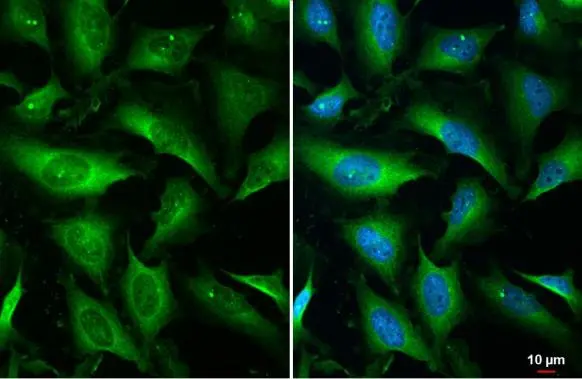
mTOR (phospho Ser2448) antibody detects mTOR (phospho Ser2448) protein at cytoplasm by immunofluorescent analysis. Sample: HeLa cells were fixed in 4% paraformaldehyde at RT for 15 min. Green: mTOR (phospho Ser2448) stained by mTOR (phospho Ser2448) antibody (GTX132803) diluted at 1:500. Blue: Fluoroshield with DAPI (GTX30920).
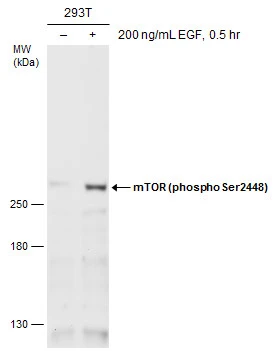
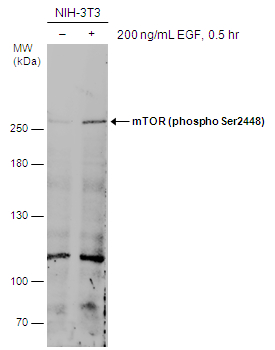
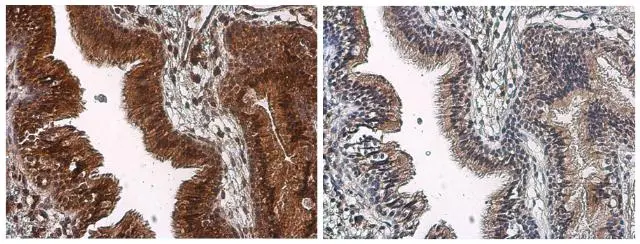
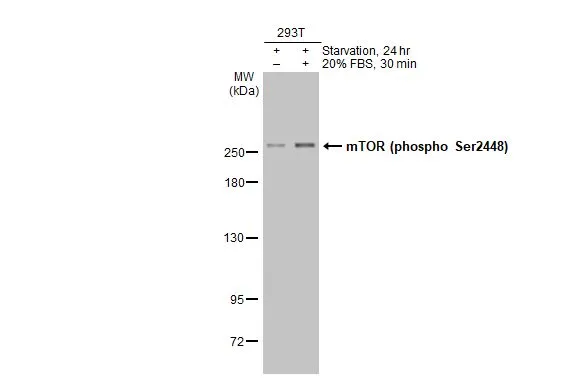
mTOR (phospho Ser2448) antibody detects mTOR (phospho Ser2448) protein at cytoplasm by immunofluorescent analysis. Sample: HeLa cells were fixed in 4% paraformaldehyde at RT for 15 min. Green: mTOR (phospho Ser2448) stained by mTOR (phospho Ser2448) antibody (GTX132803) diluted at 1:500. Blue: Fluoroshield with DAPI (GTX30920).
mTOR (phospho Ser2448) antibody
GTX132803

ApplicationsImmunoFluorescence, Western Blot, ImmunoCytoChemistry, ImmunoHistoChemistry, ImmunoHistoChemistry Paraffin
Product group Antibodies
ReactivityHuman, Mouse, Rat
TargetMTOR
Overview
- SupplierGeneTex
- Product NamemTOR (phospho Ser2448) antibody
- Delivery Days Customer9
- Application Supplier NoteWB: 1:500-1:3000. IHC-P: 1:100-1:1000. *Optimal dilutions/concentrations should be determined by the researcher.Not tested in other applications.
- ApplicationsImmunoFluorescence, Western Blot, ImmunoCytoChemistry, ImmunoHistoChemistry, ImmunoHistoChemistry Paraffin
- CertificationResearch Use Only
- ClonalityPolyclonal
- Concentration1.5 mg/ml
- ConjugateUnconjugated
- Gene ID2475
- Target nameMTOR
- Target descriptionmechanistic target of rapamycin kinase
- Target synonymsFRAP, FRAP1, FRAP2, RAFT1, RAPT1, SKS, serine/threonine-protein kinase mTOR, FK506 binding protein 12-rapamycin associated protein 2, FK506-binding protein 12-rapamycin complex-associated protein 1, FKBP-rapamycin associated protein, FKBP12-rapamycin complex-associated protein 1, mammalian target of rapamycin, mechanistic target of rapamycin (serine/threonine kinase), rapamycin and FKBP12 target 1, rapamycin associated protein FRAP2, rapamycin target protein 1, tyrosine-protein kinase mTOR
- HostRabbit
- IsotypeIgG
- Protein IDP42345
- Protein NameSerine/threonine-protein kinase mTOR
- Scientific DescriptionThe protein encoded by this gene belongs to a family of phosphatidylinositol kinase-related kinases. These kinases mediate cellular responses to stresses such as DNA damage and nutrient deprivation. This protein acts as the target for the cell-cycle arrest and immunosuppressive effects of the FKBP12-rapamycin complex. The ANGPTL7 gene is located in an intron of this gene. [provided by RefSeq]
- ReactivityHuman, Mouse, Rat
- Storage Instruction-20°C or -80°C,2°C to 8°C
- UNSPSC12352203
References
- Zhong Y, Jin R, Luo R, et al. Diosgenin Targets CaMKK2 to Alleviate Type II Diabetic Nephropathy through Improving Autophagy, Mitophagy and Mitochondrial Dynamics. Nutrients. 2023,15(16). doi: 10.3390/nu15163554Read this paper
- Tian X, Wei Y, Hou R, et al. Yangqing Chenfei formula alleviates silica-induced pulmonary inflammation in rats by inhibiting macrophage M1 polarization. Chin Med. 2023,18(1):79. doi: 10.1186/s13020-023-00787-9Read this paper
- Parija M, Adhya AK, Mishra SK. G-protein-coupled receptor 141 mediates breast cancer proliferation and metastasis by regulating oncogenic mediators and the p-mTOR/p53 axis. Oncotarget. 2023,14:466-480. doi: 10.18632/oncotarget.28433Read this paper
- Hashikawa-Hobara N, Otsuka A, Okujima C, et al. CGRP overexpression does not alter depression-like behavior in mice. PeerJ. 2021,9:e11720. doi: 10.7717/peerj.11720Read this paper
- Mori Y, Takeuchi A, Miyagawa K, et al. CD133 prevents colon cancer cell death induced by serum deprivation through activation of Akt-mediated protein synthesis and inhibition of apoptosis. FEBS Open Bio. 2021,11(5):1382-1394. doi: 10.1002/2211-5463.13145Read this paper
- Liu Z, Ma T, Duan J, et al. MicroRNA‑223‑induced inhibition of the FBXW7 gene affects the proliferation and apoptosis of colorectal cancer cells via the Notch and Akt/mTOR pathways. Mol Med Rep. 2021,23(2):pii: 154. doi: 10.3892/mmr.2020.11793.Read this paper
- Cheung CHY, Hsu CL, Lin TY, et al. ZNF322A-mediated protein phosphorylation induces autophagosome formation through modulation of IRS1-AKT glucose uptake and HSP-elicited UPR in lung cancer. J Biomed Sci. 2020,27(1):75. doi: 10.1186/s12929-020-00668-5Read this paper
- Li J, Ma J, Tian Y, et al. Effective-component compatibility of Bufei Yishen formula II inhibits mucus hypersecretion of chronic obstructive pulmonary disease rats by regulating EGFR/PI3K/mTOR signaling. J Ethnopharmacol. 2020,257:112796. doi: 10.1016/j.jep.2020.112796Read this paper
- Li H, Xue X, Li L, et al. Aluminum-Induced Synaptic Plasticity Impairment via PI3K-Akt-mTOR Signaling Pathway. Neurotox Res. 2020,37(4):996-1008. doi: 10.1007/s12640-020-00165-5Read this paper
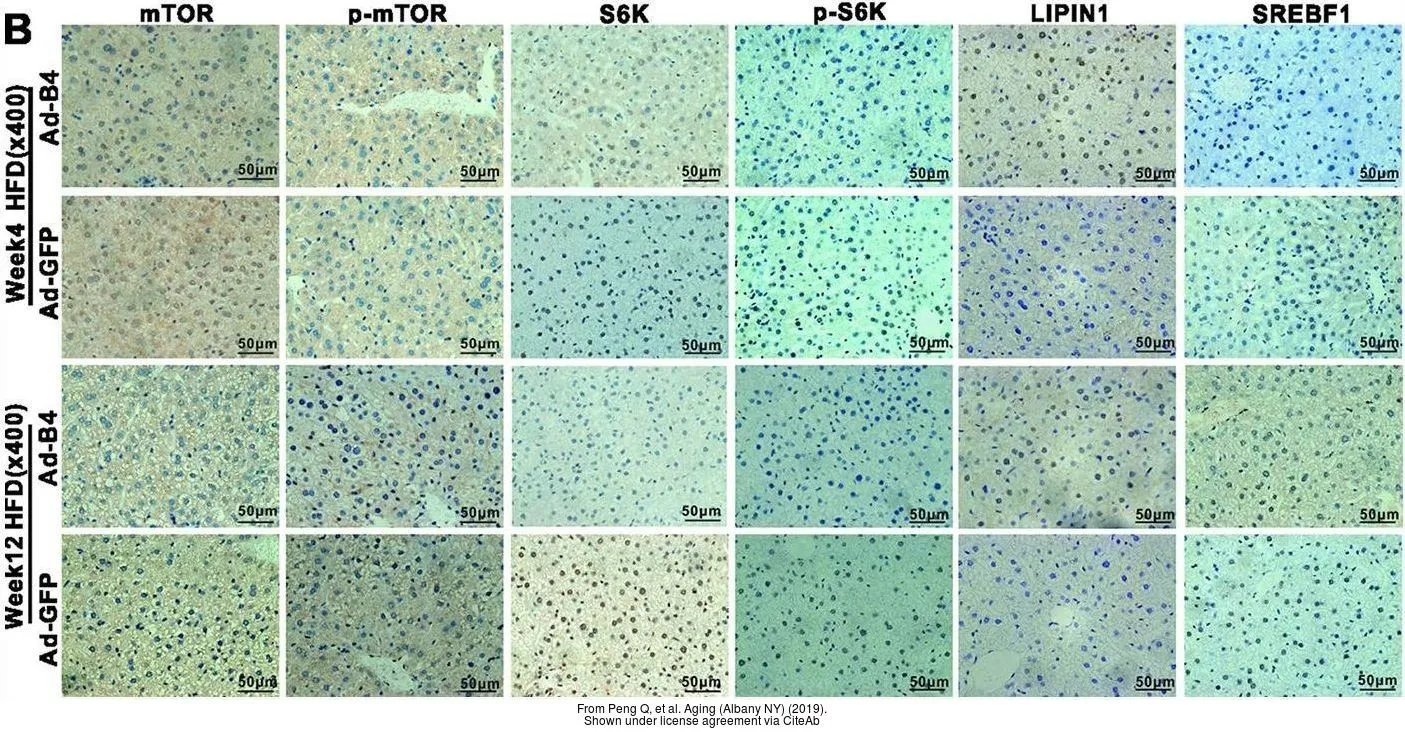
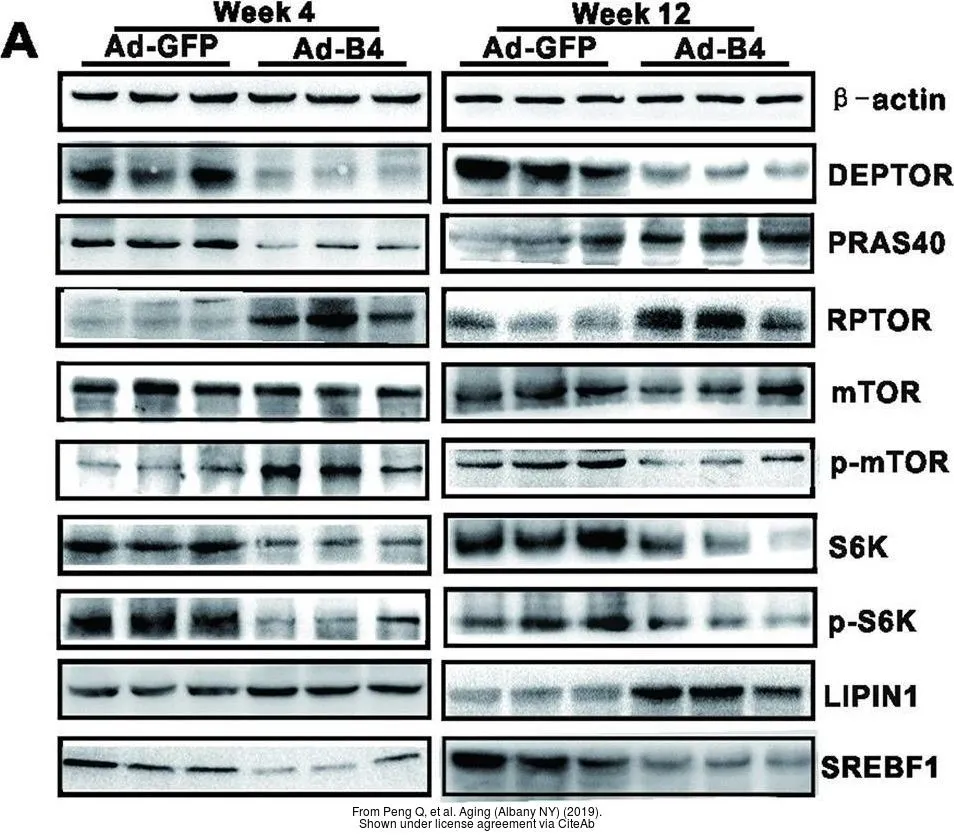
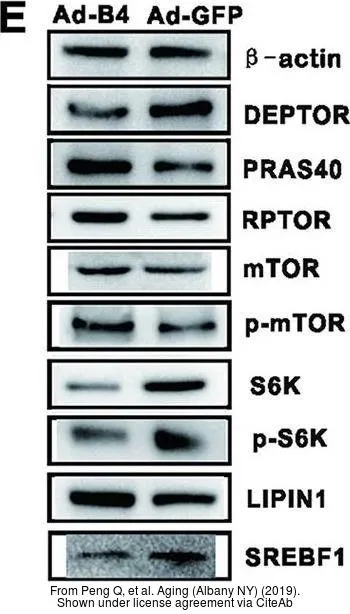
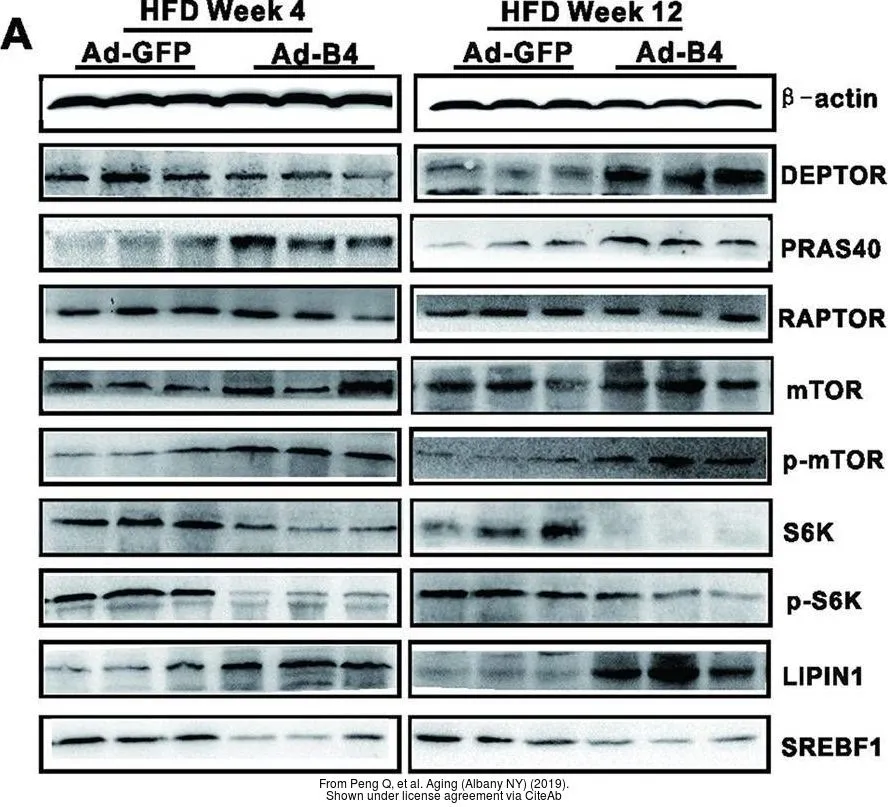
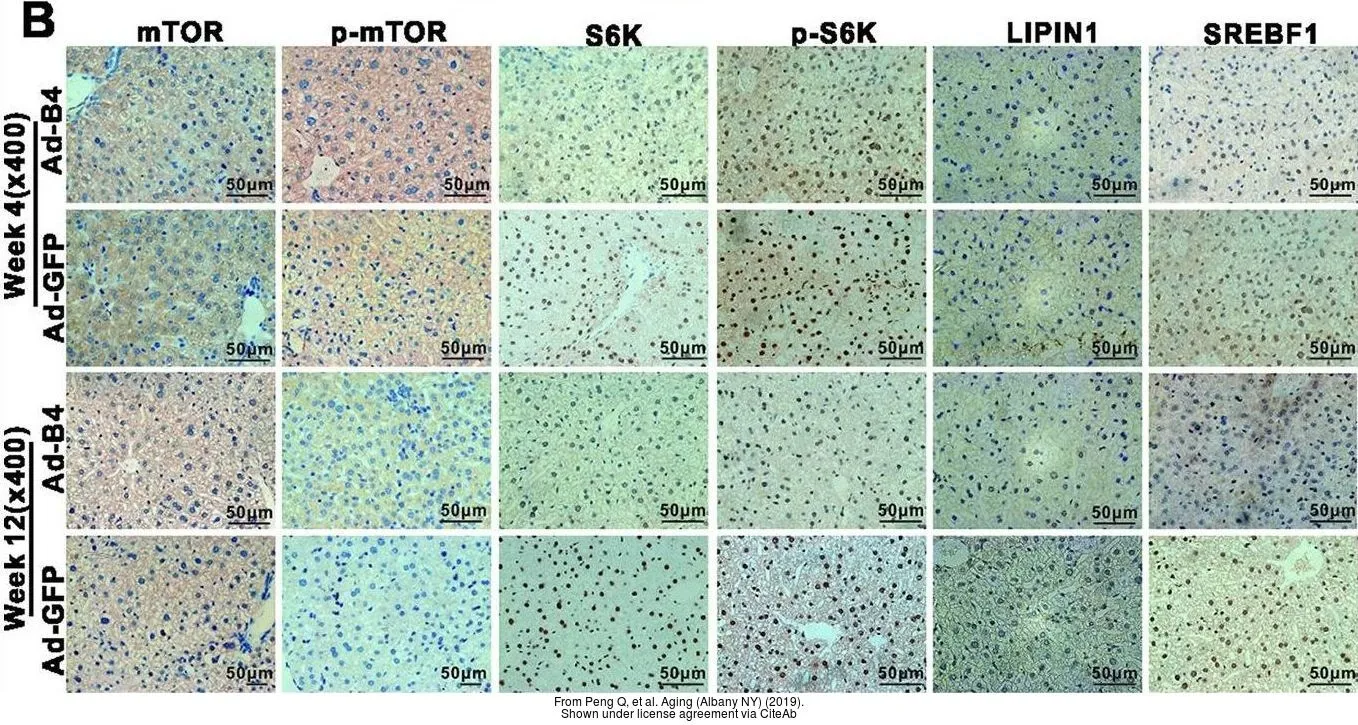
- Peng Q, Chen B, Wang H, et al. Bone morphogenetic protein 4 (BMP4) alleviates hepatic steatosis by increasing hepatic lipid turnover and inhibiting the mTORC1 signaling axis in hepatocytes. Aging (Albany NY). 2019,11(23):11520-11540. doi: 10.18632/aging.102552Read this paper
Datasheet
Related products


Product group Antibodies

Anti-MTOR AntibodyAMAB91508
ApplicationsWestern Blot
ReactivityHuman
TargetMTOR
- SizePrice
Product group Antibodies

Anti-P-mTor Antibody130-10612
ApplicationsELISA
ReactivityHuman
TargetMTOR
- SizePrice
Product group Antibodies
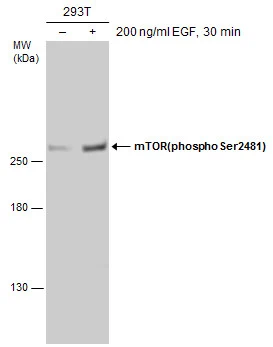
mTOR (phospho Ser2481) antibodyGTX133190
ApplicationsWestern Blot
ReactivityHuman
TargetMTOR
- SizePrice
Product group Antibodies
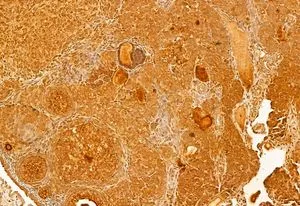
mTOR antibodyGTX04334
ApplicationsImmunoFluorescence, Western Blot, ImmunoCytoChemistry, ImmunoHistoChemistry, ImmunoHistoChemistry Paraffin
ReactivityHuman, Mouse, Rat
TargetMTOR
- SizePrice
![Whole cell extract (30 μg) was separated by 5% SDS-PAGE, and the membrane was blotted with mTOR antibody [C3], C-term (GTX101557) diluted at 1:1000. The HRP-conjugated anti-rabbit IgG antibody (GTX213110-01) was used to detect the primary antibody.](https://www.genetex.com/upload/website/prouct_img/normal/GTX101557/GTX101557_43957_20230428_WB_R_23050223_481.webp)
Product group Antibodies
References
mTOR antibody [C3], C-termGTX101557
ApplicationsImmunoFluorescence, ImmunoPrecipitation, Western Blot, ChIP Chromatin ImmunoPrecipitation, ImmunoCytoChemistry, ImmunoHistoChemistry, ImmunoHistoChemistry Paraffin
ReactivityHuman, Mouse, Rat
TargetMTOR
- SizePrice
![mTOR antibody [C1], Internal detects mTOR protein by western blot analysis. Rat tissue extracts (50 μg) was separated by 5% SDS-PAGE, and the membrane was blotted with mTOR antibody [C1], Internal (GTX101558) diluted at 1:1000.](https://www.genetex.com/upload/website/prouct_img/normal/GTX101558/GTX101558_39721_20151015_WB_R_brain_w_23060100_962.webp)
Product group Antibodies
References
mTOR antibody [C1], InternalGTX101558
ApplicationsWestern Blot
ReactivityHuman, Mouse, Rat
TargetMTOR
- SizePrice
![Non-transfected (–) and transfected (+) 293T whole cell extracts (30 μg) were separated by 5% SDS-PAGE, and the membrane was blotted with mTOR antibody [GT649] (GTX630198) diluted at 1:500.](https://www.genetex.com/upload/website/prouct_img/normal/GTX630198/GTX630198_41512_20160616_WB_shRNA_watermark_w_23061202_784.webp)
Product group Antibodies
References
mTOR antibody [GT649]GTX630198
ApplicationsImmunoFluorescence, Western Blot, ImmunoCytoChemistry, ImmunoHistoChemistry, ImmunoHistoChemistry Paraffin
ReactivityHuman, Mouse
TargetMTOR
- SizePrice
![mTOR antibody [GT6611] detects mTOR protein by western blot analysis. A. 30 μg 293T whole cell lysate/extract B. 30 μg A431 whole cell lysate/extract C. 30 μg HeLa whole cell lysate/extract D. 30 μg HepG2 whole cell lysate/extract 5 % SDS-PAGE mTOR antibody [GT6611] (GTX630199) dilution: 1:500](https://www.genetex.com/upload/website/prouct_img/normal/GTX630199/GTX630199_41512_WB_2_w_23061202_438.webp)
Product group Antibodies
mTOR antibody [GT6611]GTX630199
ApplicationsImmunoFluorescence, Western Blot, ImmunoCytoChemistry
ReactivityHuman
TargetMTOR
- SizePrice
![Non-transfected (–) and transfected (+) 293T whole cell extracts (30 μg) were separated by 5% SDS-PAGE, and the membrane was blotted with mTOR antibody [GT778] (GTX630200) diluted at 1:500.](https://www.genetex.com/upload/website/prouct_img/normal/GTX630200/GTX630200_41512_20160616_WB_shRNA_watermark_w_23061202_703.webp)
Product group Antibodies
mTOR antibody [GT778]GTX630200
ApplicationsWestern Blot
ReactivityHuman
TargetMTOR
- SizePrice