

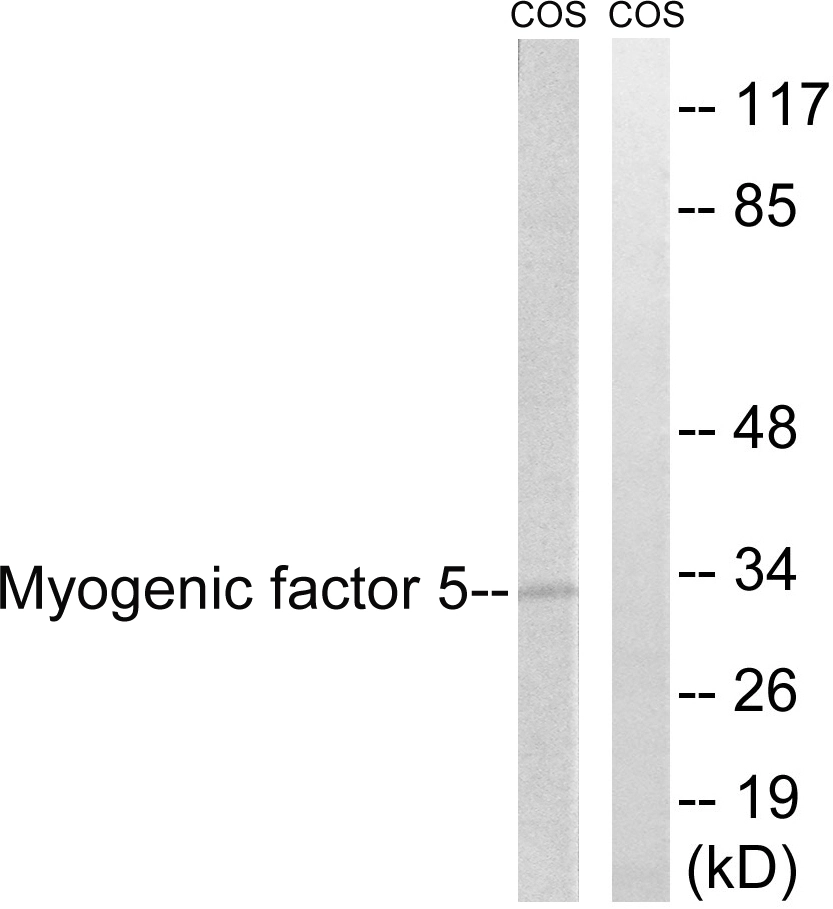
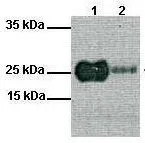
WB analysis of COS7 cell lysates using GTX87110 MYF5 antibody. The lane on the right is blocked with the synthesized peptide.
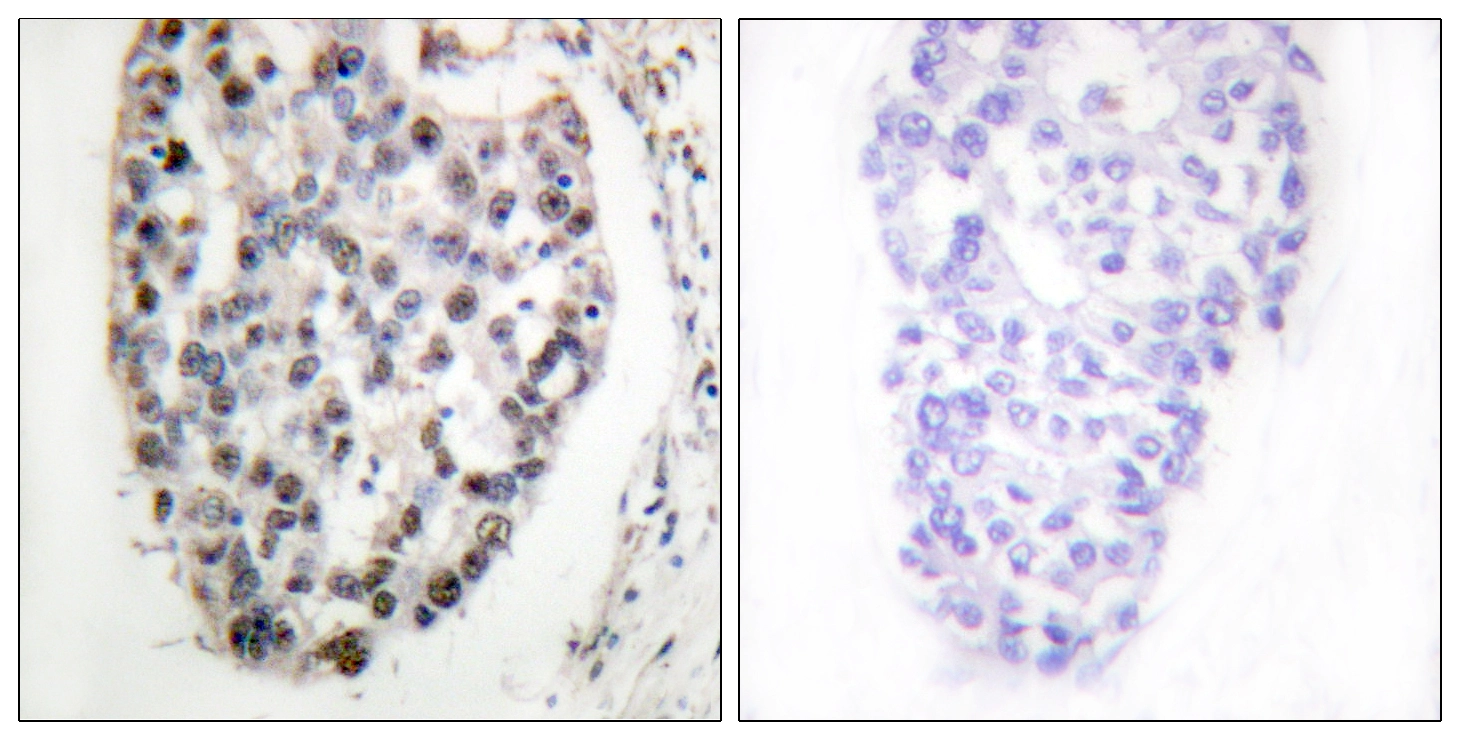
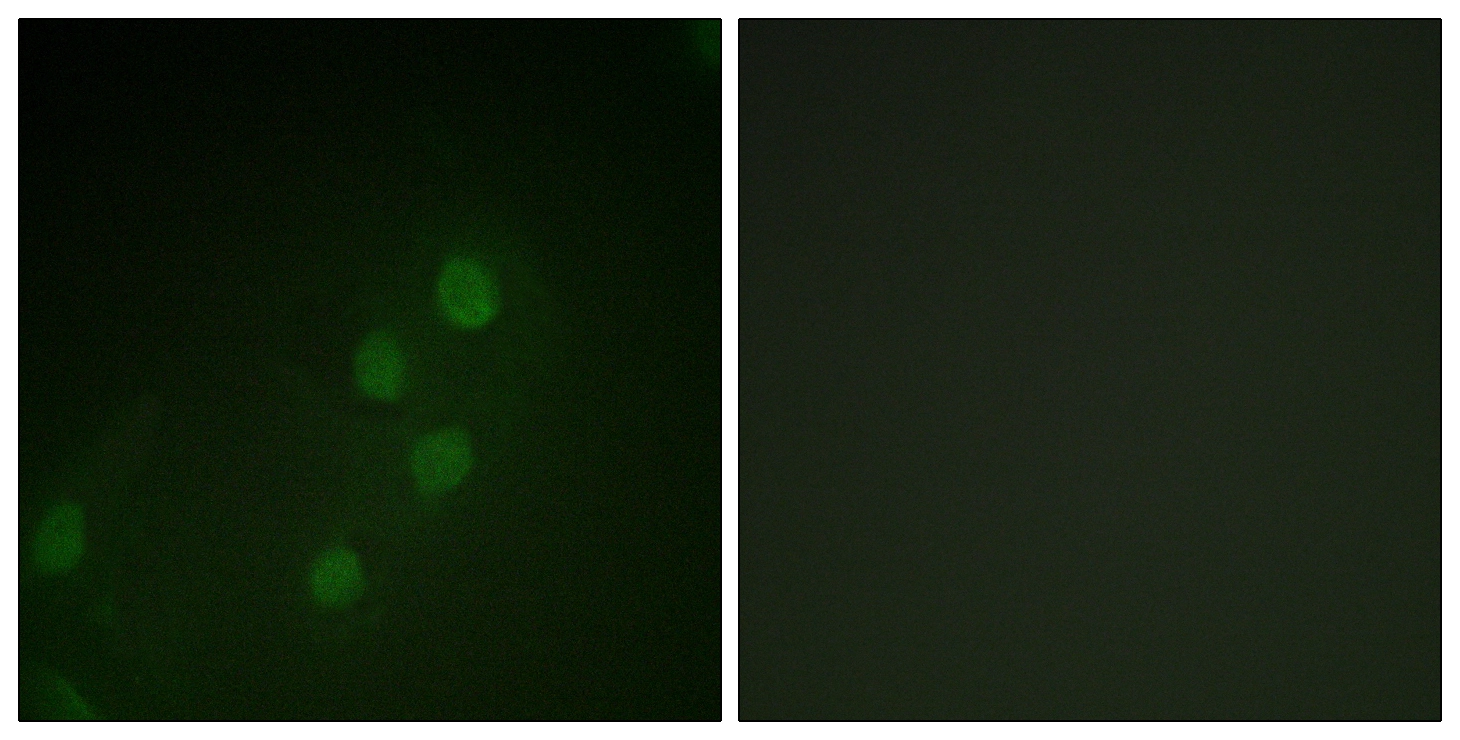
WB analysis of COS7 cell lysates using GTX87110 MYF5 antibody. The lane on the right is blocked with the synthesized peptide.
MYF5 antibody
GTX87110

ApplicationsImmunoFluorescence, Western Blot, ImmunoCytoChemistry, ImmunoHistoChemistry, ImmunoHistoChemistry Paraffin
Product group Antibodies
ReactivityHuman, Monkey, Mouse
TargetMYF5
Overview
- SupplierGeneTex
- Product NameMYF5 antibody
- Delivery Days Customer9
- Application Supplier NoteWB: 1:500~1:1000. ICC/IF: 1:100~1:500. IHC-P: 1:50~1:100. *Optimal dilutions/concentrations should be determined by the researcher.Not tested in other applications.
- ApplicationsImmunoFluorescence, Western Blot, ImmunoCytoChemistry, ImmunoHistoChemistry, ImmunoHistoChemistry Paraffin
- CertificationResearch Use Only
- ClonalityPolyclonal
- ConjugateUnconjugated
- Gene ID4617
- Target nameMYF5
- Target descriptionmyogenic factor 5
- Target synonymsEORVA, bHLHc2, myogenic factor 5, class C basic helix-loop-helix protein 2, myf-5
- HostRabbit
- IsotypeIgG
- Protein IDP13349
- Protein NameMyogenic factor 5
- ReactivityHuman, Monkey, Mouse
- Storage Instruction-20°C or -80°C,2°C to 8°C
- UNSPSC41116161
References
- Unique Features of River Lamprey (Lampetra fluviatilis) Myogenesis.Read this paper
- Trichinella spiralis muscle larvae excretory-secretory products induce changes in cytoskeletal and myogenic transcription factors in primary myoblast cultures. Hernandez-Ancheyta L et al., 2018 Mar, Int J ParasitolRead this paper
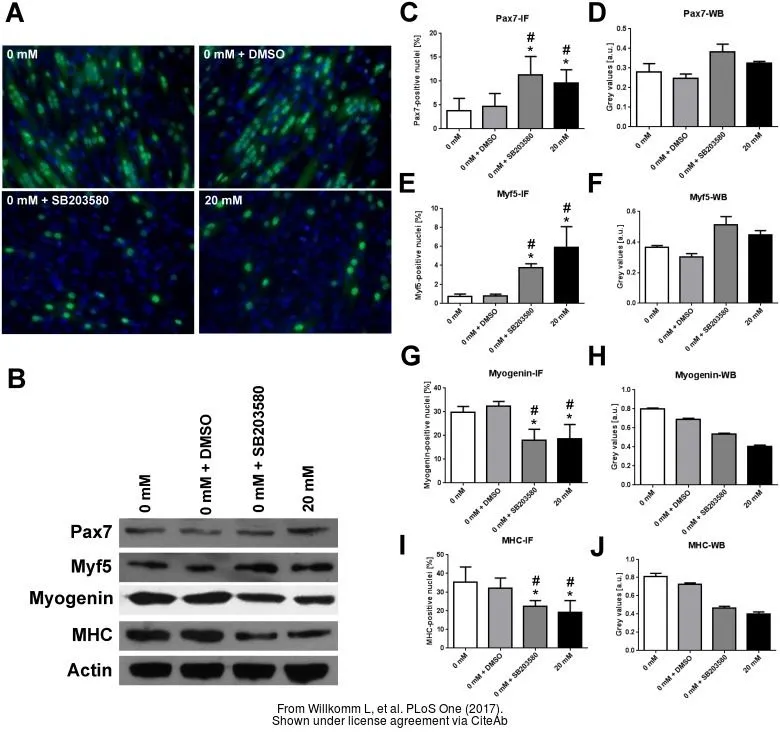
- p38 MAPK activation and H3K4 trimethylation is decreased by lactate in vitro and high intensity resistance training in human skeletal muscle. Willkomm L et al., 2017, PLoS OneRead this paper
Datasheet
Related products
Product group Antibodies

MYF5 AntibodyCSB-PA003340
ApplicationsWestern Blot, ELISA
ReactivityHuman, Mouse
TargetMYF5
- SizePrice
Product group Antibodies

Anti-MYF5 AntibodyA96380
ApplicationsImmunoFluorescence, Western Blot, ELISA, ImmunoHistoChemistry
ReactivityHuman, Mouse
- SizePrice

Product group Antibodies

Goat anti-MYF5EB08504
ApplicationsWestern Blot, ELISA
ReactivityHuman
TargetMYF5
- SizePrice
Product group Antibodies

Anti-Myf5 Antibody Picoband(r)A04040-1-CARRIER-FREE
ApplicationsWestern Blot, ELISA
ReactivityHuman, Mouse, Rat
TargetMYF5
- SizePrice
Product group Antibodies

MYF5 / MYF 5 AntibodyLS-C670731
ApplicationsWestern Blot, ELISA
ReactivityHuman
TargetMYF5
- SizePrice
Product group Antibodies

Myf5 Polyclonal AntibodyCAC11721
ApplicationsWestern Blot, ELISA
ReactivityMouse, Rat
TargetMYF5
- SizePrice
Product group Antibodies

MYF5 Polyclonal AntibodyBS-6936R
ApplicationsImmunoFluorescence, ELISA, ImmunoCytoChemistry, ImmunoHistoChemistry, ImmunoHistoChemistry Frozen, ImmunoHistoChemistry Paraffin
ReactivityBovine, Chicken, Equine, Human, Mouse, Porcine, Rabbit, Rat, Sheep
TargetMYF5
- SizePrice
Product group Antibodies
MYF5 antibody, N-termGTX77867
ApplicationsImmunoFluorescence, Western Blot, ImmunoCytoChemistry
ReactivityHuman, Mouse
TargetMYF5
- SizePrice
Product group Antibodies
MYF5 antibodyGTX129925
ApplicationsWestern Blot
ReactivityHuman
TargetMYF5
- SizePrice