

Oct4 antibody [C-10]
GTX01778

ApplicationsFlow Cytometry, ImmunoFluorescence, ImmunoPrecipitation, Western Blot, ImmunoCytoChemistry, ImmunoHistoChemistry, ImmunoHistoChemistry Frozen, ImmunoHistoChemistry Paraffin
Product group Antibodies
ReactivityHuman, Mouse, Rat
TargetPOU5F1
Overview
- SupplierGeneTex
- Product NameOct4 antibody [C-10]
- Delivery Days Customer9
- Application Supplier NoteIHC-P: 1:50-1:100. *Optimal dilutions/concentrations should be determined by the researcher.Not tested in other applications.
- ApplicationsFlow Cytometry, ImmunoFluorescence, ImmunoPrecipitation, Western Blot, ImmunoCytoChemistry, ImmunoHistoChemistry, ImmunoHistoChemistry Frozen, ImmunoHistoChemistry Paraffin
- CertificationResearch Use Only
- ClonalityMonoclonal
- Clone IDC-10
- ConjugateUnconjugated
- Gene ID5460
- Target namePOU5F1
- Target descriptionPOU class 5 homeobox 1
- Target synonymsOCT3, OCT4, OCT4Borf1, OTF-3, OTF3, OTF4, Oct-3, Oct-4, Oct3/4, POU domain, class 5, transcription factor 1, POU domain transcription factor OCT4, POU-type homeodomain-containing DNA-binding protein, octamer-binding protein 3, octamer-binding protein 4, octamer-binding transcription factor 3
- HostMouse
- IsotypeIgG2b
- Protein IDQ01860
- Protein NamePOU domain, class 5, transcription factor 1
- Scientific DescriptionThis gene encodes a transcription factor containing a POU homeodomain that plays a key role in embryonic development and stem cell pluripotency. Aberrant expression of this gene in adult tissues is associated with tumorigenesis. This gene can participate in a translocation with the Ewings sarcoma gene on chromosome 21, which also leads to tumor formation. Alternative splicing, as well as usage of alternative AUG and non-AUG translation initiation codons, results in multiple isoforms. One of the AUG start codons is polymorphic in human populations. Related pseudogenes have been identified on chromosomes 1, 3, 8, 10, and 12. [provided by RefSeq, Oct 2013]
- ReactivityHuman, Mouse, Rat
- Storage Instruction2°C to 8°C
- UNSPSC12352203
References
- Mueller T, Hantsch C, Volkmer I, et al. Differentiation-Dependent Regulation of Human Endogenous Retrovirus K Sequences and Neighboring Genes in Germ Cell Tumor Cells. Front Microbiol. 2018,9:1253. doi: 10.3389/fmicb.2018.01253Read this paper
- Chen X, Wang R, Liu X, et al. A Chemical-Genetic Approach Reveals the Distinct Roles of GSK3α and GSK3β in Regulating Embryonic Stem Cell Fate. Dev Cell. 2017,43(5):563-576.e4. doi: 10.1016/j.devcel.2017.11.007Read this paper
- Ishigaki H, Maeda T, Inoue H, et al. Transplantation of iPS-Derived Tumor Cells with a Homozygous MHC Haplotype Induces GRP94 Antibody Production in MHC-Matched Macaques. Cancer Res. 2017,77(21):6001-6010. doi: 10.1158/0008-5472.CAN-17-0775Read this paper
- Prado AA, Favaron PO, da Silva LC, et al. Characterization of mesenchymal stem cells derived from the equine synovial fluid and membrane. BMC Vet Res. 2015,11:281. doi: 10.1186/s12917-015-0531-5Read this paper
- Liu YP, Seçkin H, Izci Y, et al. Neuroprotective effects of mesenchymal stem cells derived from human embryonic stem cells in transient focal cerebral ischemia in rats. J Cereb Blood Flow Metab. 2009,29(4):780-91. doi: 10.1038/jcbfm.2009.1Read this paper
Datasheet
Related products

Product group Antibodies

POU5F1 Polyclonal AntibodyCAC14128
ApplicationsWestern Blot, ELISA, ImmunoHistoChemistry
TargetPOU5F1
- SizePrice
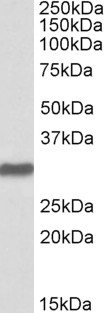
Product group Antibodies

Anti-Oct4 AntibodyA83342
ApplicationsWestern Blot, ELISA
ReactivityHuman, Mouse
- SizePrice
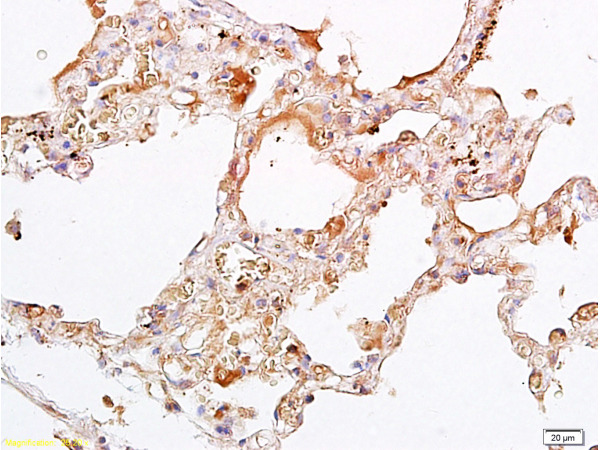
Product group Antibodies
References

Oct4 Polyclonal Antibodybs-0830R
ApplicationsFlow Cytometry, ImmunoFluorescence, Western Blot, ELISA, ImmunoCytoChemistry, ImmunoHistoChemistry, ImmunoHistoChemistry Frozen, ImmunoHistoChemistry Paraffin
ReactivityBovine, Canine, Human, Mouse, Porcine, Rat
TargetPOU5F1
- SizePrice

Product group Antibodies

Anti-POU5F1 Antibody144-07920
ApplicationsImmunoFluorescence, Western Blot, ImmunoHistoChemistry
ReactivityHuman, Mouse, Rat
TargetPOU5F1
- SizePrice

Product group Antibodies

Anti-POU5F1 AntibodyAMAB91477
ApplicationsWestern Blot, ImmunoCytoChemistry
ReactivityHuman
TargetPOU5F1
- SizePrice
Product group Antibodies

Anti-Oct3/4 [41B1]Ab03310-10.0
ApplicationsWestern Blot, ImmunoHistoChemistry
ReactivityHuman
TargetPOU5F1
- SizePrice
Product group Antibodies

Goat anti-POU5F1B AntibodyEB10038
ApplicationsELISA
ReactivityHuman
TargetPOU5F1
- SizePrice
![IHC-P analysis of human testes, seminoma tissue using GTX01931 Oct4 antibody [N1NK]. Note nuclear staining of neoplastic cells.](https://www.genetex.com/upload/website/prouct_img/normal/GTX01931/GTX01931_20200811_IHC-P_65_w_23053121_845.webp)
Product group Antibodies
Oct4 antibody [N1NK]GTX01931
ApplicationsImmunoHistoChemistry, ImmunoHistoChemistry Paraffin
ReactivityHuman
TargetPOU5F1
- SizePrice