

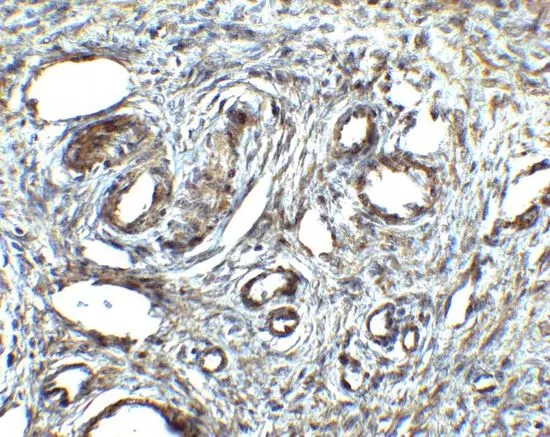
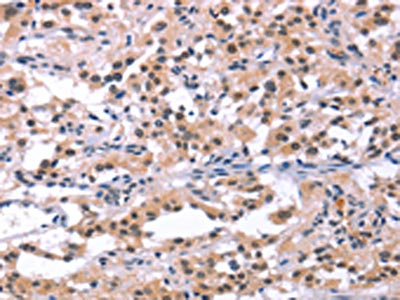
IHC-P analysis of human ovary tissue using GTX85048 Orai1 antibody. Working concentration : 2.5 μg/ml
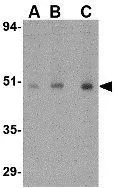
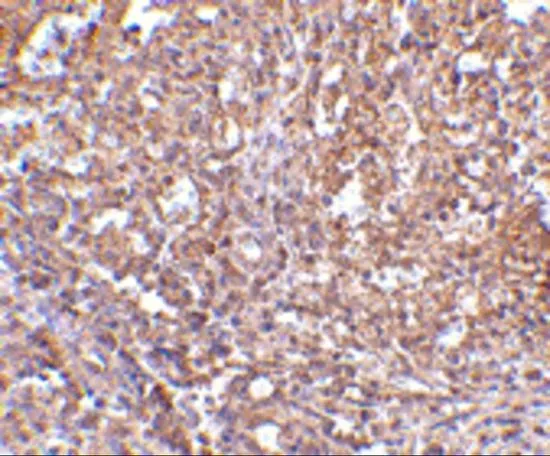
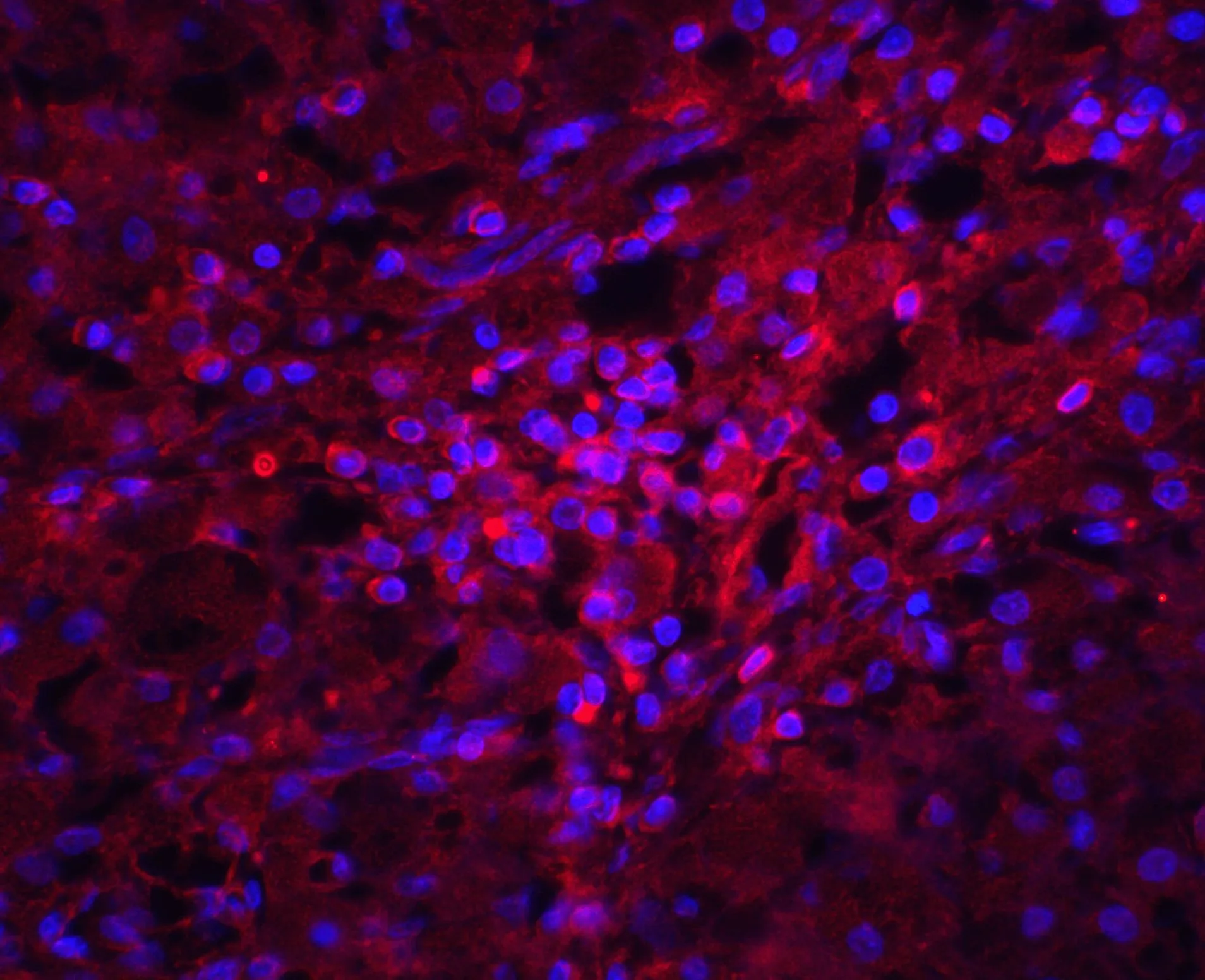
IHC-P analysis of human ovary tissue using GTX85048 Orai1 antibody. Working concentration : 2.5 μg/ml
Orai1 antibody
GTX85048

ApplicationsWestern Blot, ELISA, ImmunoHistoChemistry, ImmunoHistoChemistry Paraffin
Product group Antibodies
ReactivityHuman, Mouse
TargetORAI1
Overview
- SupplierGeneTex
- Product NameOrai1 antibody
- Delivery Days Customer9
- Application Supplier NoteWB: 0.5 - 2 microg/mL. IHC-P: 2.5 microg/mL. *Optimal dilutions/concentrations should be determined by the researcher.Not tested in other applications.
- ApplicationsWestern Blot, ELISA, ImmunoHistoChemistry, ImmunoHistoChemistry Paraffin
- CertificationResearch Use Only
- ClonalityPolyclonal
- Concentration1 mg/ml
- ConjugateUnconjugated
- Gene ID84876
- Target nameORAI1
- Target descriptionORAI calcium release-activated calcium modulator 1
- Target synonymsCRACM1, IMD9, ORAT1, TAM2, TMEM142A, calcium release-activated calcium channel protein 1, calcium release-activated calcium modulator 1, protein orai-1, transmembrane protein 142A
- HostRabbit
- IsotypeIgG
- Protein IDQ96D31
- Protein NameCalcium release-activated calcium channel protein 1
- Scientific DescriptionAntigen stimulation of immune cells triggers Ca++ entry through Ca++ release-activated Ca++ (CRAC) channels. ORAI1 is a recently identified four-transmembrane spanning protein that is an essential component of CRAC. A missense mutation in this protein in humans is the cause of one form of hereditary severe combined immune deficiency (SCID) which results in ablated T-cell Ca++ entry. It has been suggested that ORAI1 functions as a highly selective Ca++ plasma membrane channel that is gated through interactions with STIM1, the store-activated endoplasmic reticulum Ca++ sensor. ORAI1 often migrates at a higher than expected molecular weight in SDS-PAGE. This antibody is predicted to have no cross-reactivity to ORAI2 or ORAI3.
- ReactivityHuman, Mouse
- Storage Instruction-20°C or -80°C,2°C to 8°C
- UNSPSC41116161
Datasheet
Related products


Product group Antibodies

Anti-Orai1 Antibody Picoband(r)A00909-CARRIER-FREE
ApplicationsFlow Cytometry, Western Blot, ELISA
ReactivityHuman, Mouse, Rat
TargetORAI1
- SizePrice
Product group Antibodies

Anti-ORAI1 Antibody144-66388
ApplicationsWestern Blot
ReactivityHuman, Rat
TargetORAI1
- SizePrice
Product group Antibodies

TMEM142A / ORAI1 AntibodyLS-C673154
ApplicationsWestern Blot, ELISA, ImmunoHistoChemistry, ImmunoHistoChemistry Paraffin
ReactivityHuman
TargetORAI1
- SizePrice
Product group Antibodies

ORAI1 Recombinant Antibody, AbBy Fluor-488 ConjugatedBSM-61611R-BF488
ApplicationsWestern Blot
ReactivityHuman
TargetORAI1
- SizePrice
Product group Antibodies

Goat anti-ORAI1 / CRACM1EB09022
ApplicationsWestern Blot, ELISA
ReactivityCanine, Human, Porcine
TargetORAI1
- SizePrice
Product group Antibodies

ORAI1 AntibodyCSB-PA280621
ApplicationsELISA, ImmunoHistoChemistry
ReactivityHuman
TargetORAI1
- SizePrice
Product group Antibodies

Orai1 Polyclonal AntibodyCAC11167
ApplicationsWestern Blot, ELISA, ImmunoHistoChemistry
ReactivityMouse
TargetORAI1
- SizePrice
![IHC-P analysis of human spleen tissue using GTX17287 Orai1 antibody [3F6H5]. Working concentration : 20 μg/ml](https://www.genetex.com/upload/website/prouct_img/normal/GTX17287/GTX17287_839_IHC-P_20180221_w_23060620_851.webp)
Product group Antibodies
Orai1 antibody [3F6H5]GTX17287
ApplicationsWestern Blot, ELISA, ImmunoHistoChemistry, ImmunoHistoChemistry Paraffin
ReactivityHuman, Mouse, Rat
TargetORAI1
- SizePrice
![IHC-P analysis of human spleen tissue using GTX17289 Orai1 antibody [6D11A11]. Working concentration : 20 μg/ml](https://www.genetex.com/upload/website/prouct_img/normal/GTX17289/GTX17289_840_IHC-P_20180221_w_23060620_766.webp)
Product group Antibodies
Orai1 antibody [6D11A11]GTX17289
ApplicationsWestern Blot, ELISA, ImmunoHistoChemistry, ImmunoHistoChemistry Paraffin
ReactivityHuman, Mouse, Rat
TargetORAI1
- SizePrice