

PD-L1 antibody [29E.2A3]
GTX01495

ApplicationsFlow Cytometry, ImmunoFluorescence, ImmunoPrecipitation, ImmunoCytoChemistry, ImmunoHistoChemistry, ImmunoHistoChemistry Frozen, ImmunoHistoChemistry Paraffin
Product group Antibodies
ReactivityHuman
TargetCD274
Overview
- SupplierGeneTex
- Product NamePD-L1 antibody [29E.2A3]
- Delivery Days Customer9
- Application Supplier Note*Optimal dilutions/concentrations should be determined by the researcher.Not tested in other applications.
- ApplicationsFlow Cytometry, ImmunoFluorescence, ImmunoPrecipitation, ImmunoCytoChemistry, ImmunoHistoChemistry, ImmunoHistoChemistry Frozen, ImmunoHistoChemistry Paraffin
- CertificationResearch Use Only
- ClonalityMonoclonal
- Clone ID29E.2A3
- Concentration0.5 mg/ml
- ConjugateUnconjugated
- Gene ID29126
- Target nameCD274
- Target descriptionCD274 molecule
- Target synonymsADMIO5, B7-H, B7H1, PD-L1, PDCD1L1, PDCD1LG1, PDL1, hPD-L1, programmed cell death 1 ligand 1, B7 homolog 1, CD274 antigen, PDCD1 ligand 1
- HostMouse
- IsotypeIgG2b
- Protein IDQ9NZQ7
- Protein NameProgrammed cell death 1 ligand 1
- Scientific DescriptionThis gene encodes an immune inhibitory receptor ligand that is expressed by hematopoietic and non-hematopoietic cells, such as T cells and B cells and various types of tumor cells. The encoded protein is a type I transmembrane protein that has immunoglobulin V-like and C-like domains. Interaction of this ligand with its receptor inhibits T-cell activation and cytokine production. During infection or inflammation of normal tissue, this interaction is important for preventing autoimmunity by maintaining homeostasis of the immune response. In tumor microenvironments, this interaction provides an immune escape for tumor cells through cytotoxic T-cell inactivation. Expression of this gene in tumor cells is considered to be prognostic in many types of human malignancies, including colon cancer and renal cell carcinoma. Alternative splicing results in multiple transcript variants. [provided by RefSeq, Sep 2015]
- ReactivityHuman
- Storage Instruction2°C to 8°C
- UNSPSC12352203
References
- Chen JY, Li CF, Lai YS, et al. Lysine demethylase 2A expression in cancer-associated fibroblasts promotes breast tumour growth. Br J Cancer. 2021,124(2):484-493. doi: 10.1038/s41416-020-01112-zRead this paper
- Baruah P, Bullenkamp J, Wilson POG, et al. TLR9 Mediated Tumor-Stroma Interactions in Human Papilloma Virus (HPV)-Positive Head and Neck Squamous Cell Carcinoma Up-Regulate PD-L1 and PD-L2. Front Immunol. 2019,10:1644. doi: 10.3389/fimmu.2019.01644Read this paper
- Barsoum IB, Smallwood CA, Siemens DR, et al. A mechanism of hypoxia-mediated escape from adaptive immunity in cancer cells. Cancer Res. 2014,74(3):665-74. doi: 10.1158/0008-5472.CAN-13-0992Read this paper
- Lauden L, Boukouaci W, Borlado LR, et al. Allogenicity of human cardiac stem/progenitor cells orchestrated by programmed death ligand 1. Circ Res. 2013,112(3):451-64. doi: 10.1161/CIRCRESAHA.112.276501Read this paper
- Brown JA, Dorfman DM, Ma FR, et al. Blockade of programmed death-1 ligands on dendritic cells enhances T cell activation and cytokine production. J Immunol. 2003,170(3):1257-66.Read this paper
- Latchman Y, Wood CR, Chernova T, et al. PD-L2 is a second ligand for PD-1 and inhibits T cell activation. Nat Immunol. 2001,2(3):261-8.Read this paper
Datasheet
Related products
Product group Antibodies

ApplicationsFlow Cytometry, ImmunoHistoChemistry
ReactivityHuman
TargetCD274
- SizePrice
Product group Antibodies

Anti-PD-L1 [mAb #18 (PD-L1.A)]Ab03505-1.1
ApplicationsWestern Blot, Neutralisation/Blocking, Other Application
ReactivityHuman
TargetCD274
- SizePrice
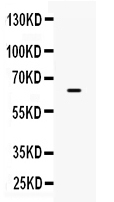
Product group Antibodies

Anti-PD-L1/B7-H1/CD274 Antibody Picoband(r)A00109-CARRIER-FREE
ApplicationsWestern Blot
ReactivityHuman
TargetCD274
- SizePrice
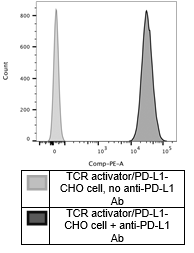
Product group Antibodies

ApplicationsImmunoFluorescence
TargetCD274
- SizePrice
Product group Antibodies

Anti-PD-L1 Antibody130-10633
ApplicationsELISA
ReactivityHuman
TargetCD274
- SizePrice
Product group Antibodies

ApplicationsFlow Cytometry
TargetCD274
- SizePrice
Product group Antibodies

PD-L1 Polyclonal AntibodyBS-22022R
ApplicationsImmunoFluorescence, Western Blot, ELISA, ImmunoCytoChemistry, ImmunoHistoChemistry, ImmunoHistoChemistry Frozen, ImmunoHistoChemistry Paraffin
ReactivityHuman, Mouse, Rat
TargetCD274
- SizePrice
Product group Antibodies

CD274, PD-L1CD274-0.5
ApplicationsImmunoHistoChemistry, ImmunoHistoChemistry Frozen, ImmunoHistoChemistry Paraffin
ReactivityHuman
TargetCD274
- SizePrice

Product group Antibodies
References
PD-L1 antibody [ZR3]GTX01796
ApplicationsImmunoHistoChemistry, ImmunoHistoChemistry Paraffin
ReactivityHuman
TargetCD274
- SizePrice