

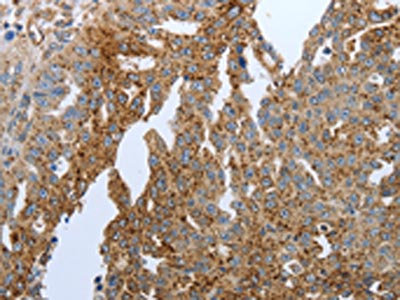
The image on the left is immunohistochemistry of paraffin-embedded Human ovarian cancer tissue using CSB-PA053064(PPARG Antibody) at dilution 1/20, on the right is treated with synthetic peptide. (Original magnification: x200)
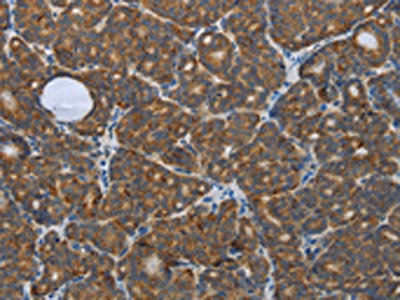
The image on the left is immunohistochemistry of paraffin-embedded Human ovarian cancer tissue using CSB-PA053064(PPARG Antibody) at dilution 1/20, on the right is treated with synthetic peptide. (Original magnification: x200)
PPARG Antibody
CSB-PA053064

ApplicationsELISA, ImmunoHistoChemistry
Product group Antibodies
ReactivityHuman, Mouse
TargetPPARG
Overview
- SupplierCusabio
- Product NamePPARG Antibody
- Delivery Days Customer20
- ApplicationsELISA, ImmunoHistoChemistry
- CertificationResearch Use Only
- ClonalityPolyclonal
- ConjugateUnconjugated
- Gene ID5468
- Target namePPARG
- Target descriptionperoxisome proliferator activated receptor gamma
- Target synonymsCIMT1, FPLD3, GLM1, NR1C3, PPARG1, PPARG2, PPARG5, PPARgamma, peroxisome proliferator-activated receptor gamma, PPAR-gamma, nuclear receptor subfamily 1 group C member 3, peroxisome proliferator-activated receptor-gamma 5, peroxisome proliferator-activated receptor-gamma splicing
- HostRabbit
- IsotypeIgG
- Protein IDP37231
- Protein NamePeroxisome proliferator-activated receptor gamma
- Scientific DescriptionThis gene encodes a member of the peroxisome proliferator-activated receptor (PPAR) subfamily of nuclear receptors. PPARs form heterodimers with retinoid X receptors (RXRs) and these heterodimers regulate transcription of various genes. Three subtypes of PPARs are known: PPAR-alpha, PPAR-delta, and PPAR-gamma. The protein encoded by this gene is PPAR-gamma and is a regulator of adipocyte differentiation. Additionally, PPAR-gamma has been implicated in the pathology of numerous diseases including obesity, diabetes, atherosclerosis and cancer. Alternatively spliced transcript variants that encode different isoforms have been described.
- ReactivityHuman, Mouse
- Storage Instruction-20°C or -80°C
- UNSPSC41116161
Related products
Product group Antibodies

Pparg Polyclonal AntibodyCAC07091
ApplicationsImmunoFluorescence, ELISA, ImmunoHistoChemistry
TargetPPARG
- SizePrice


Product group Antibodies
References

PPAR gamma Polyclonal AntibodyBS-0530R
ApplicationsFlow Cytometry, ImmunoFluorescence, Western Blot, ELISA, ImmunoCytoChemistry, ImmunoHistoChemistry, ImmunoHistoChemistry Frozen, ImmunoHistoChemistry Paraffin
ReactivityBovine, Chicken, Human, Mouse, Porcine, Rabbit, Rat, Sheep
TargetPPARG
- SizePrice
Product group Antibodies

Anti-PPAR gamma AntibodyA283080
ApplicationsELISA
ReactivityAvian, Canine, Guinea Pig, Hamster, Human, Mink, Mouse, Primate, Rabbit, Rat
- SizePrice
Product group Antibodies

Anti-PPARG Antibody144-00270
ApplicationsImmunoFluorescence, Western Blot, ImmunoHistoChemistry
ReactivityHuman, Mouse
TargetPPARG
- SizePrice
Product group Antibodies

PPAR gamma antibodyGTX113344
ApplicationsWestern Blot, ImmunoHistoChemistry, ImmunoHistoChemistry Paraffin
ReactivityHuman, Mouse, Rat
TargetPPARG
- SizePrice
Product group Antibodies

PPARG / PPAR Gamma Antibody (Internal)LS-C368478
ApplicationsImmunoFluorescence, Western Blot, ImmunoCytoChemistry, ImmunoHistoChemistry, ImmunoHistoChemistry Paraffin
ReactivityCanine, Human, Mouse, Rabbit, Rat
TargetPPARG
- SizePrice


Product group Antibodies

Anti-PPARG AntibodyHPA051239
ApplicationsImmunoCytoChemistry
ReactivityHuman
TargetPPARG
- SizePrice