

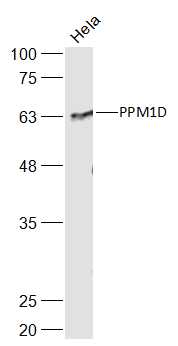
Hela lysates probed with PPM1D Polyclonal Antibody, Unconjugated (bs-2447R) at 1:500 dilution and 4˚C overnight incubation. Followed by conjugated secondary antibody incubation at 1:10000 for 60 min at 37˚C.
Hela lysates probed with PPM1D Polyclonal Antibody, Unconjugated (bs-2447R) at 1:500 dilution and 4˚C overnight incubation. Followed by conjugated secondary antibody incubation at 1:10000 for 60 min at 37˚C.
PPM1D Polyclonal Antibody
BS-2447R

ApplicationsImmunoFluorescence, Western Blot, ELISA, ImmunoCytoChemistry, ImmunoHistoChemistry, ImmunoHistoChemistry Paraffin
Product group Antibodies
ReactivityBovine, Canine, Chicken, Human, Mouse, Porcine, Rat
TargetPPM1D
Overview
- SupplierBioss
- Product NamePPM1D Polyclonal Antibody
- Delivery Days Customer16
- ApplicationsImmunoFluorescence, Western Blot, ELISA, ImmunoCytoChemistry, ImmunoHistoChemistry, ImmunoHistoChemistry Paraffin
- Applications SupplierWB(1:300-5000), ELISA(1:500-1000), IHC-P(1:200-400), IF(ICC)(1:50-200)
- CertificationResearch Use Only
- ClonalityPolyclonal
- Concentration1 ug/ul
- ConjugateUnconjugated
- Gene ID8493
- Target namePPM1D
- Target descriptionprotein phosphatase, Mg2+/Mn2+ dependent 1D
- Target synonymsIDDGIP, JDVS, PP2C-DELTA, WIP1, protein phosphatase 1D, protein phosphatase Wip1, wild-type p53-induced phosphatase 1
- HostRabbit
- IsotypeIgG
- Protein IDO15297
- Protein NameProtein phosphatase 1D
- ReactivityBovine, Canine, Chicken, Human, Mouse, Porcine, Rat
- Storage Instruction-20°C
- UNSPSC12352203
References
- Wang P, Cui J, Wen J, et al. Cisplatin induces HepG2 cell cycle arrest through targeting specific long noncoding RNAs and the p53 signaling pathway. Oncol Lett. 2016,12(6):4605-4612. doi: 10.3892/ol.2016.5288Read this paper
Datasheet
Related products

Product group Antibodies

Anti-PPM1D/WIP1 Picoband(r) AntibodyA01576-1-CARRIER-FREE
ApplicationsFlow Cytometry, ImmunoFluorescence, Western Blot, ELISA, ImmunoCytoChemistry
ReactivityHuman, Mouse, Rat
TargetPPM1D
- SizePrice
Product group Antibodies

PPM1D Polyclonal AntibodyCAC13167
ApplicationsWestern Blot, ELISA, ImmunoHistoChemistry
ReactivityRat
TargetPPM1D
- SizePrice
Product group Antibodies

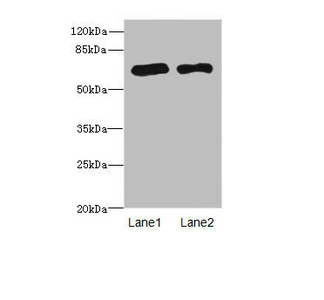
PPM1D AntibodyCSB-PA018491ESR1HU
ApplicationsWestern Blot, ELISA, ImmunoHistoChemistry
ReactivityHuman, Rat
TargetPPM1D
- SizePrice


Product group Antibodies

Anti-PPM1D AntibodyHPA022277
ApplicationsImmunoCytoChemistry, ImmunoHistoChemistry
ReactivityHuman
TargetPPM1D
- SizePrice
Product group Antibodies
References

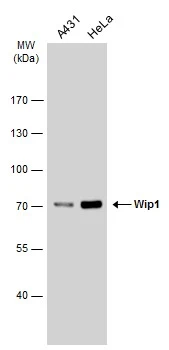
Wip1 antibodyGTX130700
ApplicationsImmunoFluorescence, Western Blot, ImmunoCytoChemistry
ReactivityHuman
TargetPPM1D
- SizePrice
Product group Antibodies

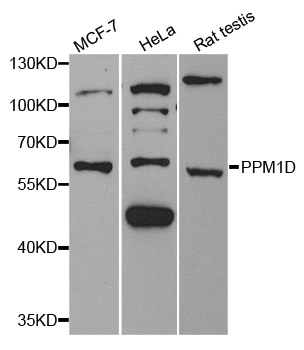
Anti-PPM1D AntibodyA37675
ApplicationsWestern Blot, ImmunoHistoChemistry
ReactivityHuman, Mouse, Rat
- SizePrice
Product group Antibodies

PPM1D / WIP1 AntibodyLS-C831748
ApplicationsELISA, ImmunoHistoChemistry
ReactivityHuman, Mouse
TargetPPM1D
- SizePrice