

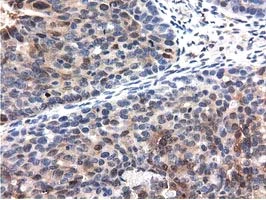
IHC-P analysis of human ovary adenocarcinoma tissue using GTX83743 QPRT antibody [1C10]. Antigen retrieval : Heat-induced epitope retrieval by 10mM citrate buffer, pH6.0, 100oC for 10min.
![IHC-P analysis of human endometrium tissue using GTX83743 QPRT antibody [1C10]. Antigen retrieval : Heat-induced epitope retrieval by 10mM citrate buffer, pH6.0, 100oC for 10min.](https://www.genetex.com/upload/website/prouct_img/normal/GTX83743/GTX83743_1793_IHC-P_w_23061420_698.webp "IHC-P analysis of human endometrium tissue using GTX83743 QPRT antibody [1C10]. Antigen retrieval : Heat-induced epitope retrieval by 10mM citrate buffer, pH6.0, 100oC for 10min.")
![IHC-P analysis of human prostate tissue using GTX83743 QPRT antibody [1C10]. Antigen retrieval : Heat-induced epitope retrieval by 10mM citrate buffer, pH6.0, 100oC for 10min.](https://www.genetex.com/upload/website/prouct_img/normal/GTX83743/GTX83743_1797_IHC-P_w_23061420_885.webp "IHC-P analysis of human prostate tissue using GTX83743 QPRT antibody [1C10]. Antigen retrieval : Heat-induced epitope retrieval by 10mM citrate buffer, pH6.0, 100oC for 10min.")
![IHC-P analysis of human liver tissue using GTX83743 QPRT antibody [1C10]. Antigen retrieval : Heat-induced epitope retrieval by 10mM citrate buffer, pH6.0, 100oC for 10min.](https://www.genetex.com/upload/website/prouct_img/normal/GTX83743/GTX83743_1794_IHC-P_w_23061420_752.webp "IHC-P analysis of human liver tissue using GTX83743 QPRT antibody [1C10]. Antigen retrieval : Heat-induced epitope retrieval by 10mM citrate buffer, pH6.0, 100oC for 10min.")
![ICC/IF analysis of COS7 cells transiently transfected with QPRT plasmid using GTX83743 QPRT antibody [1C10].](https://www.genetex.com/upload/website/prouct_img/normal/GTX83743/GTX83743_801_ICCIF_w_23061420_153.webp "ICC/IF analysis of COS7 cells transiently transfected with QPRT plasmid using GTX83743 QPRT antibody [1C10].")
![IHC-P analysis of human bladder carcinoma tissue using GTX83743 QPRT antibody [1C10]. Antigen retrieval : Heat-induced epitope retrieval by 10mM citrate buffer, pH6.0, 100oC for 10min.](https://www.genetex.com/upload/website/prouct_img/normal/GTX83743/GTX83743_1790_IHC-P_w_23061420_629.webp "IHC-P analysis of human bladder carcinoma tissue using GTX83743 QPRT antibody [1C10]. Antigen retrieval : Heat-induced epitope retrieval by 10mM citrate buffer, pH6.0, 100oC for 10min.")
![IHC-P analysis of human prostate carcinoma tissue using GTX83743 QPRT antibody [1C10]. Antigen retrieval : Heat-induced epitope retrieval by 10mM citrate buffer, pH6.0, 100oC for 10min.](https://www.genetex.com/upload/website/prouct_img/normal/GTX83743/GTX83743_1792_IHC-P_w_23061420_490.webp "IHC-P analysis of human prostate carcinoma tissue using GTX83743 QPRT antibody [1C10]. Antigen retrieval : Heat-induced epitope retrieval by 10mM citrate buffer, pH6.0, 100oC for 10min.")
![IHC-P analysis of human lymph node tissue using GTX83743 QPRT antibody [1C10]. Antigen retrieval : Heat-induced epitope retrieval by 10mM citrate buffer, pH6.0, 100oC for 10min.](https://www.genetex.com/upload/website/prouct_img/normal/GTX83743/GTX83743_1795_IHC-P_w_23061420_232.webp "IHC-P analysis of human lymph node tissue using GTX83743 QPRT antibody [1C10]. Antigen retrieval : Heat-induced epitope retrieval by 10mM citrate buffer, pH6.0, 100oC for 10min.")
![IHC-P analysis of human lymphoma tissue using GTX83743 QPRT antibody [1C10]. Antigen retrieval : Heat-induced epitope retrieval by 10mM citrate buffer, pH6.0, 100oC for 10min.](https://www.genetex.com/upload/website/prouct_img/normal/GTX83743/GTX83743_1796_IHC-P_w_23061420_294.webp "IHC-P analysis of human lymphoma tissue using GTX83743 QPRT antibody [1C10]. Antigen retrieval : Heat-induced epitope retrieval by 10mM citrate buffer, pH6.0, 100oC for 10min.")
![IHC-P analysis of human kidney carcinoma tissue using GTX83743 QPRT antibody [1C10]. Antigen retrieval : Heat-induced epitope retrieval by 10mM citrate buffer, pH6.0, 100oC for 10min.](https://www.genetex.com/upload/website/prouct_img/normal/GTX83743/GTX83743_1791_IHC-P_w_23061420_361.webp "IHC-P analysis of human kidney carcinoma tissue using GTX83743 QPRT antibody [1C10]. Antigen retrieval : Heat-induced epitope retrieval by 10mM citrate buffer, pH6.0, 100oC for 10min.")
IHC-P analysis of human ovary adenocarcinoma tissue using GTX83743 QPRT antibody [1C10]. Antigen retrieval : Heat-induced epitope retrieval by 10mM citrate buffer, pH6.0, 100oC for 10min.
QPRT antibody [1C10]
GTX83743

ApplicationsFlow Cytometry, ImmunoFluorescence, Western Blot, ImmunoCytoChemistry, ImmunoHistoChemistry, ImmunoHistoChemistry Paraffin
Product group Antibodies
ReactivityHuman
TargetQPRT
Overview
- SupplierGeneTex
- Product NameQPRT antibody [1C10]
- Delivery Days Customer9
- Application Supplier NoteWB: 1:2000. ICC/IF: 1:100. IHC-P: 1:150. FCM: 1:100. *Optimal dilutions/concentrations should be determined by the researcher.Not tested in other applications.
- ApplicationsFlow Cytometry, ImmunoFluorescence, Western Blot, ImmunoCytoChemistry, ImmunoHistoChemistry, ImmunoHistoChemistry Paraffin
- CertificationResearch Use Only
- ClonalityMonoclonal
- Clone ID1C10
- Concentration1 mg/ml
- ConjugateUnconjugated
- Gene ID23475
- Target nameQPRT
- Target descriptionquinolinate phosphoribosyltransferase
- Target synonymsHEL-S-90n, QPRTase, nicotinate-nucleotide pyrophosphorylase [carboxylating], epididymis secretory sperm binding protein Li 90n, nicotinate-nucleotide pyrophosphorylase (carboxylating)
- HostMouse
- IsotypeIgG1
- Protein IDQ15274
- Protein NameNicotinate-nucleotide pyrophosphorylase [carboxylating]
- Scientific DescriptionInvolved in the catabolism of quinolinic acid (QA).
- ReactivityHuman
- Storage Instruction-20°C or -80°C,2°C to 8°C
- UNSPSC41116161
References
- Quinolinate Phosphoribosyltransferase Promotes Invasiveness of Breast Cancer Through Myosin Light Chain Phosphorylation. Liu CL et al., 2020, Front Endocrinol (Lausanne)Read this paper
Datasheet
Related products

Product group Antibodies

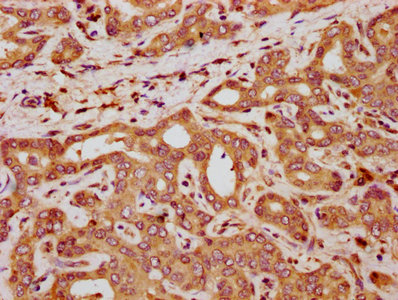
QPRT AntibodyCSB-PA621868LA01HU
ApplicationsImmunoFluorescence, ELISA, ImmunoHistoChemistry
ReactivityHuman
TargetQPRT
- SizePrice

Product group Antibodies

Anti-QPRT Antibody Picoband(r)A09896-CARRIER-FREE
ApplicationsFlow Cytometry, ImmunoFluorescence, Western Blot, ELISA, ImmunoCytoChemistry
ReactivityHuman, Mouse, Rat
TargetQPRT
- SizePrice
Product group Antibodies

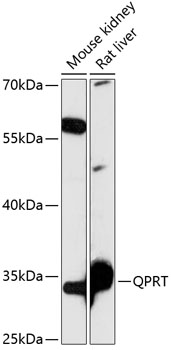
Anti-QPRT AntibodyA89070
ApplicationsWestern Blot
ReactivityHuman, Mouse, Rat
- SizePrice

Product group Antibodies

Anti-QPRT AntibodyHPA011887
ApplicationsWestern Blot
ReactivityHuman
TargetQPRT
- SizePrice
Product group Antibodies

QPRT Antibody (Biotin)LS-C681149
ApplicationsELISA
ReactivityHuman
TargetQPRT
- SizePrice
![FACS analysis of HEK293T cells transfected with either QPRT plasmid(Red) or empty vector control plasmid(Blue) using GTX83744 QPRT antibody [4B4].](https://www.genetex.com/upload/website/prouct_img/normal/GTX83744/GTX83744_163_FACS_w_23061420_406.webp)
Product group Antibodies
QPRT antibody [4B4]GTX83744
ApplicationsFlow Cytometry, Western Blot
ReactivityHuman
TargetQPRT
- SizePrice
Product group Antibodies
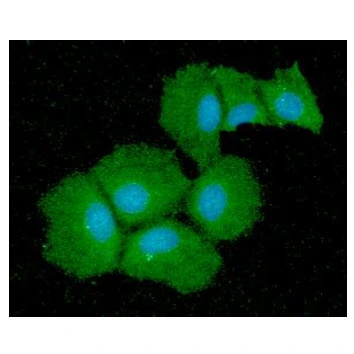
QPRT antibody [AT24C4]GTX57665
ApplicationsImmunoFluorescence, Western Blot, ImmunoCytoChemistry
ReactivityHuman
TargetQPRT
- SizePrice
Product group Antibodies

Anti-QPRT Antibody144-63215
ApplicationsWestern Blot
ReactivityHuman, Mouse, Rat
TargetQPRT
- SizePrice
Product group Antibodies

QPRT/QAPRTase Polyclonal AntibodyBS-20316R
ApplicationsImmunoFluorescence, Western Blot, ImmunoHistoChemistry, ImmunoHistoChemistry Frozen, ImmunoHistoChemistry Paraffin
ReactivityHuman, Mouse, Rat
TargetQPRT
- SizePrice