


Immunocytochemical staining of RIP2 in A431 cells with RIP2 antibody (GTX28428) at 10μg/ml.
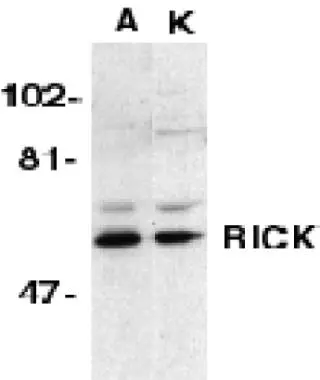
Immunocytochemical staining of RIP2 in A431 cells with RIP2 antibody (GTX28428) at 10μg/ml.
RIP2 antibody
GTX28428

ApplicationsImmunoFluorescence, Western Blot, ImmunoCytoChemistry
Product group Antibodies
ReactivityHuman, Mouse, Rat
TargetRIPK2
Overview
- SupplierGeneTex
- Product NameRIP2 antibody
- Delivery Days Customer9
- Application Supplier NoteWB: 1microg/ml. ICC/IF: 10microg/ml. *Optimal dilutions/concentrations should be determined by the researcher.Not tested in other applications.
- ApplicationsImmunoFluorescence, Western Blot, ImmunoCytoChemistry
- CertificationResearch Use Only
- ClonalityPolyclonal
- ConjugateUnconjugated
- Gene ID8767
- Target nameRIPK2
- Target descriptionreceptor interacting serine/threonine kinase 2
- Target synonymsCARD3, CARDIAK, CCK, GIG30, RICK, RIP2, receptor-interacting serine/threonine-protein kinase 2, CARD-carrying kinase, CARD-containing IL-1 beta ICE-kinase, CARD-containing interleukin-1 beta-converting enzyme (ICE)-associated kinase, RIP-2, growth-inhibiting gene 30, receptor-interacting protein (RIP)-like interacting caspase-like apoptosis regulatory protein (CLARP) kinase, receptor-interacting protein 2, tyrosine-protein kinase RIPK2
- HostRabbit
- IsotypeIgG
- Protein IDO43353
- Protein NameReceptor-interacting serine/threonine-protein kinase 2
- Scientific DescriptionThis gene encodes a member of the receptor-interacting protein (RIP) family of serine/threonine protein kinases. The encoded protein contains a C-terminal caspase activation and recruitment domain (CARD), and is a component of signaling complexes in both the innate and adaptive immune pathways. It is a potent activator of NF-kappaB and inducer of apoptosis in response to various stimuli. [provided by RefSeq, Jul 2008]
- ReactivityHuman, Mouse, Rat
- Storage Instruction-20°C or -80°C,2°C to 8°C
- UNSPSC41116161
References
- Receptor-interacting protein kinase 2 (RIPK2) profoundly contributes to post-stroke neuroinflammation and behavioral deficits with microglia as unique perpetrators.Read this paper
Datasheet
Related products
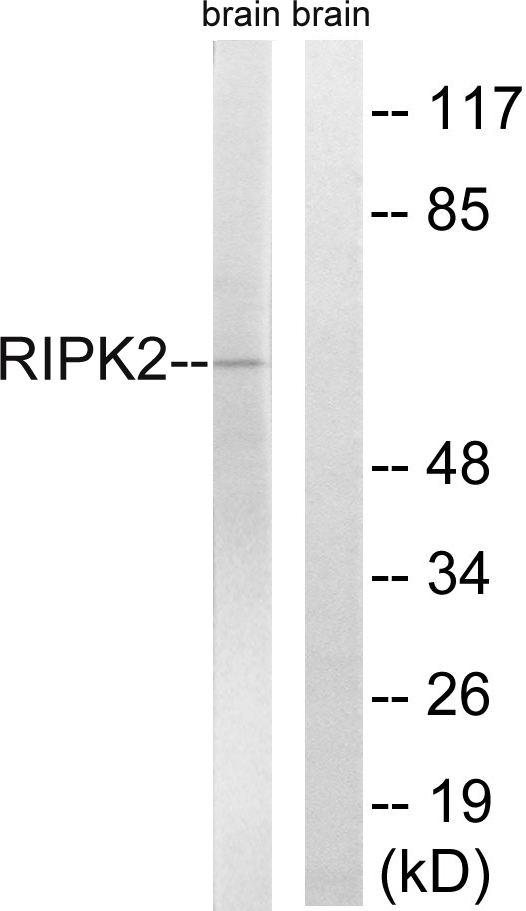
Product group Antibodies

Anti-RIPK2 AntibodyA97287
ApplicationsWestern Blot, ELISA, ImmunoHistoChemistry
ReactivityHuman, Mouse
- SizePrice

Product group Antibodies

Anti-RIP2/RIPK2 Antibody Picoband(r)A00818-2-CARRIER-FREE
ApplicationsFlow Cytometry, Western Blot, ELISA
ReactivityHuman
TargetRIPK2
- SizePrice
Product group Antibodies

Anti-RIPK2 Antibody144-02498
ApplicationsWestern Blot, ImmunoHistoChemistry
ReactivityHuman, Mouse, Rat
TargetRIPK2
- SizePrice

Product group Antibodies

RICK / RIP2 AntibodyLS-C748434
ApplicationsImmunoFluorescence, Western Blot
ReactivityHuman, Mouse
TargetRIPK2
- SizePrice
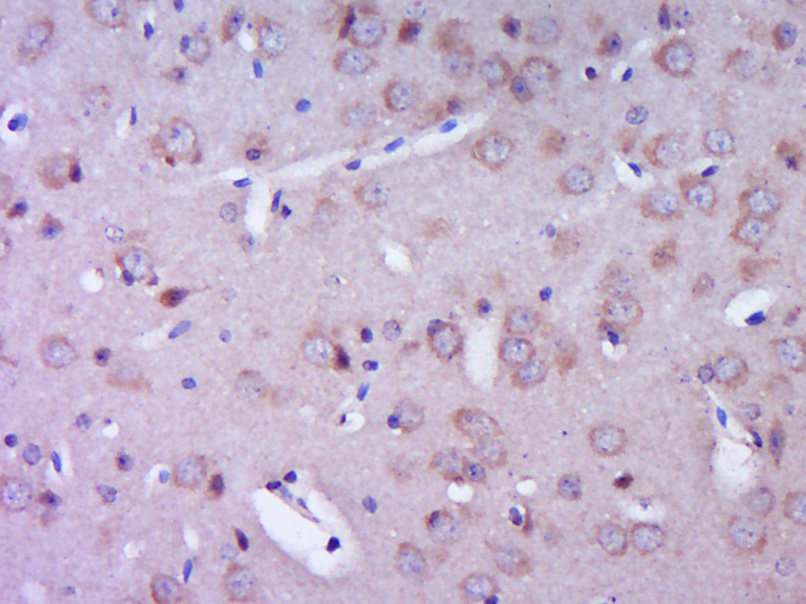
Product group Antibodies

RIP2 Polyclonal AntibodyBS-3546R
ApplicationsImmunoFluorescence, Western Blot, ELISA, ImmunoCytoChemistry, ImmunoHistoChemistry, ImmunoHistoChemistry Frozen, ImmunoHistoChemistry Paraffin
ReactivityBovine, Canine, Guinea Pig, Human, Mouse, Porcine, Rabbit, Rat
TargetRIPK2
- SizePrice
Product group Antibodies

RIPK2 Polyclonal AntibodyCAC13187
ApplicationsImmunoFluorescence, Western Blot, ELISA, ImmunoHistoChemistry
ReactivityRat
TargetRIPK2
- SizePrice
Product group Antibodies

RIPK2 AntibodyCSB-PA019736ESR1HU
ApplicationsELISA, ImmunoHistoChemistry
ReactivityHuman
TargetRIPK2
- SizePrice
Product group Antibodies
RIP2 antibody [Nick-1]GTX17328
ApplicationsWestern Blot
ReactivityHuman
TargetRIPK2
- SizePrice
Product group Antibodies
RIP2 antibodyGTX28427
ApplicationsImmunoFluorescence, Western Blot, ImmunoCytoChemistry
ReactivityHuman, Mouse, Rat
TargetRIPK2
- SizePrice