

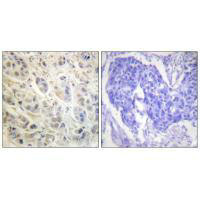
Immunohistochemistry analysis of paraffin-embedded human colon carcinoma tissue using p90 RSK (Ab-573) antibody.
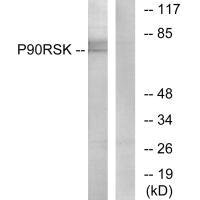
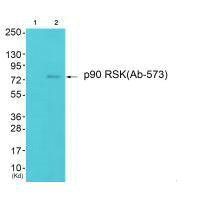
Immunohistochemistry analysis of paraffin-embedded human colon carcinoma tissue using p90 RSK (Ab-573) antibody.
RPS6KA1 (Ab-573) Antibody
CSB-PA698512

ApplicationsWestern Blot, ELISA, ImmunoHistoChemistry
Product group Antibodies
ReactivityHuman, Mouse, Rat
TargetRPS6KA1
Overview
- SupplierCusabio
- Product NameRPS6KA1 (Ab-573) Antibody
- Delivery Days Customer20
- ApplicationsWestern Blot, ELISA, ImmunoHistoChemistry
- CertificationResearch Use Only
- ClonalityPolyclonal
- ConjugateUnconjugated
- Gene ID6195
- Target nameRPS6KA1
- Target descriptionribosomal protein S6 kinase A1
- Target synonymsHU-1, MAPKAPK1, MAPKAPK1A, RSK, RSK1, p90Rsk, ribosomal protein S6 kinase alpha-1, 90 kDa ribosomal protein S6 kinase 1, MAP kinase-activated protein kinase 1a, MAPK-activated protein kinase 1a, MAPKAP kinase 1a, MAPKAPK-1a, RSK-1, S6K-alpha 1, dJ590P13.1 (ribosomal protein S6 kinase, 90kD, polypeptide 1), p90-RSK 1, p90RSK1, p90S6K, ribosomal S6 kinase 1, ribosomal protein S6 kinase, 90kDa, polypeptide 1
- HostRabbit
- IsotypeIgG
- Protein IDQ15418
- Protein NameRibosomal protein S6 kinase alpha-1
- Scientific DescriptionSerine/threonine-protein kinase that acts downstream of ERK (MAPK1/ERK2 and MAPK3/ERK1) signaling and mediates mitogenic and stress-induced activation of the transcription factors CREB1, ETV1/ER81 and NR4A1/NUR77, regulates translation through RPS6 and EIF4B phosphorylation, and mediates cellular proliferation, survival, and differentiation by modulating mTOR signaling and repressing pro-apoptotic function of BAD and DAPK1. In fibroblast, is required for EGF-stimulated phosphorylation of CREB1, which results in the subsequent transcriptional activation of several immediate-early genes. In response to mitogenic stimulation (EGF and PMA), phosphorylates and activates NR4A1/NUR77 and ETV1/ER81 transcription factors and the cofactor CREBBP. Upon insulin-derived signal, acts indirectly on the transcription regulation of several genes by phosphorylating GSK3B at Ser-9 and inhibiting its activity. Phosphorylates RPS6 in response to serum or EGF via an mTOR-independent mechanism and promotes translation initiation by facilitating assembly of the preinitiation complex. In response to insulin, phosphorylates EIF4B, enhancing EIF4B affinity for the EIF3 complex and stimulating cap-dependent translation. Is involved in the mTOR nutrient-sensing pathway by directly phosphorylating TSC2 at Ser-1798, which potently inhibits TSC2 ability to suppress mTOR signaling, and mediates phosphorylation of RPTOR, which regulates mTORC1 activity and may promote rapamycin-sensitive signaling independently of the PI3K/AKT pathway. Mediates cell survival by phosphorylating the pro-apoptotic proteins BAD and DAPK1 and suppressing their pro-apoptotic function. Promotes the survival of hepatic stellate cells by phosphorylating CEBPB in response to the hepatotoxin carbon tetrachloride (CCl4). Is involved in cell cycle regulation by phosphorylating the CDK inhibitor CDKN1B, which promotes CDKN1B association with 14-3-3 proteins and prevents its translocation to the nucleus and inhibition of G1 progression. Moller D.E., Am. J. Physiol. 266:C351-C359(1994). Gregory S.G., Nature 441:315-321(2006). The MGC Project Team, Genome Res. 14:2121-2127(2004).
- ReactivityHuman, Mouse, Rat
- Storage Instruction-20°C or -80°C
- UNSPSC41116161
Related products
Product group Antibodies

p90 RSK (Phospho-Thr573) AntibodyABX012445
ApplicationsImmunoFluorescence, Western Blot, ELISA, ImmunoCytoChemistry, ImmunoHistoChemistry
- SizePrice
Product group Antibodies

Anti-RPS6KA1 Antibody144-61164
ApplicationsWestern Blot
ReactivityHuman, Mouse, Rat
TargetRPS6KA1
- SizePrice
Product group Antibodies

ApplicationsFlow Cytometry, ImmunoFluorescence, ImmunoPrecipitation, Western Blot, ImmunoCytoChemistry, ImmunoHistoChemistry
ReactivityHuman
TargetRPS6KA1
- SizePrice
Product group Antibodies

p90 RSK1 antibodyGTX105842
ApplicationsImmunoFluorescence, Western Blot, ImmunoCytoChemistry
ReactivityHuman
TargetRPS6KA1
- SizePrice
Product group Antibodies

ApplicationsImmunoPrecipitation, Western Blot, ELISA
TargetRPS6KA1
- SizePrice
Product group Antibodies

ApplicationsImmunoFluorescence, Western Blot, ImmunoCytoChemistry, ImmunoHistoChemistry, ImmunoHistoChemistry Frozen, ImmunoHistoChemistry Paraffin
ReactivityHuman, Rat
TargetRPS6KA1
- SizePrice
Product group Antibodies

ReactivityHuman
TargetRPS6KA1
- SizePrice
Product group Antibodies

Anti-RSK1 p90 AntibodyA305085
ApplicationsImmunoFluorescence, ImmunoPrecipitation, Western Blot, ELISA, ImmunoCytoChemistry
ReactivityBovine, Human, Mouse, Rat
- SizePrice
Product group Antibodies

ApplicationsWestern Blot, ImmunoHistoChemistry
ReactivityHuman
TargetRPS6KA1
- SizePrice
Product group Antibodies
RPS6KA1 AntibodyCSB-PA004034
ApplicationsWestern Blot, ELISA, ImmunoHistoChemistry
ReactivityHuman, Mouse, Rat
TargetRPS6KA1
- SizePrice