

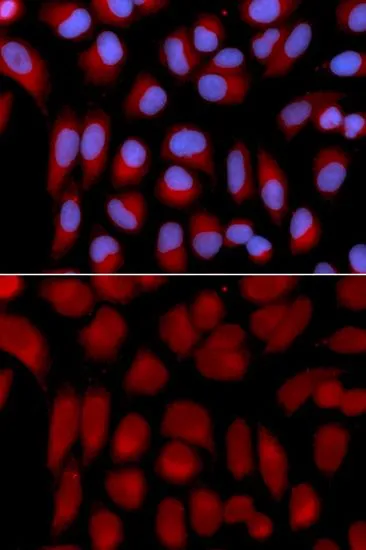
ICC/IF analysis of U2OS cells using GTX16394 TAP2 antibody. Blue : DAPI
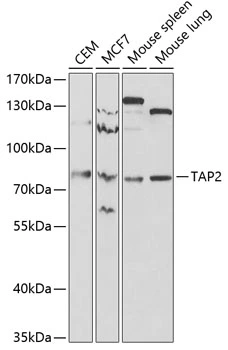
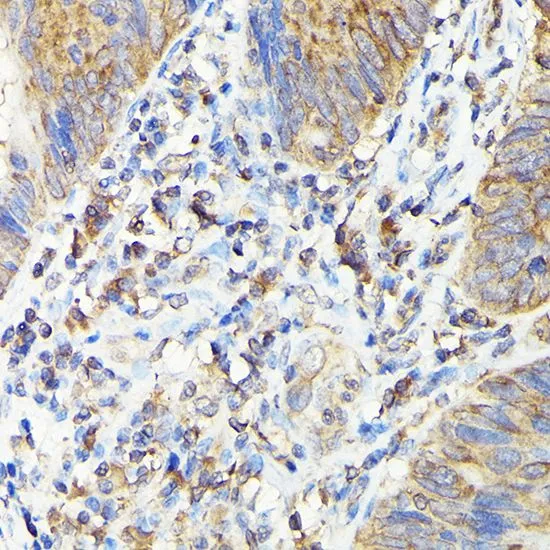
ICC/IF analysis of U2OS cells using GTX16394 TAP2 antibody. Blue : DAPI
TAP2 antibody
GTX16394

ApplicationsImmunoFluorescence, Western Blot, ImmunoCytoChemistry, ImmunoHistoChemistry, ImmunoHistoChemistry Paraffin
Product group Antibodies
ReactivityHuman, Mouse
TargetTAP2
Overview
- SupplierGeneTex
- Product NameTAP2 antibody
- Delivery Days Customer7
- Application Supplier NoteWB: 1:500 - 1:2000. ICC/IF: 1:50 - 1:200. IHC-P: 1:50 - 1:200. *Optimal dilutions/concentrations should be determined by the researcher.Not tested in other applications.
- ApplicationsImmunoFluorescence, Western Blot, ImmunoCytoChemistry, ImmunoHistoChemistry, ImmunoHistoChemistry Paraffin
- CertificationResearch Use Only
- ClonalityPolyclonal
- ConjugateUnconjugated
- Gene ID6891
- Target nameTAP2
- Target descriptiontransporter 2, ATP binding cassette subfamily B member
- Target synonymsABC18, ABCB3, APT2, D6S217E, MHC1D2, PSF-2, PSF2, RING11, antigen peptide transporter 2, ABC transporter, MHC 2, ATP-binding cassette, sub-family B (MDR/TAP), member 3, peptide supply factor 2, peptide transporter PSF2, peptide transporter involved in antigen processing 2, really interesting new gene 11 protein, transporter 2, ABC (ATP binding cassette), transporter 2, ATP-binding cassette, sub-family B (MDR/TAP)
- HostRabbit
- IsotypeIgG
- Protein IDQ03519
- Protein NameAntigen peptide transporter 2
- Scientific DescriptionThe membrane-associated protein encoded by this gene is a member of the superfamily of ATP-binding cassette (ABC) transporters. ABC proteins transport various molecules across extra- and intra-cellular membranes. ABC genes are divided into seven distinct subfamilies (ABC1, MDR/TAP, MRP, ALD, OABP, GCN20, White). This protein is a member of the MDR/TAP subfamily. Members of the MDR/TAP subfamily are involved in multidrug resistance. This gene is located 7 kb telomeric to gene family member ABCB2. The protein encoded by this gene is involved in antigen presentation. This protein forms a heterodimer with ABCB2 in order to transport peptides from the cytoplasm to the endoplasmic reticulum. Mutations in this gene may be associated with ankylosing spondylitis, insulin-dependent diabetes mellitus, and celiac disease. Alternative splicing of this gene produces products which differ in peptide selectivity and level of restoration of surface expression of MHC class I molecules. [provided by RefSeq, Feb 2014]
- ReactivityHuman, Mouse
- Storage Instruction-20°C or -80°C,2°C to 8°C
- UNSPSC41116161
Datasheet
Related products
Product group Antibodies

Anti-TAP2 Antibody144-01610
ApplicationsImmunoFluorescence, Western Blot, ImmunoHistoChemistry
ReactivityHuman, Mouse, Rat
TargetTAP2
- SizePrice
Product group Antibodies

Anti-TAP2 AntibodyA30096
ApplicationsImmunoFluorescence, Western Blot, ImmunoHistoChemistry
ReactivityHuman, Mouse, Rat
- SizePrice
Product group Antibodies

TAP2 AntibodyCSB-PA088613
ApplicationsELISA, ImmunoHistoChemistry
ReactivityHuman, Mouse, Rat
TargetTAP2
- SizePrice
Product group Antibodies

ApplicationsImmunoPrecipitation, Western Blot, ImmunoCytoChemistry, ImmunoHistoChemistry
ReactivityPorcine
TargetTAP2
- SizePrice
Product group Antibodies

TAP2 AntibodyLS-C482296
ApplicationsImmunoFluorescence, Western Blot, ImmunoCytoChemistry
ReactivityHuman, Mouse, Rat
TargetTAP2
- SizePrice

Product group Antibodies

Anti-TAP2 AntibodyHPA001312
ApplicationsImmunoHistoChemistry
ReactivityHuman
TargetTAP2
- SizePrice

Product group Antibodies

Anti-TAP2 Antibody Picoband(r)PB9824-CARRIER-FREE
ApplicationsWestern Blot
ReactivityHuman
TargetTAP2
- SizePrice