

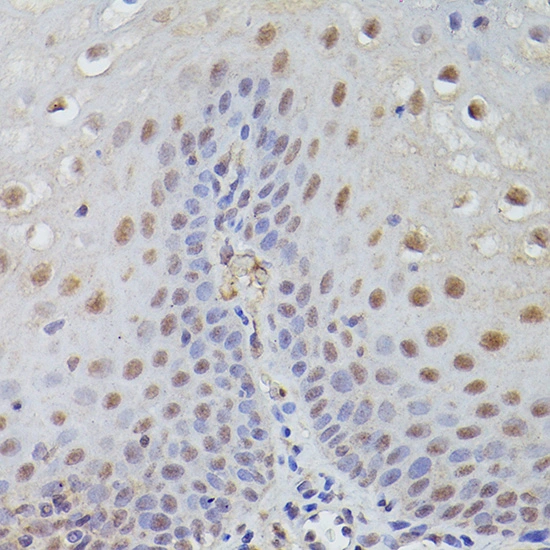
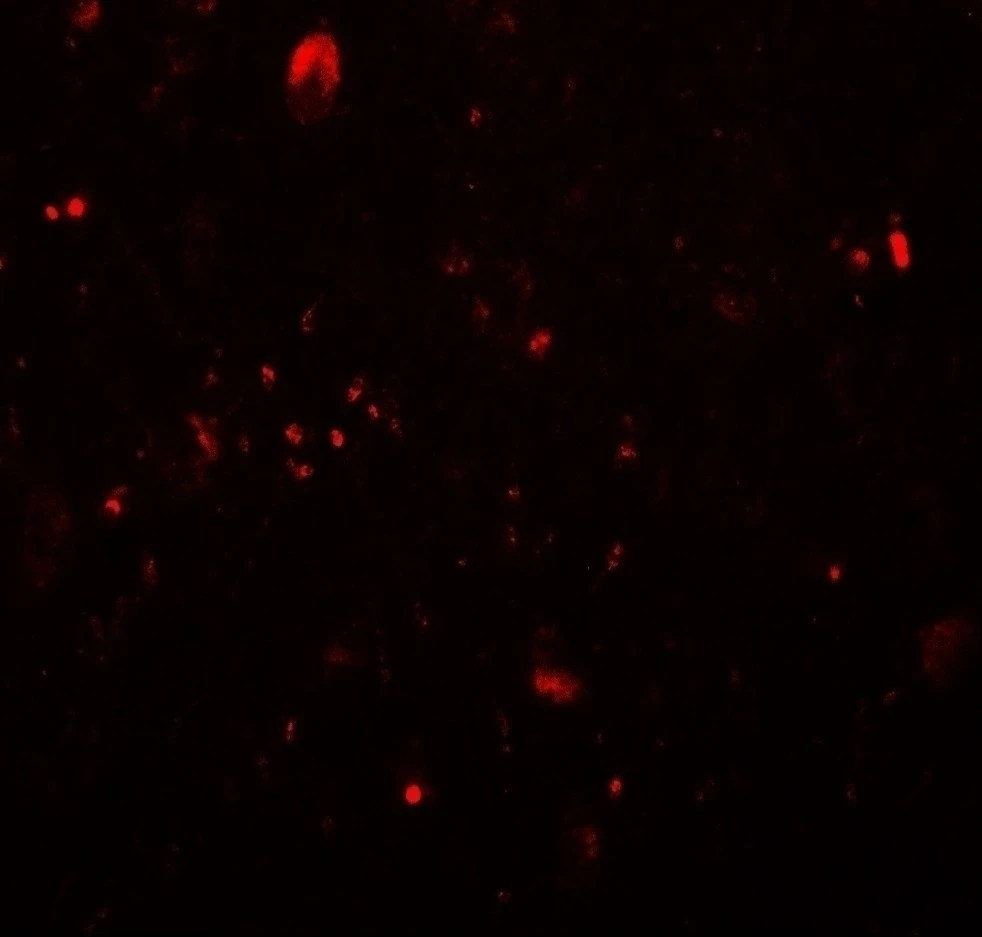
IHC-P analysis of human esophageal tissue using GTX00657 TET3 antibody. Antigen retrieval : High pressure antigen retrieval with 0.01M Citrate Bufferr (pH 6.0) Dilution : 1:50
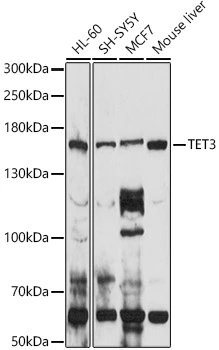
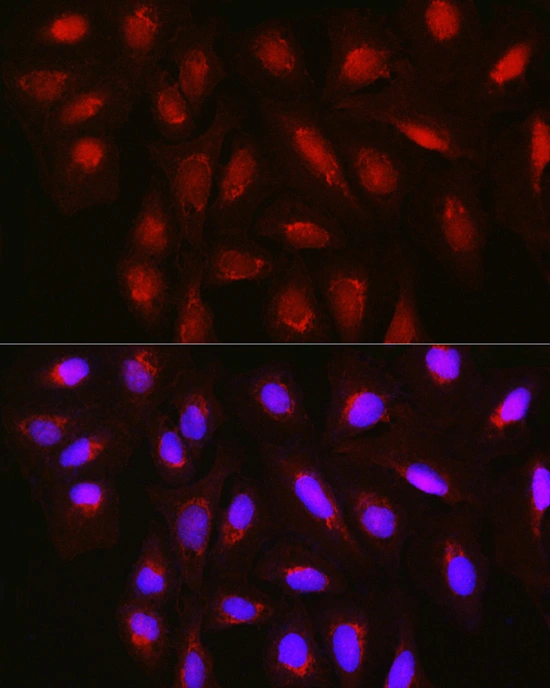
IHC-P analysis of human esophageal tissue using GTX00657 TET3 antibody. Antigen retrieval : High pressure antigen retrieval with 0.01M Citrate Bufferr (pH 6.0) Dilution : 1:50
TET3 antibody
GTX00657

ApplicationsImmunoFluorescence, Western Blot, ImmunoCytoChemistry, ImmunoHistoChemistry, ImmunoHistoChemistry Paraffin
Product group Antibodies
ReactivityHuman, Mouse
TargetTET3
Overview
- SupplierGeneTex
- Product NameTET3 antibody
- Delivery Days Customer9
- Application Supplier NoteWB: 1:500 - 1:2000. ICC/IF: 1:50 - 1:200. *Optimal dilutions/concentrations should be determined by the researcher.Not tested in other applications.
- ApplicationsImmunoFluorescence, Western Blot, ImmunoCytoChemistry, ImmunoHistoChemistry, ImmunoHistoChemistry Paraffin
- CertificationResearch Use Only
- ClonalityPolyclonal
- ConjugateUnconjugated
- Gene ID200424
- Target nameTET3
- Target descriptiontet methylcytosine dioxygenase 3
- Target synonymsBEFAHRS, hCG_40738, methylcytosine dioxygenase TET3, probable methylcytosine dioxygenase TET3, putative methylcytosine dioxygenase, ten-eleven translocation 3, tet oncogene family member 3
- HostRabbit
- IsotypeIgG
- Protein IDO43151
- Protein NameMethylcytosine dioxygenase TET3
- Scientific DescriptionMembers of the ten-eleven translocation (TET) gene family, including TET3, play a role in the DNA methylation process (Langemeijer et al., 2009 [PubMed 19923888]).[supplied by OMIM, Nov 2010]
- ReactivityHuman, Mouse
- Storage Instruction-20°C or -80°C,2°C to 8°C
- UNSPSC12352203
References
- Lv J, Liu Y, Mo S, et al. Gasdermin E mediates resistance of pancreatic adenocarcinoma to enzymatic digestion through a YBX1-mucin pathway. Nat Cell Biol. 2022,24(3):364-372. doi: 10.1038/s41556-022-00857-4Read this paper
Datasheet
Related products
Product group Antibodies

Anti-TET3 Antibody144-64874
ApplicationsWestern Blot
ReactivityHuman, Mouse
TargetTET3
- SizePrice

Product group Antibodies

TET3 AntibodyLS-C748504
ApplicationsImmunoFluorescence
ReactivityHuman
TargetTET3
- SizePrice
![Non-transfected (–) and transfected (+) MCF-7 whole cell extracts (30 μg) were separated by 5% SDS-PAGE, and the membrane was blotted with TET3 antibody [HL2463] (GTX638781) diluted at 1:1000. The HRP-conjugated anti-rabbit IgG antibody (GTX213110-01) was used to detect the primary antibody, and the signal was developed with Trident ECL plus-Enhanced.](https://www.genetex.com/upload/website/prouct_img/normal/GTX638781/GTX638781_T-45089_20240510_WB_shRNA_watermark_24051400_333.webp)
Product group Antibodies
TET3 antibody [HL2463]GTX638781
ApplicationsWestern Blot, ImmunoHistoChemistry, ImmunoHistoChemistry Paraffin
ReactivityHuman, Mouse, Rat
TargetTET3
- SizePrice
![Non-transfected (–) and transfected (+) 293T whole cell extracts (30 μg) were separated by 5% SDS-PAGE, and the membrane was blotted with TET3 antibody [HL3009] (GTX640422) diluted at 1:5000. The HRP-conjugated anti-rabbit IgG antibody (GTX213110-01) was used to detect the primary antibody.](https://www.genetex.com/upload/website/prouct_img/normal/GTX640422/GTX640422_45509_20240823_WB_multiple_B_24090423_504.webp)
Product group Antibodies
TET3 antibody [HL3009]GTX640422
ApplicationsWestern Blot
ReactivityHuman
TargetTET3
- SizePrice
Product group Antibodies

TET3 AntibodyCSB-PA023398LA01HU
ApplicationsELISA, ImmunoHistoChemistry
ReactivityHuman
TargetTET3
- SizePrice

Product group Antibodies

Anti-TET3 AntibodyHPA050845
ApplicationsImmunoCytoChemistry, ImmunoHistoChemistry
ReactivityHuman
TargetTET3
- SizePrice
![Non-transfected (–) and transfected (+) 293T whole cell extracts (30 μg) were separated by 5% SDS-PAGE, and the membrane was blotted with TET3 antibody [N3C1], Internal (GTX121452) diluted at 1:5000. The HRP-conjugated anti-rabbit IgG antibody (GTX213110-01) was used to detect the primary antibody.](https://www.genetex.com/upload/website/prouct_img/normal/GTX121452/GTX121452_40464_20231229_WB_B_24010223_950.webp)
Product group Antibodies
References
TET3 antibody [N3C1], InternalGTX121452
ApplicationsWestern Blot
ReactivityHuman
TargetTET3
- SizePrice
![Non-transfected (–) and transfected (+) 293T whole cell extracts (30 μg) were separated by 5% SDS-PAGE, and the membrane was blotted with TET3 antibody [C3], C-term (GTX121453) diluted at 1:5000. The HRP-conjugated anti-rabbit IgG antibody (GTX213110-01) was used to detect the primary antibody, and the signal was developed with Trident ECL plus-Enhanced.](https://www.genetex.com/upload/website/prouct_img/normal/GTX121453/GTX121453_41570_20220617_WB_B_22062121_249.webp)
Product group Antibodies
References
TET3 antibody [C3], C-termGTX121453
ApplicationsImmunoFluorescence, ImmunoPrecipitation, Western Blot, ChIP Chromatin ImmunoPrecipitation, ImmunoCytoChemistry, ImmunoHistoChemistry
ReactivityBovine, Human, Mouse, Xenopus
TargetTET3
- SizePrice
Product group Antibodies
TET3 antibodyGTX02579
ApplicationsWestern Blot, ELISA, ImmunoHistoChemistry, ImmunoHistoChemistry Paraffin
ReactivityHuman, Mouse, Rat
TargetTET3
- SizePrice