

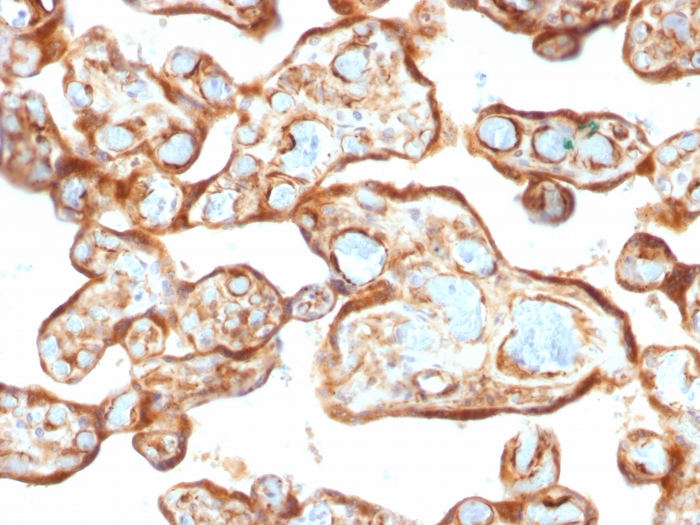
IHC-P analysis of human placenta tissue using GTX35111 Thymidine Phosphorylase antibody [P-GF.44C].
IHC-P analysis of human placenta tissue using GTX35111 Thymidine Phosphorylase antibody [P-GF.44C].
Thymidine Phosphorylase antibody [P-GF.44C]
GTX35111

ApplicationsImmunoPrecipitation, Western Blot, ImmunoHistoChemistry, ImmunoHistoChemistry Paraffin
Product group Antibodies
ReactivityHuman, Mouse, Rat
TargetTYMP
Overview
- SupplierGeneTex
- Product NameThymidine Phosphorylase antibody [P-GF.44C]
- Delivery Days Customer9
- Application Supplier NoteWB: 1-2microg/ml. IHC-P: 1-2microg/ml for 30 minutes at RT. IP: 0.5-1microg/500ug protein lysate. *Optimal dilutions/concentrations should be determined by the researcher.Not tested in other applications.
- ApplicationsImmunoPrecipitation, Western Blot, ImmunoHistoChemistry, ImmunoHistoChemistry Paraffin
- CertificationResearch Use Only
- ClonalityMonoclonal
- Clone IDP-GF.44C
- Concentration0.2 mg/ml
- ConjugateUnconjugated
- Gene ID1890
- Target nameTYMP
- Target descriptionthymidine phosphorylase
- Target synonymsECGF, ECGF1, MEDPS1, MNGIE, MTDPS1, PDECGF, TP, hPD-ECGF, thymidine phosphorylase, gliostatin, tdRPase
- HostMouse
- IsotypeIgG1
- Protein IDP19971
- Protein NameThymidine phosphorylase
- Scientific DescriptionThis gene encodes an angiogenic factor which promotes angiogenesis in vivo and stimulates the in vitro growth of a variety of endothelial cells. It has a highly restricted target cell specificity acting only on endothelial cells. Mutations in this gene have been associated with mitochondrial neurogastrointestinal encephalomyopathy. Multiple alternatively spliced transcript variants have been identified. [provided by RefSeq, Apr 2012]
- ReactivityHuman, Mouse, Rat
- Storage Instruction-20°C or -80°C,2°C to 8°C
- UNSPSC12352203
References
- Gautheron J, Lima L, Akinci B, et al. Loss of thymidine phosphorylase activity disrupts adipocyte differentiation and induces insulin-resistant lipoatrophic diabetes. BMC Med. 2022,20(1):95. doi: 10.1186/s12916-022-02296-2Read this paper
- Gajjar KK, Vora HH, Kobawala TP, et al. Deciphering the potential value of 5-fluorouracil metabolic enzymes in predicting prognosis and treatment response of colorectal cancer patients. Int J Biol Markers. 2018,33(2):180-188. doi: 10.1177/1724600817748539Read this paper
Datasheet
Related products
Product group Antibodies

ECGF1 AntibodyABX033306
ApplicationsWestern Blot, ELISA, ImmunoHistoChemistry
- SizePrice
Product group Antibodies

Anti-TYMP Antibody144-01094
ApplicationsImmunoFluorescence, Western Blot
ReactivityHuman, Mouse, Rat
TargetTYMP
- SizePrice
Product group Antibodies

ApplicationsImmunoFluorescence, Western Blot, ELISA, ImmunoCytoChemistry, ImmunoHistoChemistry, ImmunoHistoChemistry Frozen, ImmunoHistoChemistry Paraffin
ReactivityHuman
TargetTYMP
- SizePrice
Product group Antibodies

TYMP AntibodyCSB-PA005681
ApplicationsWestern Blot, ELISA
ReactivityHuman
TargetTYMP
- SizePrice
Product group Antibodies

ApplicationsImmunoPrecipitation, Western Blot, ImmunoCytoChemistry, ImmunoHistoChemistry
TargetTYMP
- SizePrice

![IHC-P analysis of human prostate carcinoma section using GTX02734 Thymidine Phosphorylase antibody [TYMP/2890R].](https://www.genetex.com/upload/website/prouct_img/normal/GTX02734/GTX02734_20210319_IHC-P_w_23053122_304.webp)
Product group Antibodies
ApplicationsImmunoHistoChemistry, ImmunoHistoChemistry Paraffin
ReactivityHuman, Mouse, Rat
TargetTYMP
- SizePrice

Product group Antibodies

Anti-TYMP AntibodyHPA000530
ApplicationsWestern Blot, ImmunoCytoChemistry
ReactivityHuman
TargetTYMP
- SizePrice
Product group Antibodies
ApplicationsImmunoHistoChemistry, ImmunoHistoChemistry Paraffin
ReactivityHuman, Mouse, Rat
TargetTYMP
- SizePrice
Product group Antibodies
References
ApplicationsWestern Blot, ImmunoHistoChemistry, ImmunoHistoChemistry Frozen, ImmunoHistoChemistry Paraffin
ReactivityHuman, Mouse, Rat
TargetTYMP
- SizePrice