XRCC5 Antibody, Biotin conjugated
CSB-PA026233LD01HU

ApplicationsELISA
Product group Antibodies
ReactivityHuman
TargetXRCC5
Overview
- SupplierCusabio
- Product NameXRCC5 Antibody, Biotin conjugated
- Delivery Days Customer20
- ApplicationsELISA
- CertificationResearch Use Only
- ClonalityPolyclonal
- ConjugateBiotin
- Gene ID7520
- Target nameXRCC5
- Target descriptionX-ray repair cross complementing 5
- Target synonymsKARP-1, KARP1, KU80, KUB2, Ku86, NFIV, X-ray repair cross-complementing protein 5, 86 kDa subunit of Ku antigen, ATP-dependent DNA helicase 2 subunit 2, ATP-dependent DNA helicase II 80 kDa subunit, CTC box-binding factor 85 kDa subunit, CTC85, CTCBF, DNA repair protein XRCC5, Ku autoantigen, 80kDa, Ku86 autoantigen related protein 1, TLAA, X-ray repair complementing defective repair in Chinese hamster cells 5 (double-strand-break rejoining), lupus Ku autoantigen protein p86, nuclear factor IV, thyroid-lupus autoantigen
- HostRabbit
- IsotypeIgG
- Protein IDP13010
- Protein NameX-ray repair cross-complementing protein 5
- Scientific DescriptionSingle-stranded DNA-dependent ATP-dependent helicase. Has a role in chromosome translocation. The DNA helicase II complex binds preferentially to fork-like ends of double-stranded DNA in a cell cycle-dependent manner. It works in the 3-5 direction. Binding to DNA may be mediated by XRCC6. Involved in DNA non-homologous end joining (NHEJ) required for double-strand break repair and V(D)J recombination. The XRCC5/6 dimer acts as regulatory subunit of the DNA-dependent protein kinase complex DNA-PK by increasing the affinity of the catalytic subunit PRKDC to DNA by 100-fold. The XRCC5/6 dimer is probably involved in stabilizing broken DNA ends and bringing them together. The assembly of the DNA-PK complex to DNA ends is required for the NHEJ ligation step. In association with NAA15, the XRCC5/6 dimer binds to the osteocalcin promoter and activates osteocalcin expression. The XRCC5/6 dimer probably also acts as a 5-deoxyribose-5-phosphate lyase (5-dRP lyase), by catalyzing the beta-elimination of the 5 deoxyribose-5-phosphate at an abasic site near double-strand breaks. XRCC5 probably acts as the catalytic subunit of 5-dRP activity, and allows to clean the termini of abasic sites, a class of nucleotide damage commonly associated with strand breaks, before such broken ends can be joined. The XRCC5/6 dimer together with APEX1 acts as a negative regulator of transcription.
- ReactivityHuman
- Storage Instruction-20°C or -80°C
- UNSPSC41116161
Related products

Product group Antibodies

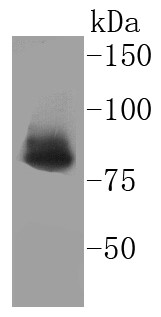
Ku80 Recombinant AntibodyBSM-52512R
ApplicationsImmunoFluorescence, Western Blot, ImmunoCytoChemistry, ImmunoHistoChemistry, ImmunoHistoChemistry Frozen, ImmunoHistoChemistry Paraffin
ReactivityHuman
TargetXRCC5
- SizePrice
Product group Antibodies

XRCC5 Polyclonal AntibodyCAC14001
ApplicationsWestern Blot, ELISA, ImmunoHistoChemistry
TargetXRCC5
- SizePrice
Product group Antibodies

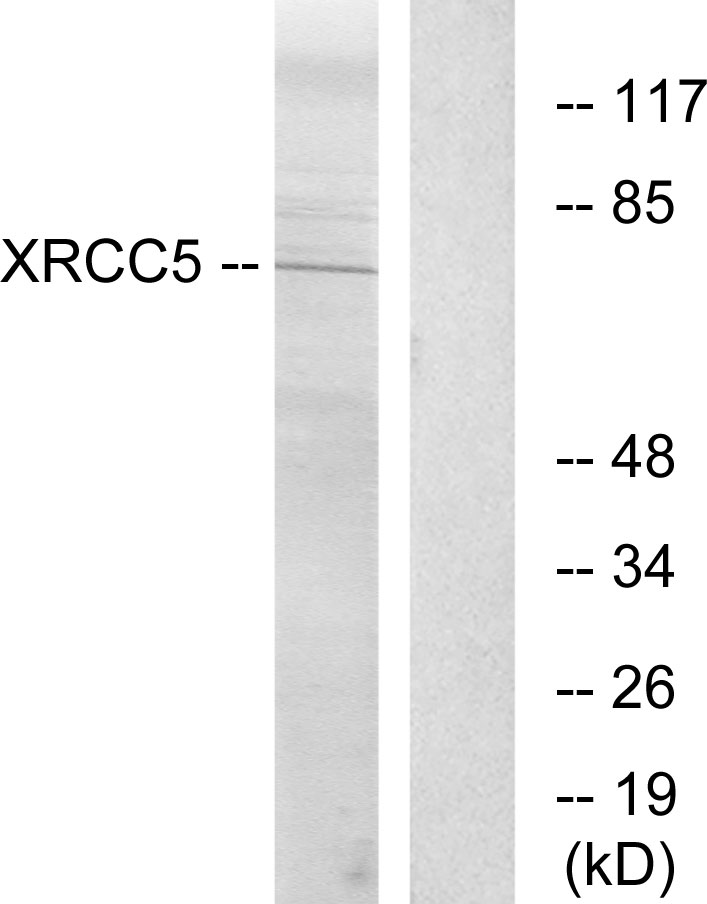
Anti-XRCC5 AntibodyA100714
ApplicationsWestern Blot, ELISA
ReactivityHuman
- SizePrice
Product group Antibodies

Anti-XRCC5 Antibody144-05862
ApplicationsImmunoFluorescence, ImmunoPrecipitation, Western Blot, ImmunoHistoChemistry
ReactivityHuman
TargetXRCC5
- SizePrice
Product group Antibodies

Ku80 AntibodyABX013131
ApplicationsImmunoFluorescence, Western Blot, ELISA, ImmunoCytoChemistry, ImmunoHistoChemistry
- SizePrice
Product group Antibodies

ApplicationsWestern Blot, ELISA, ImmunoHistoChemistry
ReactivityHuman
TargetXRCC5
- SizePrice
Product group Antibodies
References

Ku80 antibody [N3C2], InternalGTX109935
ApplicationsImmunoFluorescence, ImmunoPrecipitation, Western Blot, ImmunoCytoChemistry, ImmunoHistoChemistry, ImmunoHistoChemistry Paraffin, Other Application
ReactivityHuman, Mouse, Rat
TargetXRCC5
- SizePrice
Product group Antibodies

XRCC5 / Ku80 Antibody (C-Terminus)LS-C368653
ApplicationsImmunoFluorescence, Western Blot, ImmunoCytoChemistry, ImmunoHistoChemistry, ImmunoHistoChemistry Paraffin
ReactivityHuman, Monkey
TargetXRCC5
- SizePrice