

YAP antibody
ORB154318

ApplicationsImmunoFluorescence, Western Blot, ELISA, ImmunoHistoChemistry, ImmunoHistoChemistry Paraffin
Product group Antibodies
ReactivityHuman, Mouse, Rat
TargetYAP1
Overview
- SupplierBiorbyt
- Product NameYAP antibody
- Delivery Days Customer16
- ApplicationsImmunoFluorescence, Western Blot, ELISA, ImmunoHistoChemistry, ImmunoHistoChemistry Paraffin
- Applications SupplierWB: 1:500-2000, IHC-P: 1:50-100 ELISA, IF, IHC-P, WB
- CertificationResearch Use Only
- ClonalityPolyclonal
- ConjugateUnconjugated
- Gene ID10413
- Target nameYAP1
- Target descriptionYes1 associated transcriptional regulator
- Target synonymsCOB1, YAP, YAP-1, YAP2, YAP65, YKI, transcriptional coactivator YAP1, 65 kDa Yes-associated protein, Yes associated protein 1, protein yorkie homolog, yes-associated protein 2, yes-associated protein YAP65 homolog, yorkie homolog
- HostRabbit
- IsotypeIgG
- Protein IDP46937
- Protein NameTranscriptional coactivator YAP1
- Scientific DescriptionRabbit polyclonal antibody to YAP. The transcriptional coactivator Yes-associated protein (YAP) has been shown to interact with and to enhance p73-dependent apoptosis in response to DNA damage. It has been shown that YAP requires the promyelocytic leukemia gene (PML) and nuclear body localization to coactivate p73. YAP imparts selectivity to p73 by promoting the activation of a subset of p53 and/or p73 target promoters (1). Akt promotes YAP localization to the cytoplasm, resulting in loss from the nucleus where it functions as a coactivator of transcription factors including p73. p73-mediated induction of Bax expression following DNA damage requires YAP function and is attenuated by Akt phosphorylation of YAP. YAP overexpression increases, while YAP depletion decreases, p73-mediated apoptosis following DNA damage, in an Akt inhibitable manner
- ReactivityHuman, Mouse, Rat
- Storage Instruction-20°C,2°C to 8°C
- UNSPSC12352203
Related products
Product group Antibodies

Anti-YAP1 Antibody144-01001
ApplicationsImmunoFluorescence, Western Blot, ImmunoHistoChemistry
ReactivityHuman, Mouse, Rat
TargetYAP1
- SizePrice

![YAP1 antibody immunoprecipitates YAP1 protein in IP experiments. IP samples: HeLa whole cell extract A. Control with 4 μg of preimmune Rabbit IgG B. Immunoprecipitation of YAP1 protein by 4 μg YAP1 antibody (GTX129151) 7.5 % SDS-PAGE The immunoprecipitated YAP1 protein was detected by YAP1 antibody (GTX129151) diluted at 1:500. [EasyBlot anti-rabbit IgG (GTX221666-01) was used as a secondary reagent]](https://www.genetex.com/upload/website/prouct_img/normal/GTX129151/GTX129151_41500_IP_w_23060523_133.webp)
Product group Antibodies
References

YAP1 antibodyGTX129151
ApplicationsImmunoFluorescence, ImmunoPrecipitation, Western Blot, ImmunoCytoChemistry, ImmunoHistoChemistry, ImmunoHistoChemistry Frozen, ImmunoHistoChemistry Paraffin
ReactivityDeer, Human, Mouse
TargetYAP1
- SizePrice
Product group Antibodies

YAP1 Polyclonal AntibodyCAC15901
ApplicationsImmunoFluorescence, Western Blot, ELISA
TargetYAP1
- SizePrice

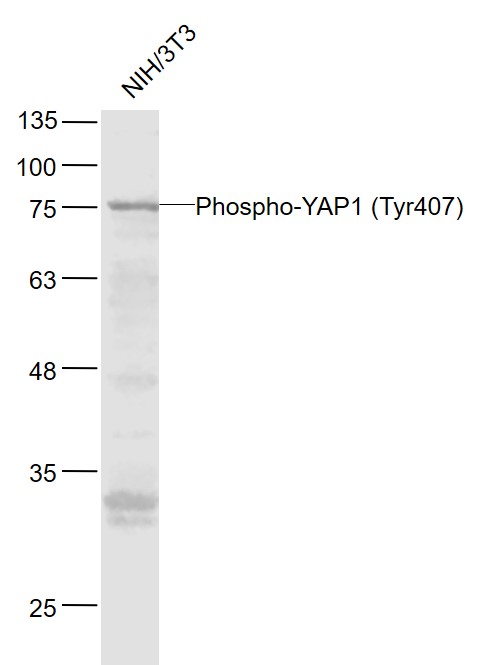
Product group Antibodies

ApplicationsImmunoFluorescence, Western Blot, ELISA, ImmunoCytoChemistry, ImmunoHistoChemistry, ImmunoHistoChemistry Frozen, ImmunoHistoChemistry Paraffin
ReactivityBovine, Canine, Chicken, Equine, Human, Mouse, Porcine, Rabbit, Rat
TargetYAP1
- SizePrice
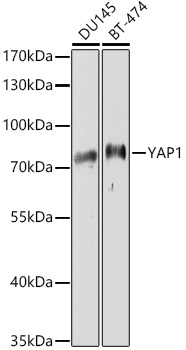
Product group Antibodies

Anti-YAP1 AntibodyA11213
ApplicationsImmunoFluorescence, Western Blot, ImmunoCytoChemistry, ImmunoHistoChemistry
ReactivityHuman, Mouse, Rat
- SizePrice

Product group Antibodies

YAP / YAP1 Antibody (phospho-Ser127)LS-C358850
ApplicationsWestern Blot
ReactivityChicken, Human, Mouse, Rat, Zebra Fish
TargetYAP1
- SizePrice

Product group Antibodies

Anti-YAP1 Antibody Picoband(r)PB9967-CARRIER-FREE
ApplicationsFlow Cytometry, ImmunoFluorescence, ImmunoPrecipitation, Western Blot, ImmunoCytoChemistry, ImmunoHistoChemistry
ReactivityHuman, Mouse, Rat
TargetYAP1
- SizePrice