

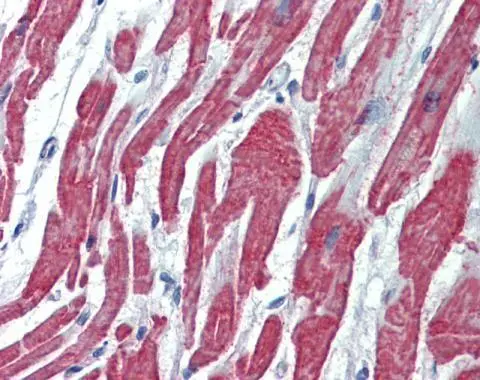
Immunohistochemical analysis of paraffin-embedded human heart, using Activin A Receptor Type II-like 1(GTX100035) antibody(20 μg/ml).
Antigen Retrieval: Trilogy? (EDTA based, pH 8.0) buffer, 15min
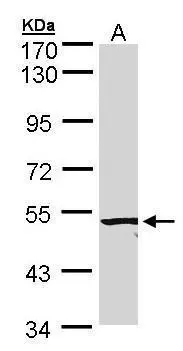
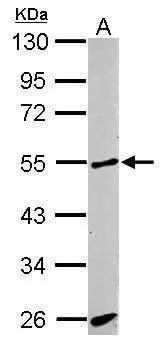
Immunohistochemical analysis of paraffin-embedded human heart, using Activin A Receptor Type II-like 1(GTX100035) antibody(20 μg/ml).
Antigen Retrieval: Trilogy? (EDTA based, pH 8.0) buffer, 15min
ACVRL1 antibody [C3], C-term
GTX100035

ApplicationsWestern Blot, ImmunoHistoChemistry, ImmunoHistoChemistry Paraffin
Product group Antibodies
ReactivityHuman, Mouse
TargetACVRL1
Overview
- SupplierGeneTex
- Product NameACVRL1 antibody [C3], C-term
- Delivery Days Customer9
- Application Supplier NoteWB: 1:1000-1:10000. IHC-P: 1:100-1:1000. *Optimal dilutions/concentrations should be determined by the researcher.Not tested in other applications.
- ApplicationsWestern Blot, ImmunoHistoChemistry, ImmunoHistoChemistry Paraffin
- CertificationResearch Use Only
- ClonalityPolyclonal
- Concentration1 mg/ml
- ConjugateUnconjugated
- Gene ID94
- Target nameACVRL1
- Target descriptionactivin A receptor like type 1
- Target synonymsACVRLK1, ALK-1, ALK1, HHT, HHT2, ORW2, SKR3, TSR-I, activin receptor type-1-like, TGF-B superfamily receptor type I, activin A receptor type II-like 1, activin A receptor type IL, activin A receptor, type II-like kinase 1, serine/threonine-protein kinase receptor R3
- HostRabbit
- IsotypeIgG
- Protein IDP37023
- Protein NameActivin receptor type-1-like
- Scientific DescriptionThis gene encodes a type I cell-surface receptor for the TGF-beta superfamily of ligands. It shares with other type I receptors a high degree of similarity in serine-threonine kinase subdomains, a glycine- and serine-rich region (called the GS domain) preceding the kinase domain, and a short C-terminal tail. The encoded protein, sometimes termed ALK1, shares similar domain structures with other closely related ALK or activin receptor-like kinase proteins that form a subfamily of receptor serine/threonine kinases. Mutations in this gene are associated with hemorrhagic telangiectasia type 2, also known as Rendu-Osler-Weber syndrome 2. [provided by RefSeq]
- ReactivityHuman, Mouse
- Storage Instruction-20°C or -80°C,2°C to 8°C
- UNSPSC41116161
Datasheet
Related products
Product group Antibodies

ReactivityHuman
TargetACVRL1
- SizePrice
Product group Antibodies

ACVRL1 AntibodyCSB-PA005080
ApplicationsWestern Blot, ELISA
ReactivityHuman, Mouse, Rat
TargetACVRL1
- SizePrice

Product group Antibodies

Anti-ALK-1/ACVRL1 Antibody Picoband(r)A01468-2-CARRIER-FREE
ApplicationsFlow Cytometry, Western Blot, ELISA, ImmunoHistoChemistry
ReactivityHuman, Mouse, Rat
TargetACVRL1
- SizePrice

Product group Antibodies

Anti-ACVRL1 AntibodyA96975
ApplicationsWestern Blot, ELISA
ReactivityHuman, Mouse, Rat
- SizePrice
Product group Antibodies

ApplicationsELISA
ReactivityHuman
TargetACVRL1
- SizePrice
Product group Antibodies

ApplicationsWestern Blot, ELISA
ReactivityHuman
TargetACVRL1
- SizePrice

Product group Antibodies

Anti-ACVRL1 AntibodyHPA007041
ApplicationsWestern Blot, ImmunoHistoChemistry
ReactivityHuman
TargetACVRL1
- SizePrice
Product group Antibodies

ACVRL1 Polyclonal AntibodyCAC14534
ApplicationsImmunoFluorescence, Western Blot, ELISA
TargetACVRL1
- SizePrice
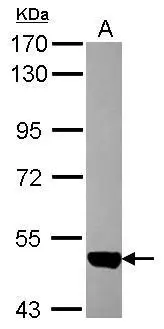
Product group Antibodies
ACVRL1 antibody [C1C3]GTX101672
ApplicationsWestern Blot
ReactivityHuman
TargetACVRL1
- SizePrice
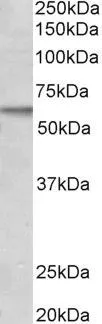
Product group Antibodies
ACVRL1 antibody, C-termGTX10179
ApplicationsWestern Blot
ReactivityHuman
TargetACVRL1
- SizePrice