

Anti-AMACR Antibody
ER1706-60

ApplicationsFlow Cytometry, ImmunoFluorescence, Western Blot, ImmunoHistoChemistry, ImmunoHistoChemistry Paraffin
Product group Antibodies
ReactivityHuman, Mouse
TargetAmacr
Overview
- SupplierHUABIO
- Product NameAnti-AMACR Antibody
- Delivery Days Customer7
- ApplicationsFlow Cytometry, ImmunoFluorescence, Western Blot, ImmunoHistoChemistry, ImmunoHistoChemistry Paraffin
- Applications SupplierWB,IF-Cell,IHC-P,FC
- CertificationResearch Use Only
- ClonalityPolyclonal
- Concentration1 mg/ml
- ConjugateUnconjugated
- Gene ID17117
- Target nameAmacr
- Target descriptionalpha-methylacyl-CoA racemase
- Target synonymsMacr1, alpha-methylacyl-CoA racemase, 2-arylpropionyl-CoA epimerase, 2-methylacyl-CoA racemase, alpha-methylacyl-Coenzyme A racemase
- HostRabbit
- IsotypeIgG
- Protein IDO09174
- Protein NameAlpha-methylacyl-CoA racemase
- Scientific DescriptionP504S, also known as AMACR (alpha-methylacyl-CoA racemase), 2-methylacyl-CoA racemase or RACE, is an enzyme belonging to the caiB/baiF CoA-transferase family. Localizing to the peroxisome and mitochondrion, P504S plays a role in the metabolism of branched-chain fatty acids and bile acid intermediates. More specifically, P504S catalyzes the conversion of pristanoyl-CoA and C27-bile acyl-CoAs to their (S)-stereoisomers which can then be degraded by peroxisomal beta-oxidation. Mutations in the gene encoding P504S can lead to AMACR deficiency, a disease characterized by increased concentrations of pristanic acid that is associated with adult onset sensory motor neuropathy, and/or CBAS4 (congenital bile acid synthesis defect type 4), a disorder characterized by intrahepatic cholestasis, absence of cholic acid from bile, neonatal jaundice and bile duct deficiency. In addition, P504S is overexpressed in prostate cancer and is believed to be functionally important for prostate cancer cell growth.
- ReactivityHuman, Mouse
- Reactivity SupplierHuman,Mouse
- Storage Instruction-20°C,2°C to 8°C
- UNSPSC41116161
Datasheet
Related products

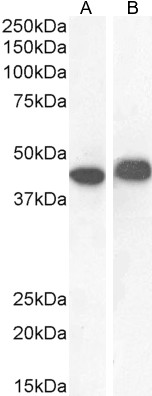
Product group Antibodies

Anti-AMACR AntibodyA82680
ApplicationsWestern Blot, ELISA, ImmunoHistoChemistry
ReactivityHuman
- SizePrice

Product group Antibodies

Anti-AMACR AntibodyAMAB91561
ApplicationsWestern Blot, ImmunoHistoChemistry
ReactivityHuman
TargetAMACR
- SizePrice
Product group Antibodies

AMACR / P504S Antibody (clone 1F1)LS-C764021
ApplicationsImmunoFluorescence, Western Blot, ImmunoHistoChemistry, ImmunoHistoChemistry Paraffin
ReactivityHuman, Mouse, Rat
TargetAMACR
- SizePrice
Product group Antibodies

Goat anti-AMACREB12538
ApplicationsWestern Blot, ELISA
ReactivityHuman
TargetAMACR
- SizePrice
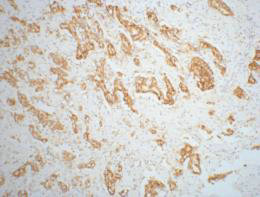
Product group Antibodies

AMACR Monoclonal AntibodyCSB-MA000203
ApplicationsWestern Blot, ELISA, ImmunoHistoChemistry
ReactivityHuman, Mouse, Rat
TargetAMACR
- SizePrice
Product group Antibodies

Amacr Polyclonal AntibodyCAC08104
ApplicationsImmunoFluorescence, Western Blot, ELISA
ReactivityMouse
TargetAMACR
- SizePrice
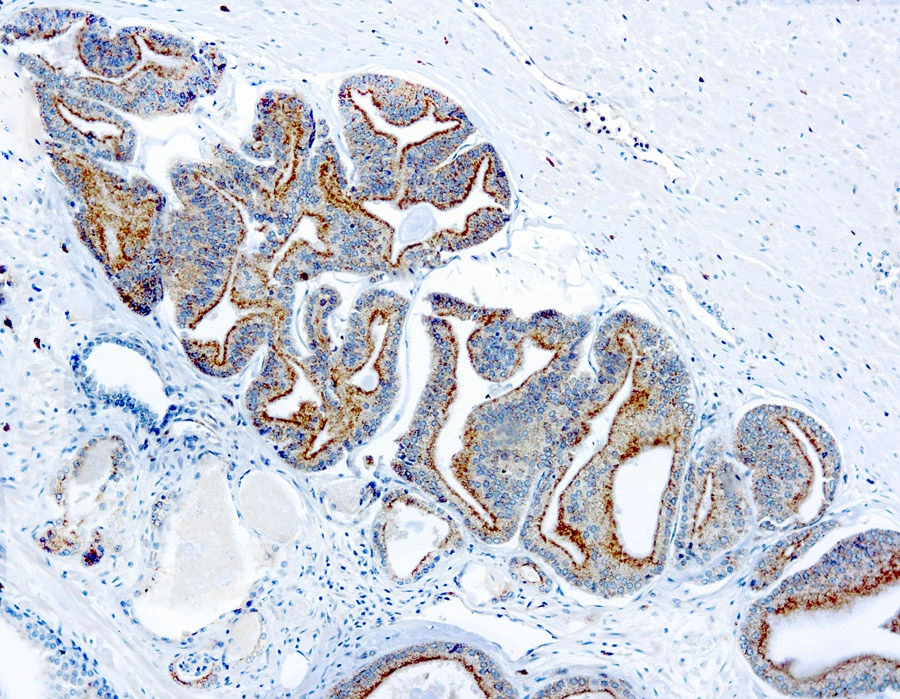
Product group Antibodies

AMACR antibodyGTX12498
ApplicationsImmunoHistoChemistry, ImmunoHistoChemistry Paraffin
ReactivityHuman
TargetAMACR
- SizePrice


Product group Antibodies

Anti-AMACR Antibody Picoband(r)PB9983-CARRIER-FREE
ApplicationsFlow Cytometry, ImmunoFluorescence, Western Blot, ImmunoCytoChemistry, ImmunoHistoChemistry
ReactivityBovine, Equine, Human, Monkey, Mouse, Rat
TargetAMACR
- SizePrice