

Anti-TLR4 Antibody
ER1706-43

ApplicationsFlow Cytometry, ImmunoFluorescence, ImmunoHistoChemistry, ImmunoHistoChemistry Paraffin
Product group Antibodies
ReactivityHuman, Mouse, Rat
TargetTLR4
Overview
- SupplierHUABIO
- Product NameAnti-TLR4 Antibody
- Delivery Days Customer7
- ApplicationsFlow Cytometry, ImmunoFluorescence, ImmunoHistoChemistry, ImmunoHistoChemistry Paraffin
- Applications SupplierIF-Cell,IHC-P,FC
- CertificationResearch Use Only
- ClonalityPolyclonal
- Concentration1 mg/ml
- ConjugateUnconjugated
- Gene ID7099
- Target nameTLR4
- Target descriptiontoll like receptor 4
- Target synonymsARMD10, CD284, TLR-4, TOLL, toll-like receptor 4, hToll, homolog of Drosophila toll, toll like receptor 4 protein
- HostRabbit
- IsotypeIgG
- Protein IDO00206
- Protein NameToll-like receptor 4
- Scientific DescriptionSix human homologs of the Drosophila Toll receptor were initially identified based on their sequence similarities and designated toll-like receptors (TLR). Toll receptors are involved in mediating dorsoventral polarization in the developing Drosophila embryo and participate in the host immunity. The TLR family of proteins are characterized by a highly conserved Toll homology (TH) domain, which is essential for Toll-induced signal transduction. TLR1, as well as the other TLR family members, are type I transmembrane receptors that characteristically contain an extracellular domain consisting of several leucine-rich regions along with a single cytoplasmic Toll / IL-1R-like domain. TLR2 and TLR4 are activated in response to lipopolysacchride (LPS) stimulation, which results in the activation and translocation of NFkB and suggests that these receptors are involved in mediating inflammatory responses. Expression of TLR receptors is highest in peripheral blood leukocytes, macro-phages, and TLR6 is highly homologous to TLR1, sharing greater than 65% sequence identity, and, like other members of TLR family, it induces NFkB signaling upon activation.
- ReactivityHuman, Mouse, Rat
- Reactivity SupplierHuman,Mouse,Rat
- Storage Instruction-20°C,2°C to 8°C
- UNSPSC41116161
Datasheet
Related products
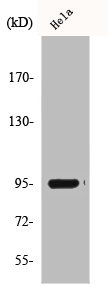
Product group Antibodies

TLR4 AntibodyCSB-PA001434
ApplicationsWestern Blot, ELISA, ImmunoHistoChemistry
ReactivityHuman, Mouse
TargetTLR4
- SizePrice
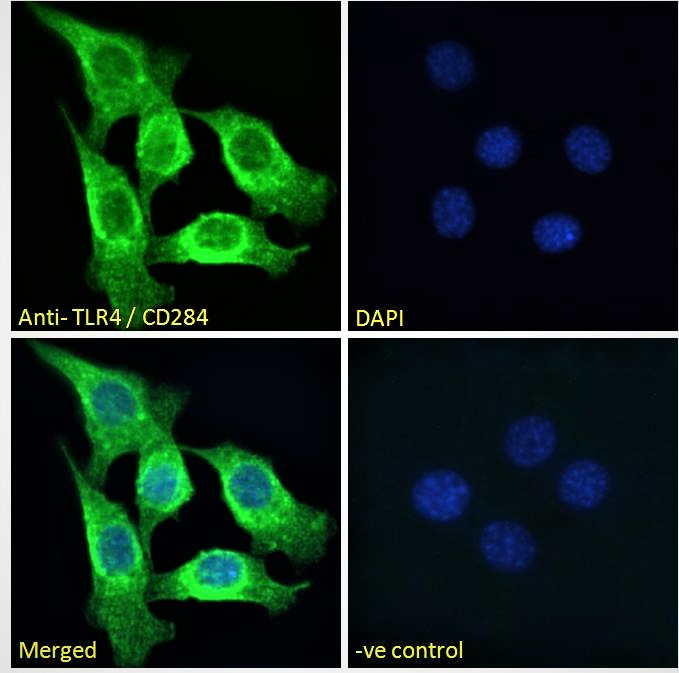
Product group Antibodies

Anti-TLR4 AntibodyA121173
ApplicationsFlow Cytometry, ImmunoFluorescence, ELISA, ImmunoHistoChemistry
ReactivityHuman, Mouse
- SizePrice

Product group Antibodies

Anti-TLR4 Antibody Picoband(r)A00017-2-CARRIER-FREE
ApplicationsFlow Cytometry, Western Blot, ELISA
ReactivityHuman
TargetTLR4
- SizePrice
Product group Antibodies

Goat anti-TLR4 / CD284EB09441
ApplicationsFlow Cytometry, ImmunoFluorescence, ELISA, ImmunoHistoChemistry
ReactivityBovine, Canine, Human, Mouse, Porcine, Rat, Sheep
TargetTLR4
- SizePrice

Product group Antibodies

Anti-TLR4 AntibodyHPA049174
ApplicationsImmunoHistoChemistry
ReactivityHuman
TargetTLR4
- SizePrice
Product group Antibodies

TLR4 AntibodyLS-C401319
ApplicationsELISA, ImmunoHistoChemistry
ReactivityHuman
TargetTLR4
- SizePrice
Product group Antibodies

ApplicationsImmunoPrecipitation, Western Blot, ImmunoCytoChemistry, ImmunoHistoChemistry
ReactivityMouse, Rat
TargetTLR4
- SizePrice
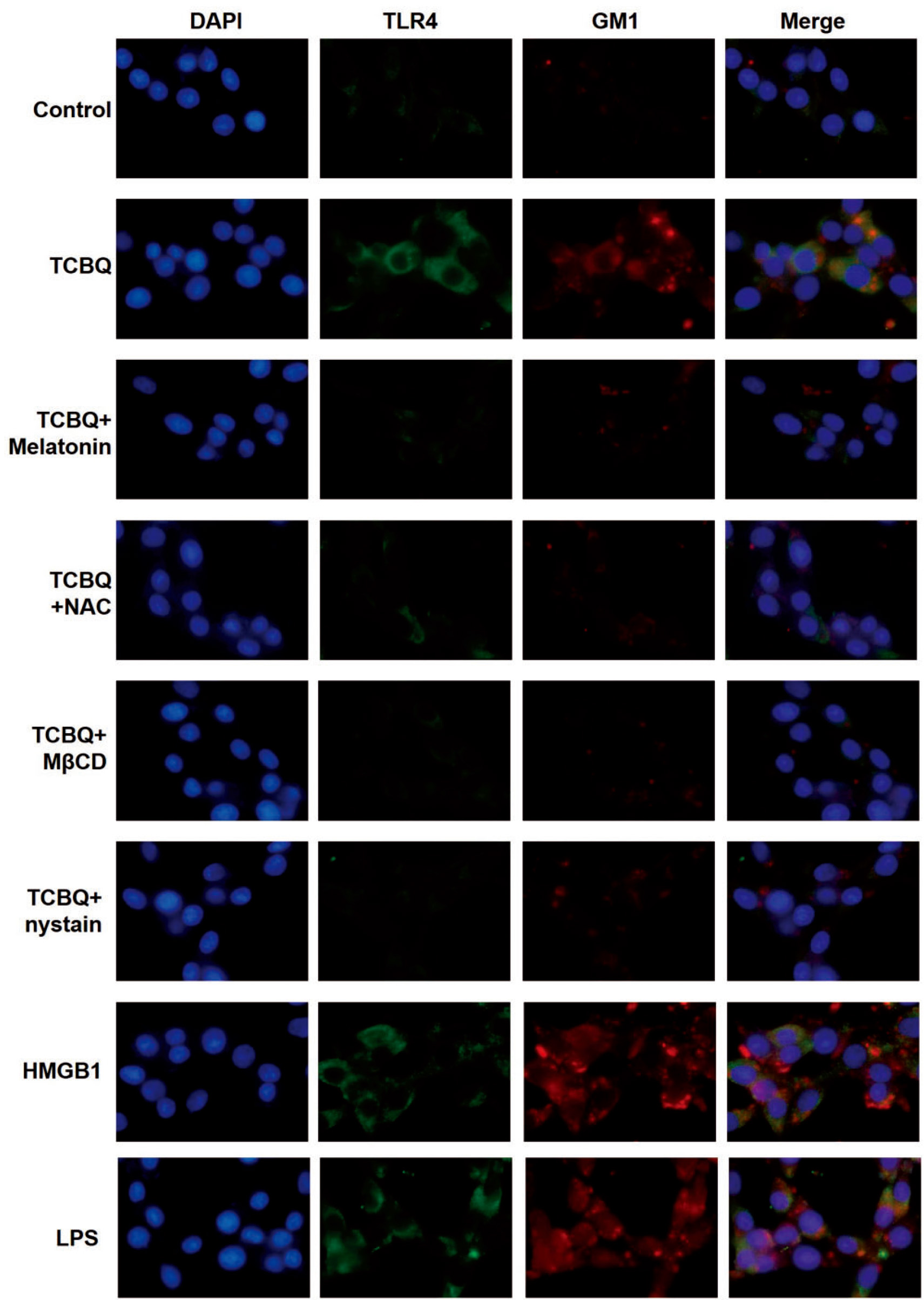
Product group Antibodies
References

TLR4 Polyclonal AntibodyBS-20594R
ApplicationsFlow Cytometry, ImmunoFluorescence, Western Blot, ELISA, ImmunoCytoChemistry, ImmunoHistoChemistry, ImmunoHistoChemistry Frozen, ImmunoHistoChemistry Paraffin
ReactivityBovine, Equine, Human, Mouse, Porcine, Rabbit, Rat, Sheep
TargetTLR4
- SizePrice
![FACS analysis of human peripheral blood monocytes using GTX75742 TLR4 antibody [HTA125].](https://www.genetex.com/upload/website/prouct_img/normal/GTX75742/GTX75742_5573_FACS_w_23061322_280.webp)
Product group Antibodies

TLR4 antibody [HTA125]GTX75742
ApplicationsFlow Cytometry, ImmunoFluorescence, ImmunoPrecipitation, Western Blot, ImmunoCytoChemistry, ImmunoHistoChemistry, ImmunoHistoChemistry Frozen, ImmunoHistoChemistry Paraffin, Neutralisation/Blocking
ReactivityCanine, Feline, Guinea Pig, Human, Mouse, Porcine, Primate
TargetTLR4
- SizePrice
Product group Antibodies

anti-TLR4 (human), mAb (2E11)IAX-400-003
ApplicationsFlow Cytometry, ImmunoCytoChemistry
ReactivityHuman
TargetTLR4
- SizePrice