

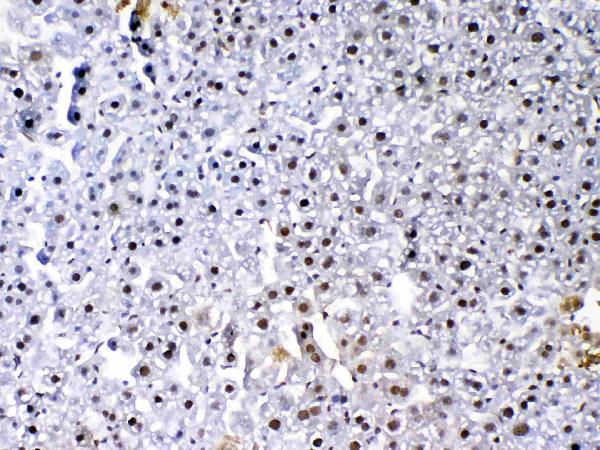
Figure 7. IHC analysis of VEGF Receptor 3 using anti-VEGF Receptor 3 antibody (A01276-3). VEGF Receptor 3 was detected in paraffin-embedded section of mouse liver tissue. Heat mediated antigen retrieval was performed in citrate buffer (pH6, epitope retrieval solution) for 20 mins. The tissue section was blocked with 10% goat serum. The tissue section was then incubated with 1microg/ml rabbit anti-VEGF Receptor 3 Antibody (A01276-3) overnight at 4°C. Biotinylated goat anti-rabbit IgG was used as secondary antibody and incubated for 30 minutes at 37°C. The tissue section was developed using Strepavidin-Biotin-Complex (SABC)(Catalog # SA1022) with DAB as the chromogen.
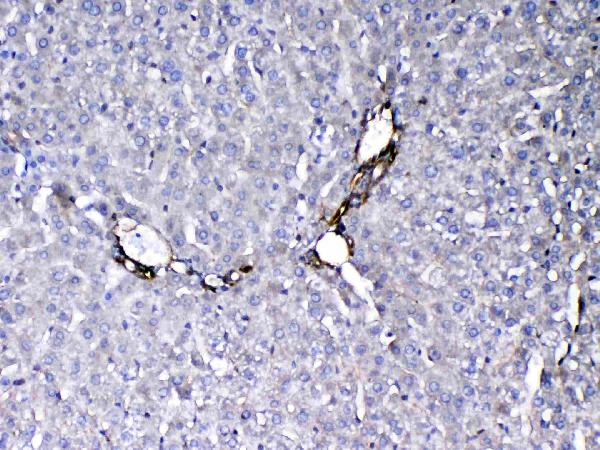
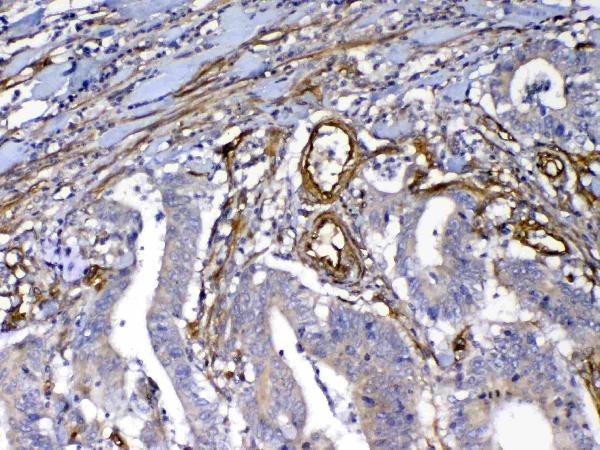
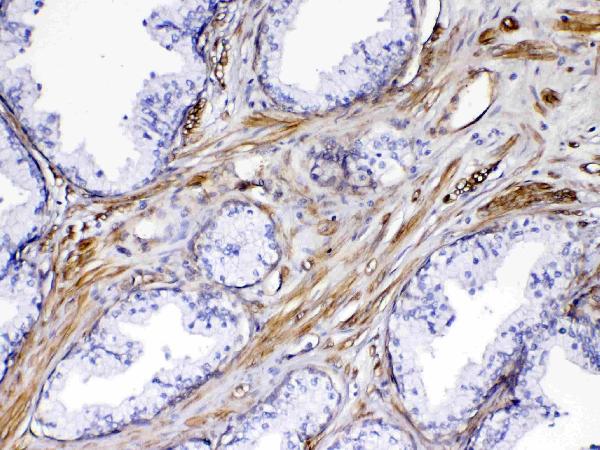
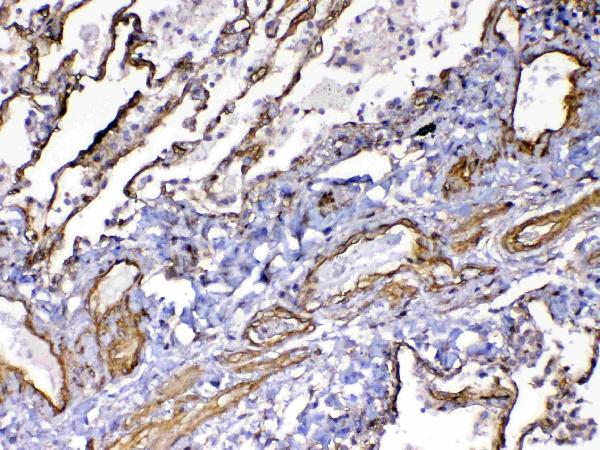
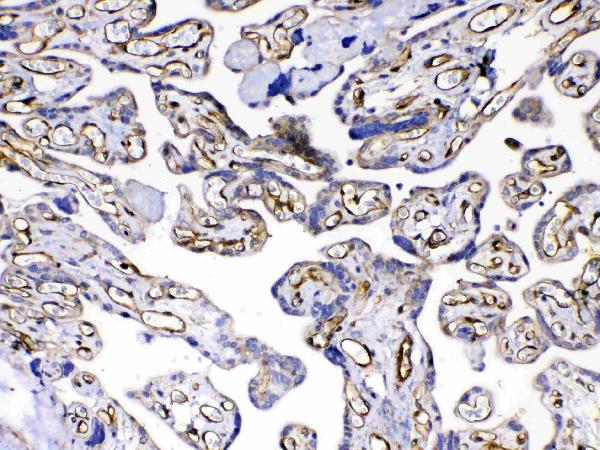
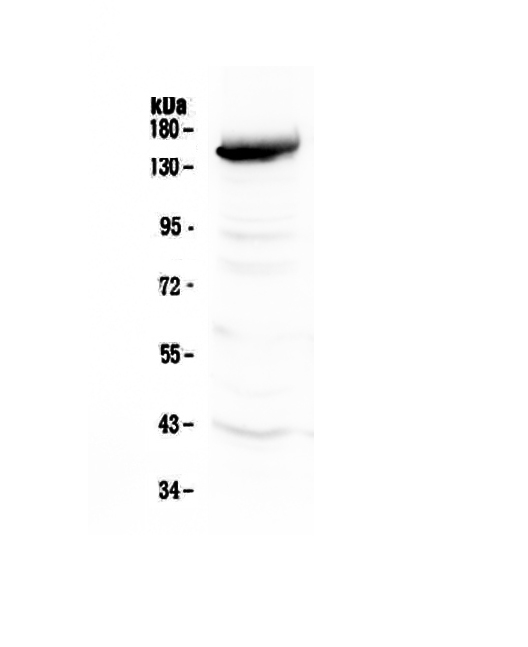


Figure 7. IHC analysis of VEGF Receptor 3 using anti-VEGF Receptor 3 antibody (A01276-3). VEGF Receptor 3 was detected in paraffin-embedded section of mouse liver tissue. Heat mediated antigen retrieval was performed in citrate buffer (pH6, epitope retrieval solution) for 20 mins. The tissue section was blocked with 10% goat serum. The tissue section was then incubated with 1microg/ml rabbit anti-VEGF Receptor 3 Antibody (A01276-3) overnight at 4°C. Biotinylated goat anti-rabbit IgG was used as secondary antibody and incubated for 30 minutes at 37°C. The tissue section was developed using Strepavidin-Biotin-Complex (SABC)(Catalog # SA1022) with DAB as the chromogen.
Anti-VEGF Receptor 3/FLT4 Antibody Picoband(r)
A01276-3

ApplicationsFlow Cytometry, ImmunoFluorescence, Western Blot, ELISA, ImmunoCytoChemistry, ImmunoHistoChemistry, ImmunoHistoChemistry Frozen
Product group Antibodies
ReactivityHuman, Mouse, Rat
TargetFLT4
Overview
- SupplierBoster Bio
- Product NameAnti-VEGF Receptor 3/FLT4 Antibody Picoband(r)
- Delivery Days Customer9
- ApplicationsFlow Cytometry, ImmunoFluorescence, Western Blot, ELISA, ImmunoCytoChemistry, ImmunoHistoChemistry, ImmunoHistoChemistry Frozen
- CertificationResearch Use Only
- ClonalityPolyclonal
- Concentration500 ug/ml
- Gene ID2324
- Target nameFLT4
- Target descriptionfms related receptor tyrosine kinase 4
- Target synonymsCHTD7, FLT-4, FLT41, LMPH1A, LMPHM1, PCL, VEGFR-3, VEGFR3, vascular endothelial growth factor receptor 3, Feline McDonough Sarcoma (FMS)-like tyrosine kinase 4, VEGF receptor-3, fms related tyrosine kinase 4, fms-like tyrosine kinase 4, primary congenital lymphedema, tyrosine-protein kinase receptor FLT4
- HostRabbit
- IsotypeIgG
- Protein IDP35916
- Protein NameVascular endothelial growth factor receptor 3
- Scientific DescriptionBoster Bio Anti-VEGF Receptor 3/FLT4 Antibody Picoband® catalog # A01276-3. Tested in ELISA, Flow Cytometry, IF, IHC, IHC-F, ICC, WB applications. This antibody reacts with Human, Mouse, Rat. The brand Picoband indicates this is a premium antibody that guarantees superior quality, high affinity, and strong signals with minimal background in Western blot applications. Only our best-performing antibodies are designated as Picoband, ensuring unmatched performance.
- ReactivityHuman, Mouse, Rat
- Storage Instruction-20°C,2°C to 8°C
- UNSPSC12352203
References
- Li X, Song D, Liu H, et al. Expression levels of VEGF-C and VEGFR-3 in renal cell carcinoma and their association with lymph node metastasis. Exp Ther Med. 2021,21(6):554. doi: 10.3892/etm.2021.9986Read this paper
- Li C, Fan J, Song X, et al. Expression of angiopoietin-2 and vascular endothelial growth factor receptor-3 correlates with lymphangiogenesis and angiogenesis and affects survival of oral squamous cell carcinoma. PLoS One. 2013,8(9):e75388. doi: 10.1371/journal.pone.0075388Read this paper
- Ren SX, Ren ZJ, Zhao MY, et al. Antitumor activity of endogenous mFlt4 displayed on a T4 phage nanoparticle surface. Acta Pharmacol Sin. 2009,30(5):637-45. doi: 10.1038/aps.2009.44Read this paper
- Da MX, Wu XT, Wang J, et al. Expression of cyclooxygenase-2 and vascular endothelial growth factor-C correlates with lymphangiogenesis and lymphatic invasion in human gastric cancer. Arch Med Res. 2008,39(1):92-9.Read this paper
Datasheet
MSDS
Related products
Product group Antibodies
Anti-VEGF Receptor 3/FLT4 Antibody Picoband(r)A01276-2-CARRIER-FREE
ApplicationsFlow Cytometry, ImmunoFluorescence, Western Blot, ImmunoCytoChemistry, ImmunoHistoChemistry, ImmunoHistoChemistry Frozen
ReactivityHuman, Mouse, Rat
TargetFLT4
- SizePrice
Product group Antibodies

Anti-VEGFR-3 [ABDD073]AB04028-10.0
ApplicationsFlow Cytometry, ELISA, ImmunoHistoChemistry
ReactivityHuman
TargetFLT4
- SizePrice
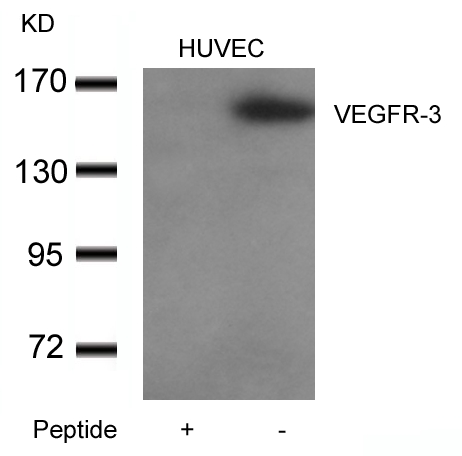
Product group Antibodies

Anti-VEGFR3 AntibodyA34796
ApplicationsImmunoFluorescence, Western Blot, ImmunoHistoChemistry
ReactivityHuman
- SizePrice
Product group Antibodies

FLT4 / VEGFR3 AntibodyLS-C832540
ApplicationsImmunoFluorescence, ELISA
ReactivityHuman
TargetFLT4
- SizePrice
Product group Antibodies

Phospho-KDR/FLT4 (Y1054/Y1063) AntibodyCSB-PA009643
ApplicationsELISA, ImmunoHistoChemistry
ReactivityHuman, Mouse, Rat
TargetFLT4
- SizePrice

Product group Antibodies

Anti-FLT4 AntibodyHPA046519
ApplicationsImmunoCytoChemistry
ReactivityHuman
TargetFLT4
- SizePrice
Product group Antibodies

ApplicationsImmunoPrecipitation, Western Blot, ImmunoCytoChemistry, ImmunoHistoChemistry
TargetFLT4
- SizePrice
Product group Antibodies
References

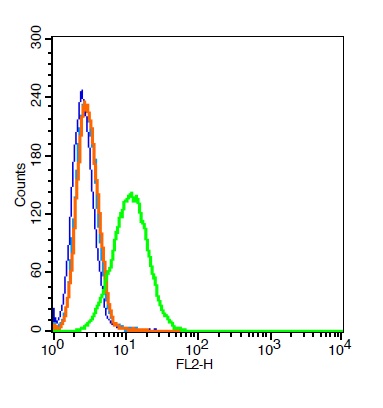
VEGFR3 Polyclonal AntibodyBS-2202R
ApplicationsFlow Cytometry, ImmunoFluorescence, ELISA, ImmunoCytoChemistry, ImmunoHistoChemistry, ImmunoHistoChemistry Frozen, ImmunoHistoChemistry Paraffin
ReactivityCanine, Equine, Human, Mouse, Porcine, Rabbit, Rat
TargetFLT4
- SizePrice
Product group Antibodies

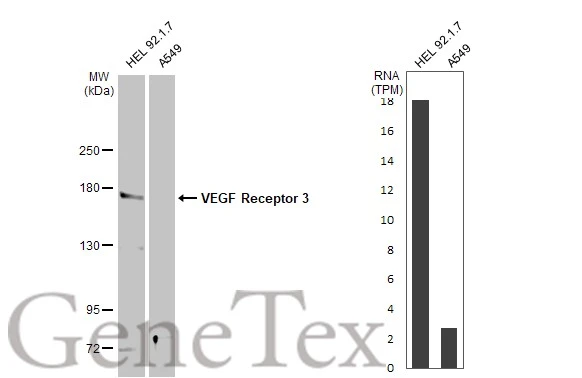
VEGF Receptor 3 antibodyGTX100807
ApplicationsWestern Blot
ReactivityHuman, Mouse
TargetFLT4
- SizePrice
Product group Antibodies

Anti-Mouse/Rat FLT4 Antibody144-12332
ApplicationsWestern Blot
ReactivityHuman, Mouse, Rat
TargetFLT4
- SizePrice