

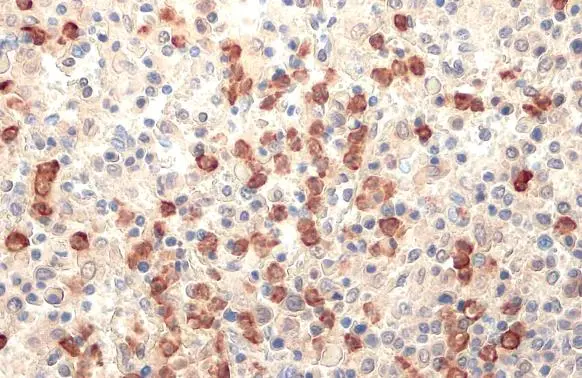
Immunohistochemistry of paraffin-embedded Human brain tissue using LCN2 Polyclonal Antibody at dilution 1:50
Immunohistochemistry of paraffin-embedded Human brain tissue using LCN2 Polyclonal Antibody at dilution 1:50
LCN2 Polyclonal Antibody
E-AB-12805

ApplicationsImmunoHistoChemistry
Product group Antibodies
TargetLCN2
Overview
- SupplierElabscience
- Product NameLCN2 Polyclonal Antibody
- Delivery Days Customer12
- ApplicationsImmunoHistoChemistry
- Applications SupplierELISA IHC
- CertificationResearch Use Only
- ClonalityPolyclonal
- Concentration0.5 mg/ml
- ConjugateUnconjugated
- Gene ID3934
- Target nameLCN2
- Target descriptionlipocalin 2
- Target synonyms24p3, MSFI, NGAL, p25, neutrophil gelatinase-associated lipocalin, 25 kDa alpha-2-microglobulin-related subunit of MMP-9, migration-stimulating factor inhibitor, oncogene 24p3, siderocalin LCN2
- HostRabbit
- IsotypeIgG
- Protein IDP80188
- Protein NameNeutrophil gelatinase-associated lipocalin
- Scientific DescriptionIron-trafficking protein involved in multiple processes such as apoptosis, innate immunity and renal development. Binds iron through association with 2,5-dihydroxybenzoic acid (2,5-DHBA), a siderophore that shares structural similarities with bacterial enterobactin, and delivers or removes iron from the cell, depending on the context. Iron-bound form (holo-24p3) is internalized following binding to the SLC22A17 (24p3R) receptor, leading to release of iron and subsequent increase of intracellular iron concentration. In contrast, association of the iron-free form (apo-24p3) with the SLC22A17 (24p3R) receptor is followed by association with an intracellular siderophore, iron chelation and iron transfer to the extracellular medium, thereby reducing intracellular iron concentration. Involved in apoptosis due to interleukin-3 (IL3) deprivation: iron-loaded form increases intracellular iron concentration without promoting apoptosis, while iron-free form decreases intracellular iron levels, inducing expression of the proapoptotic protein BCL2L11/BIM, resulting in apoptosis. Involved in innate immunity, possibly by sequestrating iron, leading to limit bacterial growth.
- Storage Instruction-20°C
- UNSPSC41116161
MSDS
Related products
Product group Antibodies

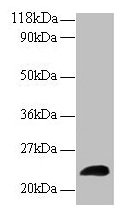
LCN2 AntibodyCSB-PA06834A0RB
ApplicationsWestern Blot, ELISA
ReactivityHuman
TargetLCN2
- SizePrice
Product group Antibodies

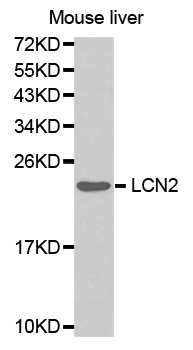
Anti-LCN2 AntibodyA30354
ApplicationsWestern Blot, ImmunoHistoChemistry
ReactivityHuman, Mouse, Rat
- SizePrice
Product group Antibodies

ApplicationsWestern Blot, ELISA
ReactivityHuman
TargetLCN2
- SizePrice
Product group Antibodies

Goat anti-Lipocalin 2 / NGALEB06762
ApplicationsWestern Blot, ELISA, ImmunoHistoChemistry
ReactivityHuman
TargetLCN2
- SizePrice

Product group Antibodies

Anti-LCN2 AntibodyHPA002695
ApplicationsWestern Blot, ImmunoHistoChemistry
ReactivityHuman
TargetLCN2
- SizePrice
Product group Antibodies

Lcn2 Polyclonal AntibodyCAC09085
ApplicationsWestern Blot, ELISA
TargetLCN2
- SizePrice
Product group Antibodies

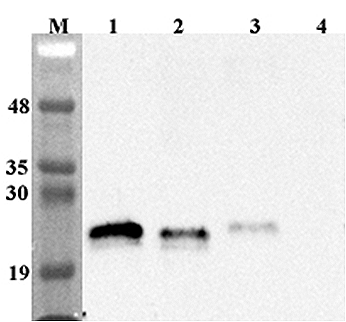
anti-Lipocalin-2 (human), pAbAG-25A-0087
ApplicationsWestern Blot, ELISA
ReactivityHuman, Mouse, Rat
TargetLCN2
- SizePrice

Product group Antibodies

Anti-Lipocalin 2/LCN2 Antibody Picoband(r)PB9610-CARRIER-FREE
ApplicationsWestern Blot, ELISA, ImmunoHistoChemistry
ReactivityHuman
TargetLCN2
- SizePrice
Product group Antibodies
References

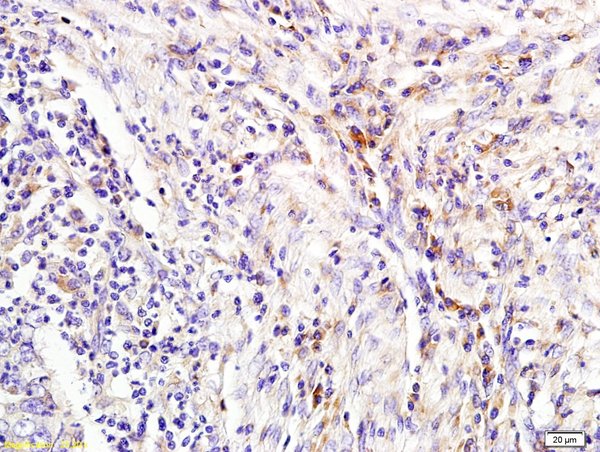
ApplicationsFlow Cytometry, ImmunoFluorescence, ELISA, ImmunoCytoChemistry, ImmunoHistoChemistry, ImmunoHistoChemistry Frozen, ImmunoHistoChemistry Paraffin
ReactivityHuman
TargetLCN2
- SizePrice
Product group Antibodies

Lipocalin-2 antibodyGTX132773
ApplicationsWestern Blot, ImmunoHistoChemistry, ImmunoHistoChemistry Paraffin
ReactivityHuman
TargetLCN2
- SizePrice