


LDHA antibody detects LDHA protein at cytoplasm by immunohistochemical analysis. Sample: Paraffin-embedded mouse liver. LDHA stained by LDHA antibody (GTX101416) diluted at 1:500. Antigen Retrieval: Citrate buffer, pH 6.0, 15 min
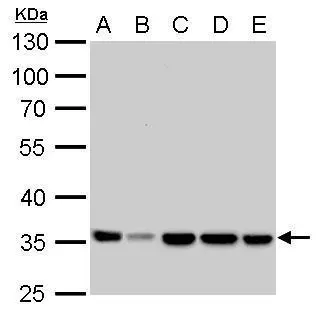
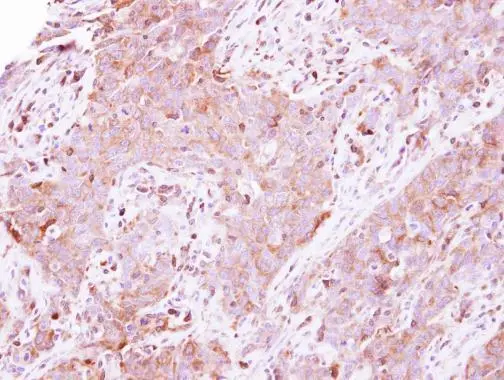
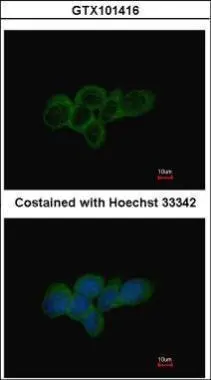
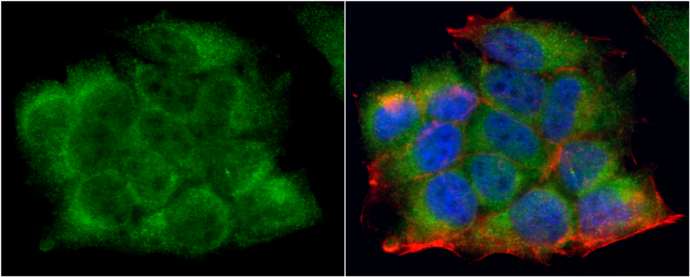
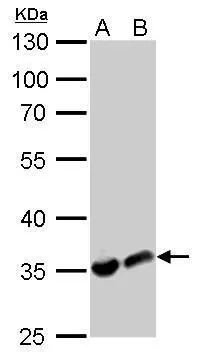
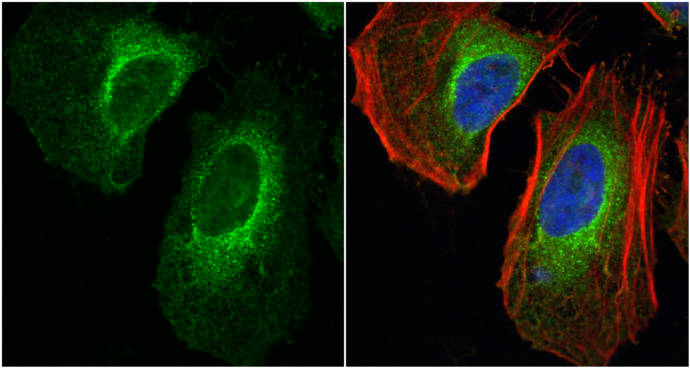
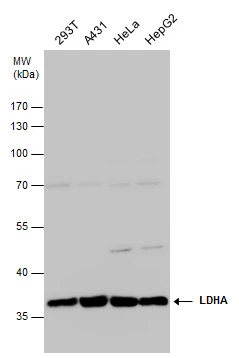
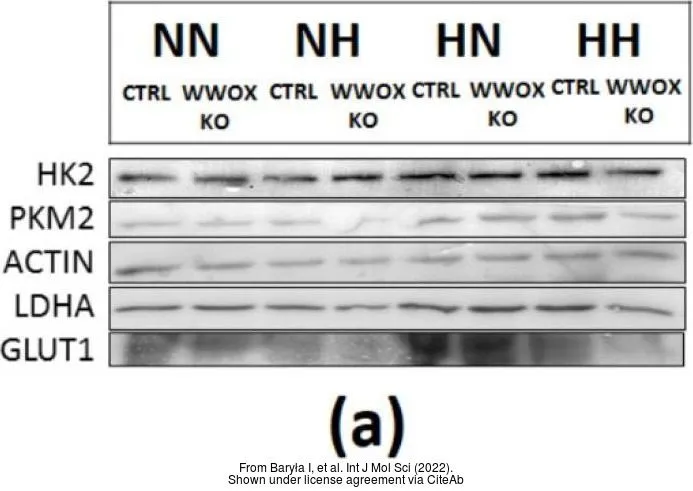
LDHA antibody detects LDHA protein at cytoplasm by immunohistochemical analysis. Sample: Paraffin-embedded mouse liver. LDHA stained by LDHA antibody (GTX101416) diluted at 1:500. Antigen Retrieval: Citrate buffer, pH 6.0, 15 min
LDHA antibody
GTX101416

ApplicationsImmunoFluorescence, Western Blot, ImmunoCytoChemistry, ImmunoHistoChemistry, ImmunoHistoChemistry Paraffin
Product group Antibodies
ReactivityHuman, Mouse, Rat
TargetLDHA
Overview
- SupplierGeneTex
- Product NameLDHA antibody
- Delivery Days Customer9
- Application Supplier NoteWB: 1:500-1:3000. ICC/IF: 1:100-1:1000. IHC-P: 1:100-1:1000. *Optimal dilutions/concentrations should be determined by the researcher.Not tested in other applications.
- ApplicationsImmunoFluorescence, Western Blot, ImmunoCytoChemistry, ImmunoHistoChemistry, ImmunoHistoChemistry Paraffin
- CertificationResearch Use Only
- ClonalityPolyclonal
- Concentration0.37 mg/ml
- ConjugateUnconjugated
- Gene ID3939
- Target nameLDHA
- Target descriptionlactate dehydrogenase A
- Target synonymsGSD11, HEL-S-133P, LDHM, PIG19, L-lactate dehydrogenase A chain, LDH muscle subunit, LDH-A, LDH-M, cell proliferation-inducing gene 19 protein, epididymis secretory sperm binding protein Li 133P, lactate dehydrogenase M, proliferation-inducing gene 19, renal carcinoma antigen NY-REN-59
- HostRabbit
- IsotypeIgG
- Protein IDP00338
- Protein NameL-lactate dehydrogenase A chain
- Scientific DescriptionThe protein encoded by this gene catalyzes the conversion of L-lactate and NAD to pyruvate and NADH in the final step of anaerobic glycolysis. The protein is found predominantly in muscle tissue and belongs to the lactate dehydrogenase family. Mutations in this gene have been linked to exertional myoglobinuria. Multiple transcript variants encoding different isoforms have been found for this gene. The human genome contains several non-transcribed pseudogenes of this gene. [provided by RefSeq]
- ReactivityHuman, Mouse, Rat
- Storage Instruction-20°C or -80°C,2°C to 8°C
- UNSPSC41116161
Datasheet
Related products
Product group Antibodies

ApplicationsWestern Blot, ELISA
ReactivityHuman
- SizePrice


Product group Antibodies

LDHA / LDH1 AntibodyLS-C831340
ApplicationsWestern Blot, ELISA, ImmunoHistoChemistry
ReactivityHuman, Mouse, Rat
TargetLDHA
- SizePrice
Product group Antibodies

LDHA Polyclonal AntibodyBS-1810R
ApplicationsImmunoFluorescence, ELISA, ImmunoHistoChemistry, ImmunoHistoChemistry Frozen, ImmunoHistoChemistry Paraffin
ReactivityHuman, Mouse, Rat
TargetLDHA
- SizePrice
Product group Antibodies

LDHA AntibodyCSB-PA00045A0RB
ApplicationsImmunoFluorescence, Western Blot, ELISA, ImmunoHistoChemistry
ReactivityHuman
TargetLDHA
- SizePrice
Product group Antibodies

Goat anti-LDHAEB12393
ApplicationsWestern Blot, ELISA
ReactivityHuman
TargetLDHA
- SizePrice
Product group Antibodies

Ldha Polyclonal AntibodyCAC07074
ApplicationsImmunoFluorescence, Western Blot, ELISA, ImmunoHistoChemistry
TargetLDHA
- SizePrice
Product group Antibodies

TargetLDHA
- SizePrice
![IHC-P analysis of human thyroid carcinoma tissue using GTX84226 LDHA antibody [5G10]. Antigen retrieval : Heat-induced epitope retrieval by 10mM citrate buffer, pH6.0, 100oC for 10min.](https://www.genetex.com/upload/website/prouct_img/normal/GTX84226/GTX84226_2476_IHC-P_w_23061420_108.webp)
Product group Antibodies
LDHA antibody [5G10]GTX84226
ApplicationsImmunoPrecipitation, Western Blot, ImmunoHistoChemistry, ImmunoHistoChemistry Paraffin
ReactivityHuman
TargetLDHA
- SizePrice